COMMENTARY
GETTING STARTED NOW
The Army needs to embrace advanced manufacturing at the beginning of new system development to surpass potential foes.
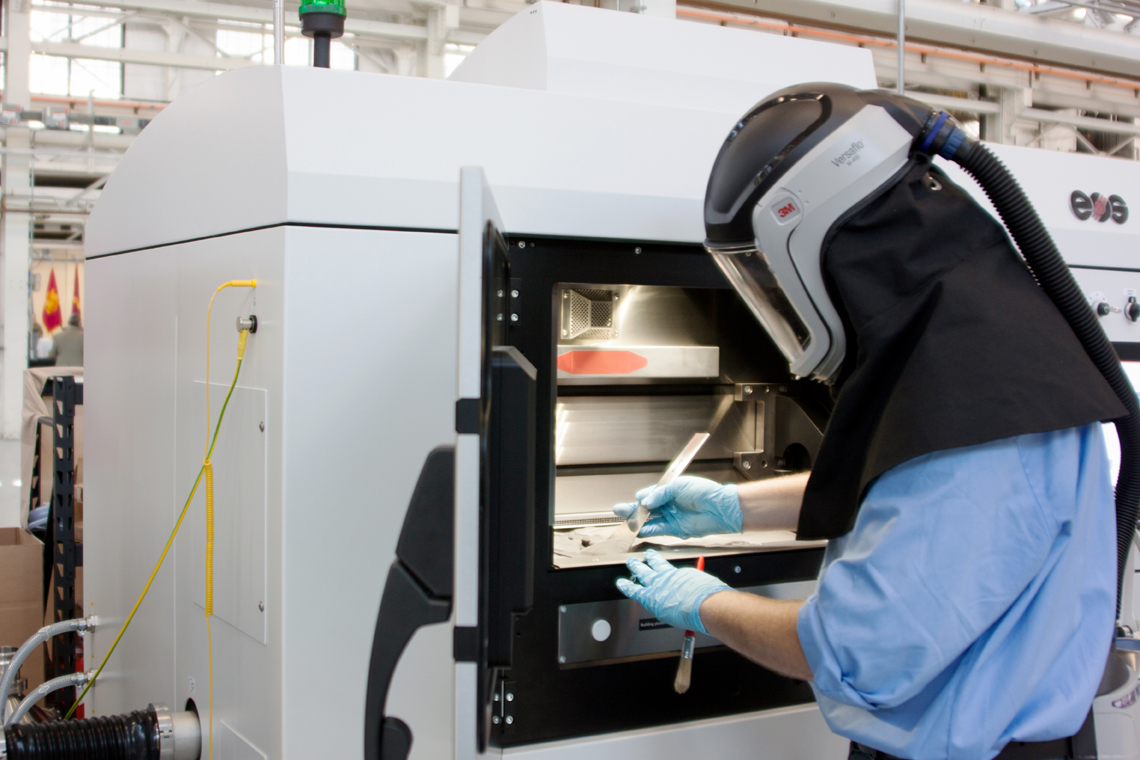
CENTER OF EXCELLENCE
Prototype parts are 3D-printed in May at the new Advanced Manufacturing Center of Excellence at Rock Island Arsenal – Joint Manufacturing and Technology Center (RIA–JMTC). The center will serve as the focal point for advanced manufacturing in sustainment matters. (U.S. Army photo by Debralee Best, RIA–JMTC)
In the future, advanced manufacturing techniques like 3D printing could allow Soldiers to replace parts for systems and equipment almost at the point of need. Back home, the use of artificial intelligence and robotics on the factory floor could streamline and optimize the manufacturing process, saving time and other resources. New, innovative weapon systems, produced using a variety of advanced manufacturing methods and materials, could give Soldiers superior capabilities necessary to defeat rapidly advancing near-peer adversaries.
But to fully realize these benefits, the Army must embrace advanced manufacturing at the beginning of the acquisition process and incorporate it throughout the life cycle of the system.
FROM CONCEPT TO CAPABILITY
Recently, we’ve heard quite a bit about additive manufacturing—better known as 3D printing—because it’s one of the most understandable and prevalent forms of advanced manufacturing. However, advanced manufacturing is much broader than just 3D printing; it includes both new ways to manufacture existing products and new products resulting from advances in technology. (See sidebar, “Optimized by Design,” on Page 108.) It often combines new manufacturing techniques with traditional methods; for example, 3D-printing a part and then using machining and heat treating to get the desired surface finish and material properties, all the while using robotic monitoring for quality control.
Advanced manufacturing has the ability to fundamentally change the way we design, deliver, produce and sustain our capabilities. It can allow us to modernize and innovate our systems like never before. It can decrease design limitations imposed by traditional manufacturing methods and allow us to more easily produce complex parts. Let’s look at an example. Traditionally, an aircraft engine component may be the combination of 200 parts that are welded together into a complex design. But what if, instead of welding together 200 distinct, intricate parts, we could 3D-print the whole component as one piece? We’re going from 200 parts to one, eliminating all fusion points—that are really possible failure points—thereby increasing reliability.
It can also enable the production of specialty or tailored items. Helmets, for example, could be customized to fit individual Soldiers. These capabilities will fundamentally change how we design a component; instead of designing around the confines of traditional manufacturing, engineers can concentrate on the design that achieves the greatest operational performance. Advanced manufacturing can also allow us to innovate with unparalleled speed. Using advanced methods, we can quickly produce prototypes, determine if they are viable, and transition them to production faster than ever before.
But to optimize our use of advanced manufacturing, we have to change our thinking about what materials we use as well. That same aircraft engine component we just discussed, which was designed and manufactured using advanced methods, could also be generated using—you guessed it—advanced materials. The use of certain composite materials, such as spun ceramic, allows for components that are lighter than ever before—which is especially critical for things like aircraft components and Soldiers’ equipment.
The Army has begun and will continue to incorporate these advanced methods and materials into all aspects of the system development life cycle.
Beyond the new methods and materials used to produce this component, advanced techniques can also transform the industrial operations at the facility where the component is produced. Combining artificial intelligence, robotics, sensors and a digital network on the factory floor enables the connection between machines, products and people, leading to efficiencies such as improved quality control, predictive maintenance or automatic ordering of supplies. It also allows people to monitor the entire process, from individual machine performance to the environmental conditions in the factory—you can digitally follow a part from raw material to final production.
MODERNIZATION AND READINESS
Advanced manufacturing also provides the promise of production scalability. Producing parts or systems using traditional manufacturing methods requires a significant amount of time and money to establish or restart a production line. Using advanced methods, we can quickly establish a line and increase throughput with one company or by contracting with multiple companies. As a result, advanced manufacturing has the potential to lower the barrier to entry for small businesses because there’s no need for large space and machinery, which is usually required for a large production line.
On top of the modernization benefits just outlined, Dr. Bruce D. Jette, assistant secretary of the Army for acquisition, logistics and technology (ASA(ALT)), is excited about the possibilities these technologies present for Army readiness. If employed to the maximum extent, advanced manufacturing could revolutionize our battlefield logistics footprint through on-demand fabrication of parts close to the point of need, thus reducing the large number of parts that would have to be stored and transported around the globe. Advanced manufacturing can also be used to address obsolete parts, hard-to-get parts and diminishing sources of supply. Previously, in urgent situations, innovative solutions were put together with things like duct tape and wire, but now, with 3D printers, better solutions can be produced.
Currently, the Army is assessing the value and utility of advanced manufacturing in tactical environments through a limited user experiment that began in April 2018.
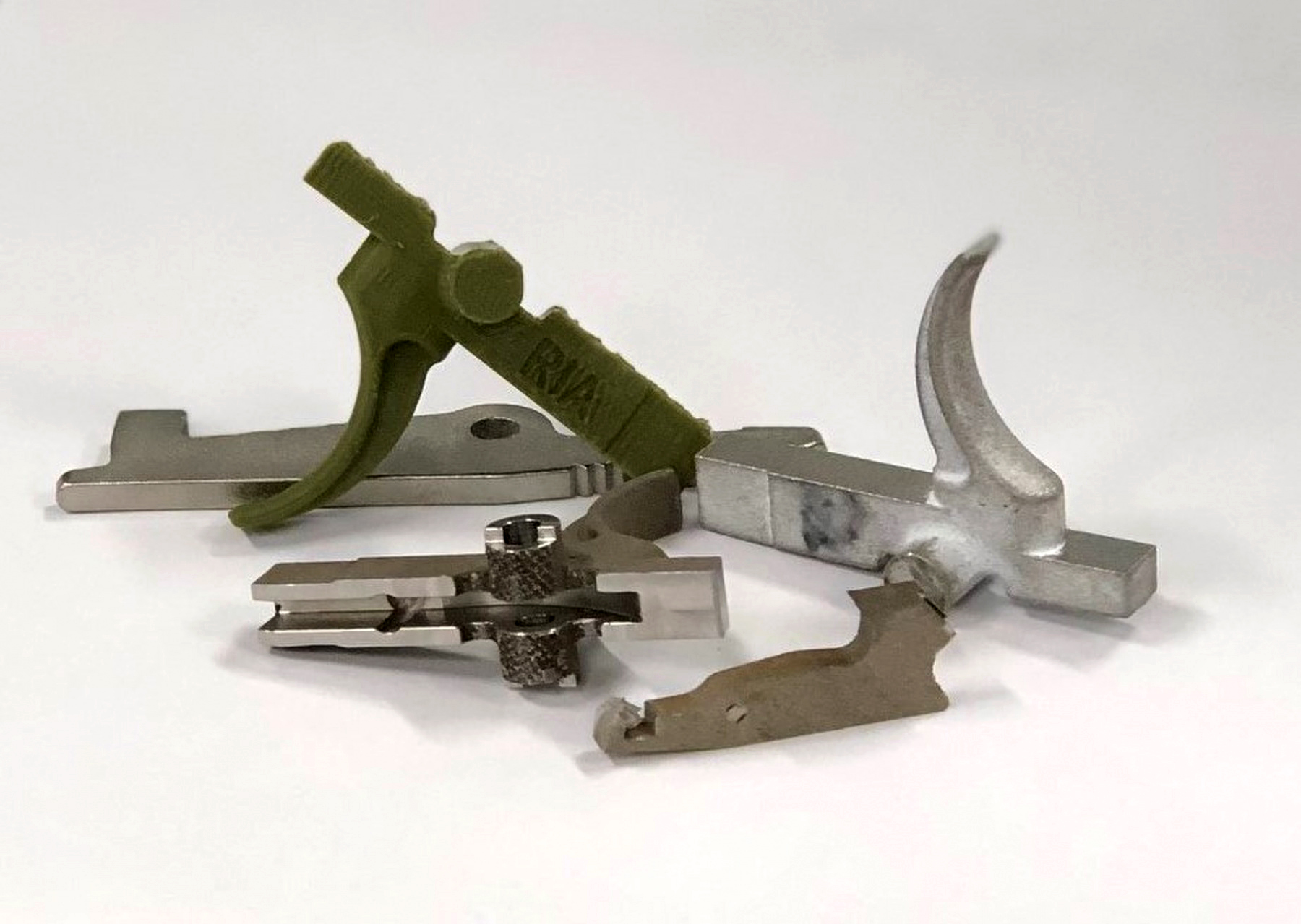
POINT OF NEED
Advanced manufacturing could revolutionize the logistics footprint on the battlefield through on-demand fabrication of parts close to the point of need. Such a capability would reduce the large number of parts that would have to be stored and transported around the globe. (Photo by RIA–JMTC)
The experiment consists of adding 3D scanning and 3D polymer printing capabilities to a select set of 10 metalworking and machining shop sets (MWMSS) fielded by the Product Manager for Sets, Kits, Outfits and Tools in the Program Executive Office for Combat Support and Combat Service Support. The MWMSS system already contains a robust point-of-need metalworking and machining capability, and adding advanced and additive manufacturing tools is expected to increase its ability to address urgent user needs at the tactical edge. Feedback from the experiment will be used to inform future requirements for forward capabilities in advanced manufacturing and the value to the warfighter.
From innovative methods and materials, optimized designs and increased performance to improved industrial operations and enhanced battlefield logistics, advanced manufacturing will deliver on two of the secretary of the Army’s top priorities: modernization and readiness.
POLICY
To implement and fully realize the potential of advanced manufacturing, we are developing an Army advanced manufacturing policy that is scheduled for release in fall 2019. At its core, the policy will direct Army organizations to consider and incorporate advanced manufacturing in all aspects of a system’s life cycle, from early design and development through sust ainment.
Through this policy, we are attempting to move the entire acquisition system toward advanced manufacturing, from the development of requirements, to system design, to production and sustainment. This endeavor will undoubtedly require close coordination and partnership from stakeholders involved across the life cycle of a system. To that end, the policy will apply to the requirements, acquisition and sustainment communities—the U.S. Army Futures Command (AFC), the Office of the ASA(ALT) and the U.S. Army Materiel Command (AMC). We have been working very closely with AFC and AMC, as well as with other key stakeholders, to ensure that the policy takes a holistic approach to address advanced manufacturing in the entire life cycle of a system, and it will be effectively implemented in the coming years.
There are several key elements underpinning the new policy:
- Strategic Investment
First, the Army and its industry partners must actively invest in advanced manufacturing. While transitioning to advanced methods and materials may require significant resources, it will play a critical role in our ability to modernize our weapon systems and industrial base. Others, including near-peer adversaries, are already ahead of us in this endeavor. In order to keep pace, we must begin making investments now. To that end, the policy requires that a holistic, threat-based strategy be developed for the investment in and application of advanced methods and materials. Importantly, executing such a strategy will require partnership from the private sector. - Systemic Adoption
Second, we must incorporate advanced manufacturing upfront and throughout a system’s life cycle. Advanced manufacturing methods and materials will have the largest impact and will provide the greatest return when they are integrated early in system design. As such, the policy directs that advanced manufacturing be incorporated into the upfront design of systems when analysis indicates it offers the best value to the government. To facilitate this, AFC will write capability requirements based on performance and readiness gains made possible by advanced manufacturing methods and materials. For example, harking back to the aircraft engine component I discussed earlier, the reduced weight of critical aircraft parts could be a performance gain that the requirements and acquisition communities seek. Additionally, AFC is now responsible for the laboratories and technical centers within the Army, so they will be developing new manufacturing techniques and materials for use in weapon systems. ASA(ALT) program offices will be responsible for working with industry to incorporate advanced manufacturing into system design and development. As this is the phase where contracts and agreements are entered into with industry, it is where the rubber meets the road.
Currently, companies across industry are employing advanced manufacturing in different ways. Some have fully embraced advanced manufacturing and are incorporating it into production lines, while others are developing an additive manufacturing capability to sell as a service to other companies and the government. We currently are engaging with the breadth of industry to determine the best way to mature and leverage advanced manufacturing and incorporate it into weapon systems.
Advanced manufacturing has the ability to fundamentally change the way we design, deliver, produce and sustain our capabilities.
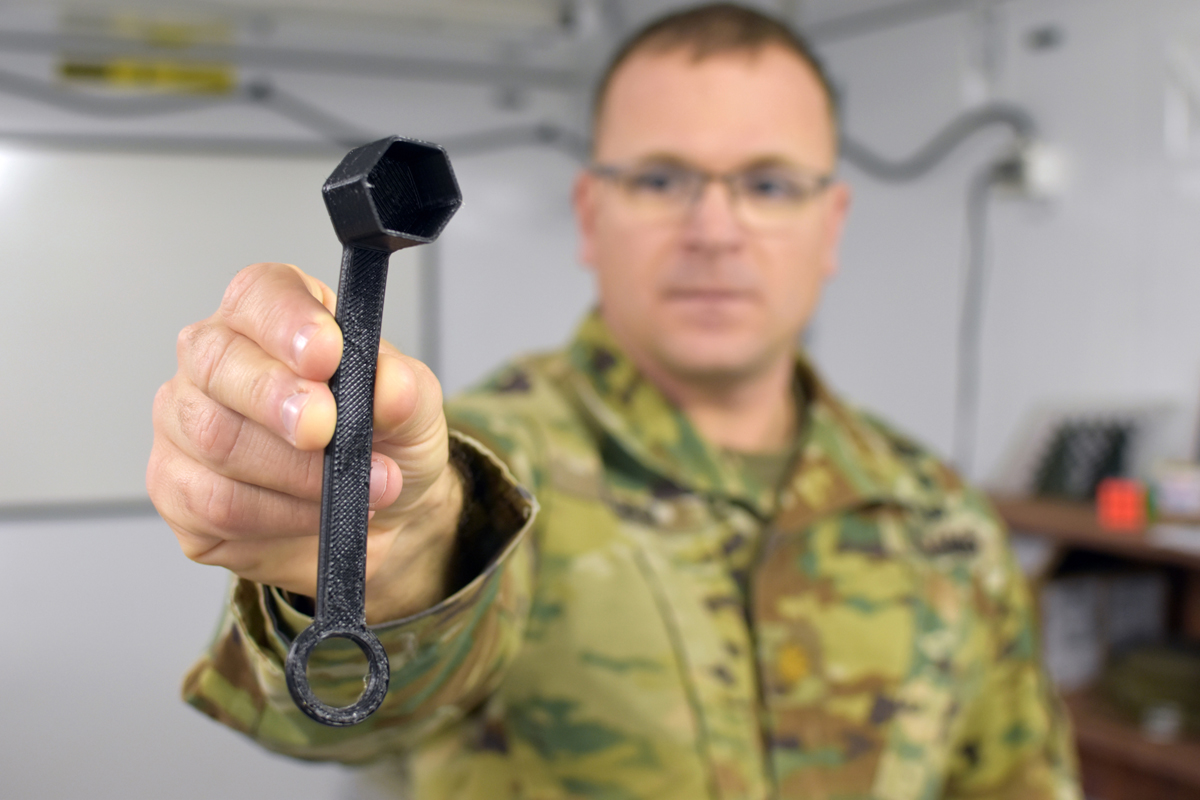
PARTS ON DEMAND
Advanced manufacturing, which includes techniques like 3D printing, could allow Soldiers to print replacement parts —like the one pictured—at their location as a stopgap measure until official replacement parts can arrive from the supply chain. (Photo by Army Staff Sgt. Armando R. Limon, American Forces Network Humphreys)
And on the sustainment side, AMC will be responsible for incorporating advanced methods and materials into already fielded systems when readiness challenges or cost-benefit analyses call for it. AMC will integrate advanced manufacturing into supply chain processes and provide support to tactical units procuring advanced manufacturing equipment and services. AMC has recently established the Advanced Manufacturing Center of Excellence at Rock Island Arsenal, Illinois, which will serve as the focal point for the application of advanced manufacturing in sustainment matters. They are making great strides in using advanced manufacturing to address diminishing sources of supply and obsolescent parts for fielded systems.
- Thoughtful Use
Finally, we must deliberately and thoughtfully leverage advanced manufacturing. It is worth noting that advanced manufacturing is not appropriate for all systems and all situations, and that certain considerations must be made before its use. The policy takes care to provide flexibility to Army organizations to determine whether to use advanced manufacturing, based on cost-benefit analysis and anticipated value to the government. Incorporating advanced manufacturing into already fielded systems takes time, money and significant engineering analysis, but in some cases, it is warranted to increase readiness. Further, the policy requires that any readiness and performance benefits offered by advanced manufacturing be balanced with warfighter safety, which is always of the utmost importance. For example, only organizations that are authorized and trained to work with explosives may fabricate or modify such items.
Lastly, and importantly, when pursuing advanced manufacturing, we must carefully consider intellectual property matters. Consistent with the Army’s recently released intellectual property policy, program offices must plan early for the intellectual property required to support advanced manufacturing, negotiate with industry for the necessary—not all—intellectual property and for the license rights to use it, and communicate these requirements early and often. With the transformation of engineering and manufacturing, we must also look to new ways to manage intellectual property. For example, if we are considering 3D-printing parts close to the point of need during sustainment, a good approach to handling intellectual property might be a fee-based agreement, or “pay-to-print.” Instead of spending a lot of money for an extensive intellectual property license, the Army could pay a reasonable fee to the company that holds the intellectual property every time a part is printed.
This policy represents the first Armywide step toward truly leveraging the immense potential of advanced manufacturing. We will look to work with partners across the Army, DOD and industry as we implement the policy in the coming months and years.
CONCLUSION
Undoubtedly, these technologies will fundamentally change the way the Army designs, develops, produces and sustains systems. The Army has begun and will continue to incorporate these advanced methods and materials into all aspects of the system development life cycle. The technologies involved in advanced manufacturing techniques are complex and rapidly evolving, and commercial industry and our adversaries are already well on their way.
We must start down the same path as quickly as possible to maintain our readiness and overmatch. The future of the Army’s readiness and modernization lies with advanced manufacturing.
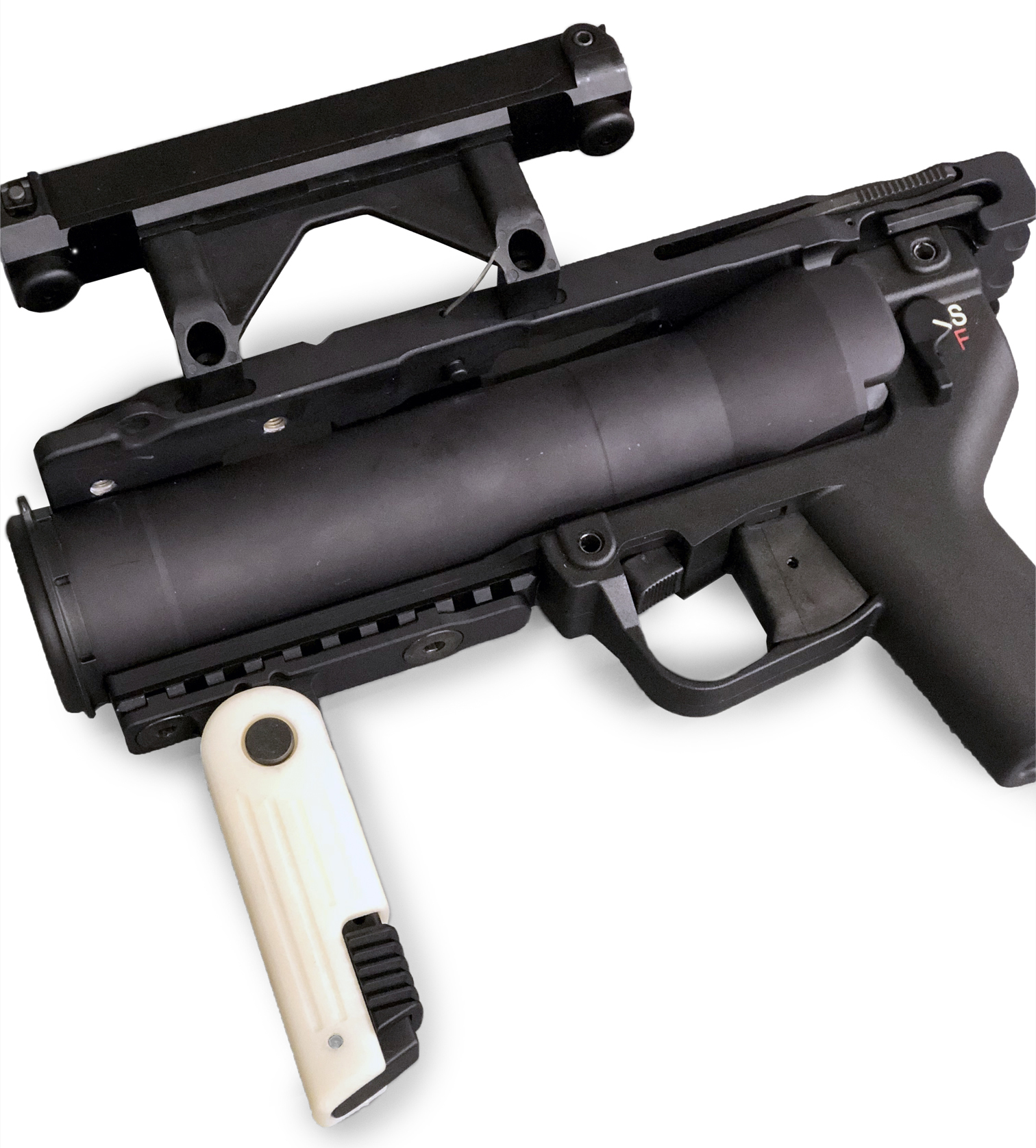
MANAGING IP AND 3D
Printing parts at the point of need during sustainment will need a good approach to handle intellectual property—like a fee-based agreement, or “pay-to-print” concept, whereby the Army could pay a fee to the company that holds the IP every time a part is printed. (U.S. Army photo)
For more information, go to https://www.asaalt.army.mil/About-Us/Deputies-Assistant-Secretary-of-the-Army.
DR. ALEXIS LASSELLE ROSS serves as deputy assistant secretary of the Army for strategy and acquisition reform. She is the principal adviser to ASA(ALT), responsible for the design and implementation of acquisition reform and modernization initiatives. She holds a Ph.D. in public policy from George Mason University, an M.S. in national security and strategic studies from the Naval War College and a B.A. in international relations from Bucknell University.
OPTIMIZED BY DESIGN
In the future, what we call advanced manufacturing today will just be manufacturing. That doesn’t mean it will be obsolete, just that it will get more advanced. Henry Ford’s revolutionary assembly line is both outdated and not. We have plenty of assembly lines, just as Ford envisioned, but they’re vastly more efficient and effective—something he probably did not foresee. Even assembly lines outfitted in the past 30 years or so are no longer considered advanced, because the central quality of advanced manufacturing is that the technologies used are cutting-edge and near fruition.
“Computer numerical control [NC] in machining was considered advanced manufacturing in 1980,” said H. Edward Flinn, director of the Advanced Manufacturing Center of Excellence at Rock Island Arsenal – Joint Manufacturing and Technology Center (RIA–JMTC). “It shifted the workload from the shop floor, where a machinist manually operated a cutting tool path, to the office environment where an NC programmer wrote computer code to control the tool path.” Advanced manufacturing via artificial intelligence and feature-based recognition—algorithms that classify by feature—are now working “to minimize the need for NC programmers in the platform that would be used to machine a part, the tools that will be used and, of course, the tool path.”
The Advanced Manufacturing Center of Excellence reached full operational capacity in May. Its ultimate goal is to improve Soldier readiness, said Flinn. To do that, the center plans to use advanced manufacturing methods such as process simulation, artificial intelligence, and 3D printing or additive manufacturing.
Flinn worked closely with the Army development and engineering centers (the former DECs, now part of the U.S. Army Combat Capability Development Command) to specify the capabilities the center of excellence should house. He has coordinated with HQDA to help develop a policy on supporting tactical use and requirements of advanced manufacturing, and has begun working with organic industrial base locations on their advanced manufacturing needs. Not only has the center been working with the organic industrial base, but it has also been working with private industry, academia and the other services to leverage their best practices, he said.
Flinn said 3D printing offers point-of-use fabrication options, is competitive for small production and is a new method of manufacturing that opens up design freedom. In the past decade, 3D printing has gone from a method of making prototypes with little manufacturing applicability to becoming an integral part of the manufacturing process. Improvements in printing speed and accuracy, materials, cost and computer modeling-and-simulation systems have dramatically accelerated the technology’s use in manufacturing, he said. The technology can help the tactical Army right now, by providing on-demand, temporary replacement parts, he added.
While the center is currently focused on 3D printing, other advanced manufacturing techniques are being introduced into mainstream processes within RIA–JMTC. Those include the use of robotics, process simulation and material optimization, Flinn said. “Robotics is being used at the arsenal in the welding and investment casting processes to remove repetitive motion and improve process stability.” Investment casting comprises precise wax parts created using an injection-molding machine and a die that contains the shape of the part to be made, Flinn said. Smaller parts can be attached to a tree—a frame that enables batch-creation of the parts’ shells. This process can create almost any part for any piece of equipment—any part that can be created in wax can go through this process.
The wax object is then dipped in and coated with a wet refractory material—a ceramic slurry and sand that, when hardened, won’t be degraded by heat—and then the whole assembly goes to an autoclave that melts the wax away for reclamation, then on to the furnace to harden the ceramic refractory material, creating a shell. Any wax that’s left will be burned away in the furnace. Then, metal goes into the mold to make the part. Robotics helps to increase the efficiency, volume and speed of the process. Robotics “also allowed us to expand weight of the [investment casting] mold, which increased our yield and our range of parts that we could [make bigger]. The robot’s job is finished once the ‘dipping’ of the shell is completed. From there, it is removed from the process and hand-delivered to all follow-on operations.” (For more on how the process works, go to https://www.facebook.com/RIAJMTC/videos/670254872464/?v=670254872464.)
The center is also using process simulation whereby “we can, through mathematic models, recreate solidification and stress that are induced during the transformation of metal from a liquid to a solid.” This, Flinn continued, reduces the need to have a casting expert on hand. It also helps to reduce costs by eliminating trial-and-error iterations on the shop floor. “The present system has shifted the need from a casting [expert] to a modeling and simulation [expert].” That parallels what happened with computer numerical control machining after its introduction.
Artificial intelligence has the potential to aid in shifting repetitive tasks from humans to machines—for example, combining artificial intelligence with process simulation. “In combining the two, much of the human interface necessary to write NC programs, prepare process plans, design tooling and manage the logistic chain will be minimized, if not eliminated,” Flinn said.
Advanced manufacturing will be key to the Army’s future overmatch capabilities. “It provides opportunities to improve readiness, optimize design and lethality, drive down cost and expand the manufacturing base,” he said.
—JACQUELINE M. HAMES