
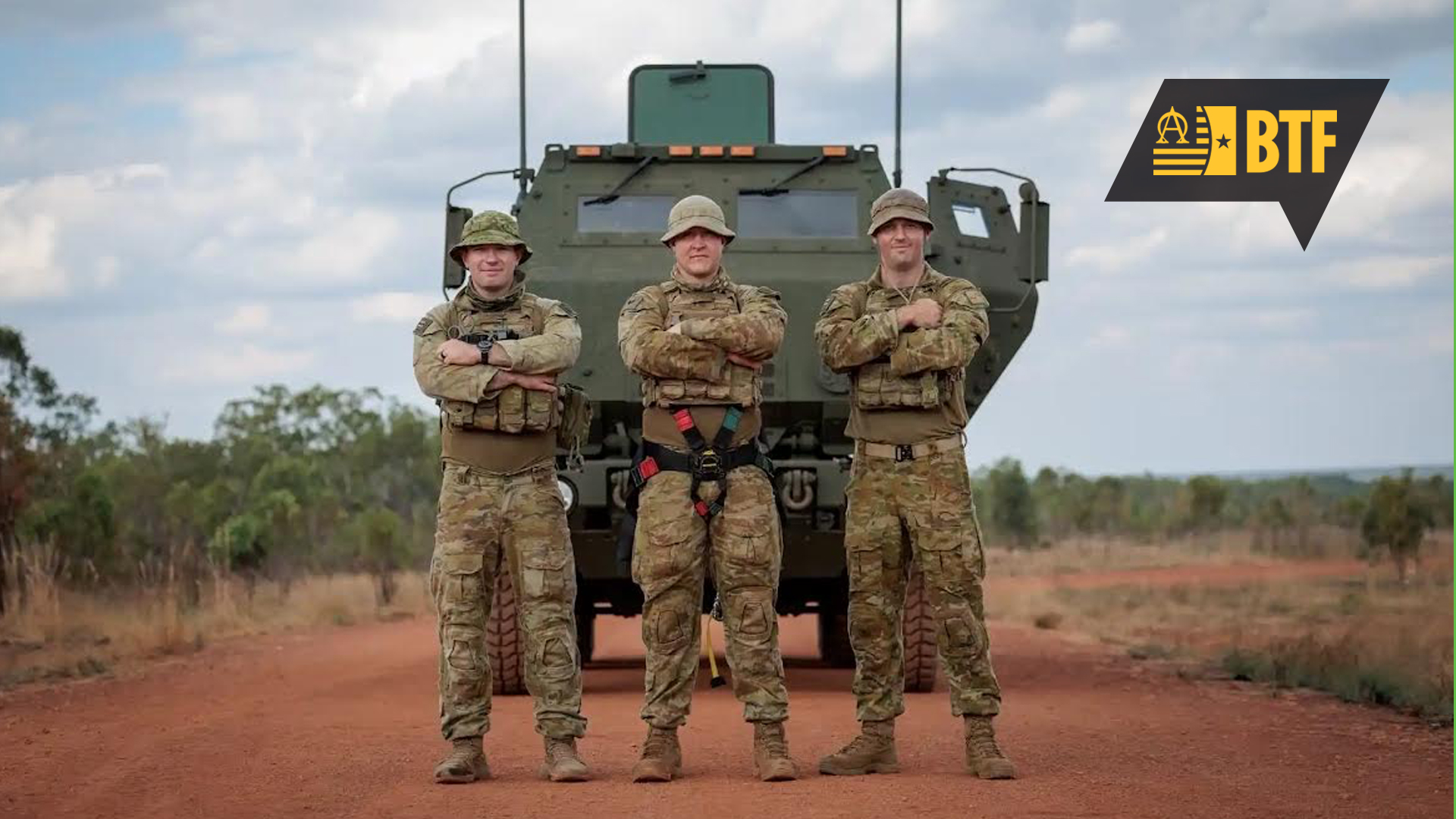
Australian Army soldiers Private Sebastian Jayne, left, Bombardier Charlie Vera, center, and Gunner Zaryn Monson, right, from 54 Siege Battery, 14th Regiment, Royal Australian Artillery, stand in front of a HIMARS after firing a PrSM at Mount Bundey Training Area, Northern Territory during Exercise Talisman Sabre 2025. (Photo by Cpl. Cameron Pegg, Australian Army)
PRECISION STRIKE MISSILE SUCCESS AT TALISMAN SABRE
by Lt. Col. Zach Lewis and Lt. Col. Joel Tarleton
The first ever launch of a Precision Strike Missile (PrSM) from an Australian High Mobility Artillery Rocket System (HIMARS) during Exercise Talisman Sabre 2025 marked more than just another successful weapons demonstration. It represented a pivotal moment in the U.S. Army’s most critical modernization priority, Long Range Precision Fires (LRPF), and demonstrated the accelerated timeline of capability delivery that has become the hallmark of this transformational effort.
Conducted at Mount Bundey Training Area in Australia’s Northern Territory, the live-fire demonstration showcased the precision and lethality that defines next-generation land-based strike capabilities. The Australian HIMARS launcher precisely engaged a target hundreds of kilometers downrange, validating years of development work and bilateral cooperation between the United States and one of its most strategically important Indo-Pacific allies.
STRATEGIC CONTEXT AND OPERATIONAL SUCCESS
From July 13-August 14, 2025, Exercise Talisman Sabre 2025—featuring over 35,000 participants from 19 nations—provided the perfect backdrop for this capability demonstration. The exercise’s scale and complexity offered a realistic operational environment to test not just PrSM’s technical performance, but its integration into joint and multinational operations, a critical requirement for future Indo-Pacific contingencies.
The timing of this demonstration carries particular significance given the evolving security environment in the region. China’s expanding military presence, including dual aircraft carrier operations in the Western Pacific and naval task group circumnavigation of Australia, has heightened the importance of credible deterrent capabilities. The successful PrSM live-fire demonstration sends a clear message about allied resolve and capability to maintain regional stability.
What makes this achievement particularly noteworthy is the accelerated delivery timeline. The demonstration occurred years ahead of schedule, following delivery of Australia’s first PrSM missile a year early and HIMARS launcher arriving two months ahead of contracted dates. This acceleration reflects the Army’s commitment to rapid fielding capability and the mature nature of the PrSM system in contrast to traditional acquisition programs that often face delays and cost overruns.
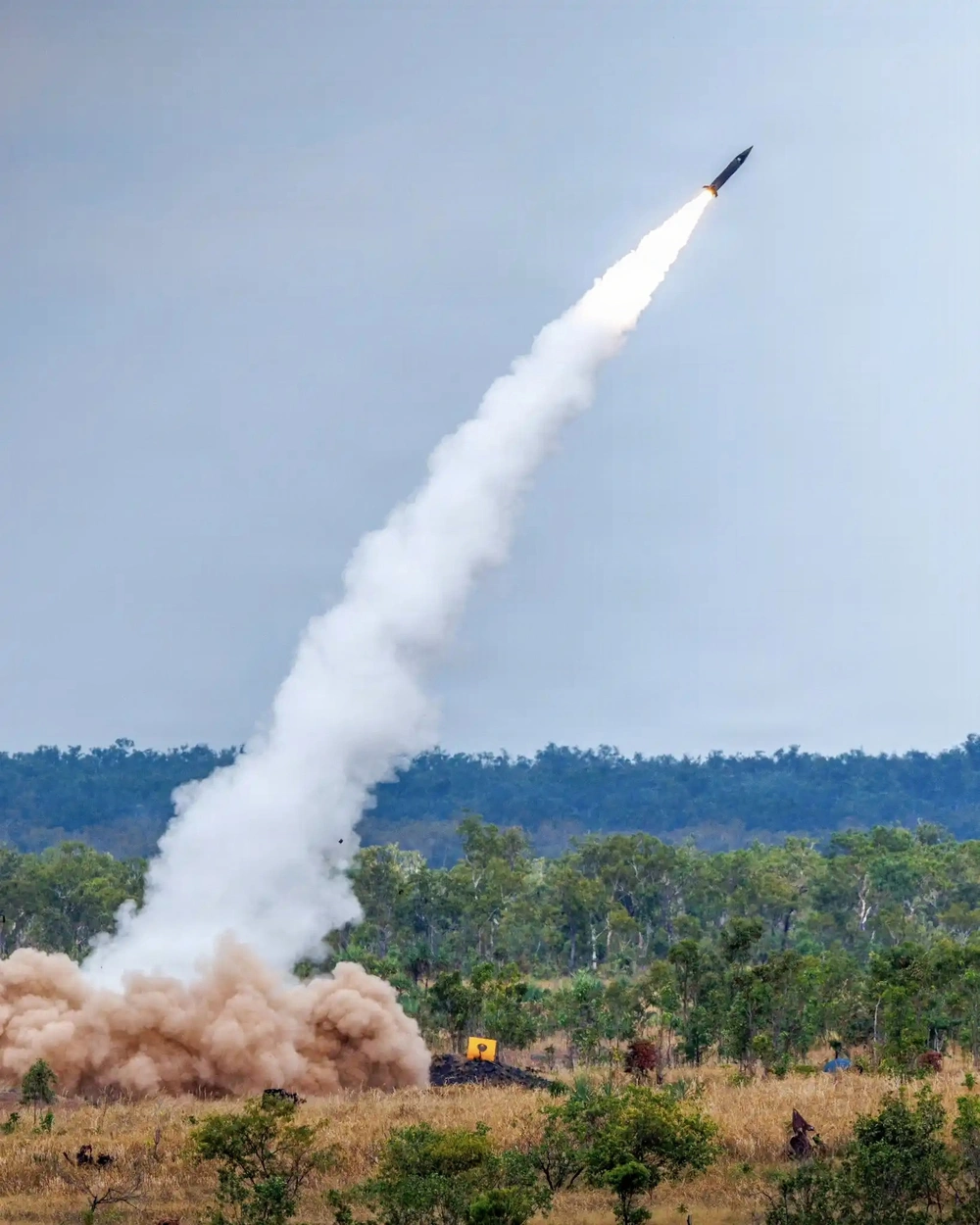
An Australian Army HIMARS from 14th Regiment, Royal Australian Artillery, fires a PrSM from Mount Bundey Training Area, Northern Territory during Exercise Talisman Sabre 2025. (Photo by Cpl. Cameron Pegg, Australian Army)
PRSM: THE FOUNDATION OF ARMY MODERNIZATION
PrSM represents the Army’s answer to regaining overmatch in long-range precision fires, a capability area where near-peer competitors had achieved temporary advantages. Designed to replace the aging Army Tactical Missile System (ATACMS), PrSM offers substantially improved range, speed and accuracy while maintaining compatibility with existing HIMARS and Multiple Launch Rocket System platforms (See “Then & Now ATACMS to PRSM: Out with the Old In With the New,” in the Summer 2024 issue of Army AL&T).
PrSM doubles the payload capacity of HIMARS launchers, which can carry two PrSM missiles compared to a single ATACMS. The missile’s modular, open-systems architecture provides the foundation for continuous capability growth through planned incremental upgrades—a design philosophy that ensures the weapon system can evolve to meet emerging threats.
The system’s survivability represents another critical advantage. Engineered to penetrate sophisticated anti-access/area denial environments, PrSM can counter advanced air defense systems deployed by near-peer adversaries. This extended range stand-off capability is essential for operations in contested environments where traditional air assets might face significant threats.
INCREMENTAL MODERNIZATION STRATEGY
The Army’s approach to PrSM development embodies the service’s broader commitment to continuous modernization through incremental capability improvements. Rather than pursuing revolutionary leaps that carry higher risk and longer development timelines, the Army has adopted an evolutionary approach that delivers enhanced capabilities at regular intervals.
Increment 1: Increased Range and Lethality
The first batch of Early Operational Capability PrSM Increment 1 missiles were delivered to the U.S. Army in 2023. The program has sustained extensive flight testing and evaluation. In July 2025, the PrSM Increment 1 program achieved Milestone C approval, signaling the program’s transition into the Production and Deployment phase.
Increment 2: Enhanced Target Engagement
The next major milestone in PrSM development involves Increment 2, featuring a multi-mode seeker to address moving maritime and relocatable land targets. This advancement will transform the PrSM from a precision strike weapon limited to stationary targets into a dynamic system capable of prosecuting mobile threats across multiple domains.
Increment 2 represents a particularly significant capability enhancement. By providing land-based forces with the ability to engage maritime targets, the Army is fundamentally altering the calculus of littoral warfare. This capability enables asymmetric advantages against traditional naval formations, allowing relatively small ground units to contest maritime domains previously dominated by expensive naval platforms.
Future Increments: Extended Range and Advanced Capabilities
Looking beyond Increment 2, the Army’s LRPF modernization roadmap envisions PrSM variants with ranges out to 1,000 kilometers. These extended-range variants will leverage advanced propulsion systems and aerodynamic improvements to dramatically expand operational reach, enabling engagement of strategic targets from greater standoff distances.
The integration of artificial intelligence (AI) and machine learning algorithms represents another transformational upgrade path. AI-enhanced seekers will provide improved target discrimination in complex environments where adversaries employ deception and camouflage.
Multidomain targeting integration will connect PrSM systems to space-based sensors, aerial platforms and ground-based intelligence assets through resilient communication networks. This capability will enable rapid target hand-offs and prosecution across joint force operations, maximizing the effectiveness of each missile by ensuring optimal target selection and engagement timing.
WARHEAD DIVERSIFICATION AND TACTICAL FLEXIBILITY
The Army’s commitment to PrSM modernization extends beyond guidance and propulsion improvements to encompass specialized warhead development. Future variants will offer commanders flexible engagement options tailored to specific threat environments and mission requirements.
Penetrating warheads designed for hardened targets will enable prosecution of underground command centers, reinforced bunkers and other fortified positions that represent high-value enemy assets. These specialized munitions will incorporate advanced fusing and penetration technologies to ensure effectiveness against increasingly sophisticated defensive construction.
Area-effect munitions represent another capability enhancement, providing the ability to engage distributed targets such as vehicle formations, logistics nodes and personnel concentrations. These warheads will maximize effectiveness against targets where precise point impact is less critical than broad area coverage.
The development of electronic warfare and cyber-capable warheads offers another potential evolution, enabling PrSM to disrupt enemy communications and electronic systems without kinetic destruction. Such capabilities would prove particularly valuable in scenarios requiring reversible effects or minimized collateral damage.
ALLIED INTEGRATION AND COOPERATIVE DEVELOPMENT
The success at Talisman Sabre exemplifies the Army’s strategic approach to allied integration in capability development. Australia’s participation as a full cooperative partner in the PrSM program represents more than just an export sale, it reflects a deep partnership in capability development, production and sustainment that enhances both nations’ security while sharing costs and risks.
This cooperative approach extends beyond bilateral relationships to encompass broader alliance structures. The interoperability demonstrated during Talisman Sabre validates the Army’s vision of seamless coalition operations where allied forces can share targeting data, coordinate fires and achieve effects that exceed the sum of individual national capabilities.
Under Australia’s Guided Weapons and Explosive Ordnance Enterprise, Lockheed Martin Australia will commence domestic production of guided munitions, including PrSM variants. This distributed production approach enhances supply chain resilience, while providing allies with indigenous manufacturing capabilities that reduce dependence on single-source suppliers.
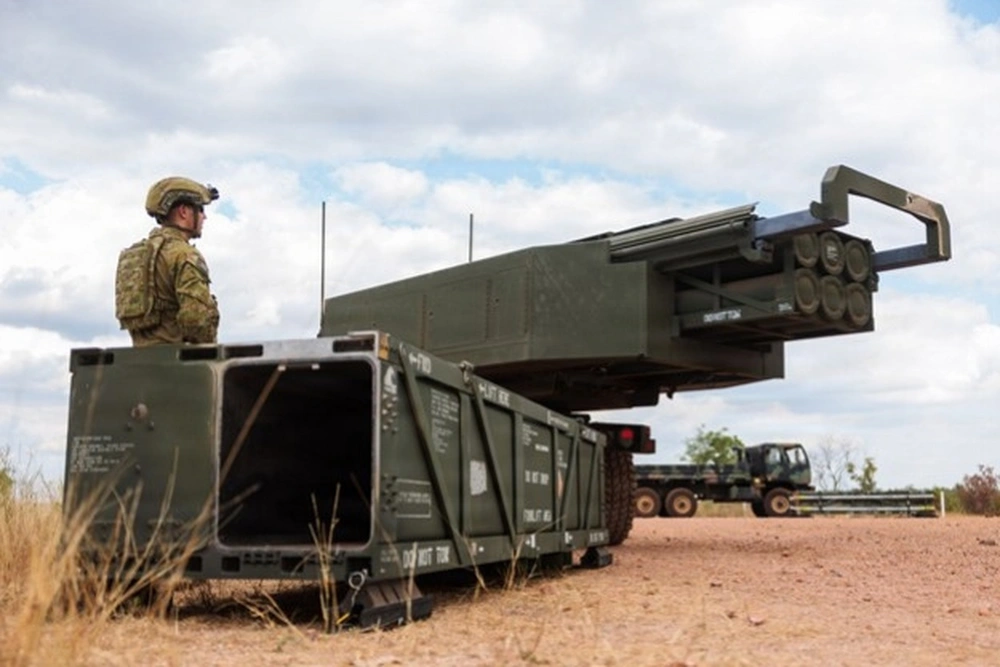
Australian Army soldier Gunner Zaryn Monson from 54 Siege Battery, 14th Regiment, Royal Australian Artillery, loads a Guided Multiple Launch Rocket System onto a HIMARS after firing a PrSM at Mount Bundey Training Area, Northern Territory during Exercise Talisman Sabre 2025. (Photo by Cpl. Cameron Pegg, Australian Army)
TECHNOLOGICAL MATURITY AND RAPID FIELDING
The ahead-of-schedule performance demonstrated throughout the Australian PrSM program reflects the technological maturity that the Army has achieved through focused investment and streamlined urgent capability acquisition processes. Unlike developmental systems that require extensive testing and refinement, the PrSM has proven its reliability and effectiveness across multiple test scenarios and operational environments.
This maturity enables the Army to pursue aggressive fielding timelines while maintaining high confidence in system performance. The service’s approach to rapid capability delivery represents a fundamental shift from traditional acquisition methodologies that emphasized extensive testing and validation before operational deployment.
The Army’s LRPF Cross-Functional Team has driven this accelerated development through streamlined decision-making, reduced bureaucratic overhead and direct communication channels between requirements developers and system integrators. This organizational approach has proven so effective that it has become a model for other modernization priorities across the service.
STRATEGIC IMPLICATIONS AND FUTURE OPERATIONS
The successful PrSM demonstration at Talisman Sabre validates the Army’s strategic vision of land forces as critical enablers of joint operations across the Indo-Pacific’s vast distances. By providing theater-level strike capabilities from land-based platforms, the Army is offering combatant commanders flexible options that complement air and naval assets, while presenting adversaries with multiple dilemmas.
The ability to rapidly deploy HIMARS systems via C-130 and C-17 aircraft, as demonstrated through the Christmas Island deployment during Talisman Sabre, provides unprecedented strategic flexibility. This rapid deployment capability enables the Army to establish land-based fires positions across distributed locations, complicating adversary targeting while extending effective engagement ranges through forward positioning.
The deterrent value of these capabilities extends beyond their kinetic effects to encompass the uncertainty they create for potential adversaries. The unpredictable appearance of land-based precision fires in multiple locations forces adversaries to consider threats from unexpected vectors, complicating their planning and resource allocation.
CONCLUSION
The PrSM success at Talisman Sabre represents more than a technical achievement, it demonstrates the U.S. Army’s unwavering commitment to maintaining technological superiority through continuous modernization and allied partnership. The accelerated delivery timelines, enhanced capabilities and operational flexibility showcased during this exercise validate the service’s strategic approach to LRPF development.
As the Army continues advancing through planned PrSM increments, each enhancement will provide combatant commanders with increasingly sophisticated options for engaging threats across multiple domains. The combination of extended range, enhanced accuracy and diverse warhead options will ensure that land-based precision fires remain a cornerstone of American military superiority.
The success at Talisman Sabre proves that the Army’s modernization strategy is delivering real capabilities to operational forces ahead of schedule and within budget. This achievement should provide confidence that the service’s commitment to LRPF modernization will continue yielding decisive advantages for the joint force in an increasingly complex and contested global security environment.
Through sustained investment, innovative acquisition approaches and deep allied partnerships, the Army is transforming its LRPF capabilities at unprecedented speed. The PrSM program represents the foundation of this transformation, with future increments promising even greater capabilities that will ensure American land forces remain decisive in large-scale combat operations against any potential adversary.
For more information, go to https://www.army.mil/PAEFires.
COL. ZACH LEWIS is the product manager for the Precision Strike Missile Program, Portfolio Acquisition Executive Fires.
COL. JOEL TARLETON is the Australian deputy product manager within the Cooperative Program Office.