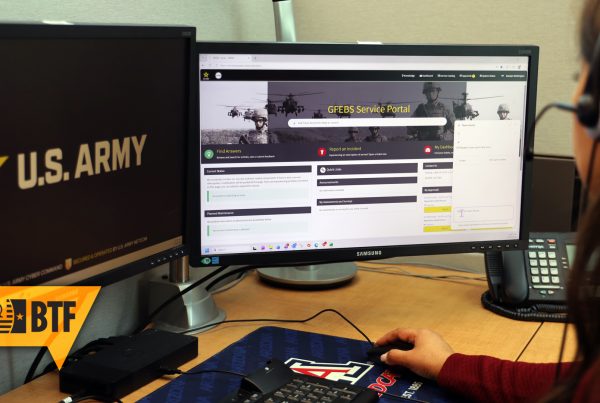
The Army is embracing low-code solutions to rapidly develop and deploy applications with minimal hand-coding, resulting in faster time-to-production, lower costs and greater agility in responding to changing mission requirements.
A look at acquisition in action.
The Army is embracing low-code solutions to rapidly develop and deploy applications with minimal hand-coding, resulting in faster time-to-production, lower costs and greater agility in responding to changing mission requirements.
The M139 Volcano System is a rapidly deployable anti-vehicular mine dispensing system that counters enemy mobility and provides strategic advantages in diverse operational scenarios.
Built to deliver decisive effects from standoff distances, these systems are rapidly moving from concept to operational use.
The Army’s acquisition reform is beginning to show tangible results, as early actions taken under the new portfolio acquisition executive (PAE) construct translate strategic intent into measurable progress.
The ECTDP are Army initiatives created to produce senior civilian leaders with an enterprise perspective.
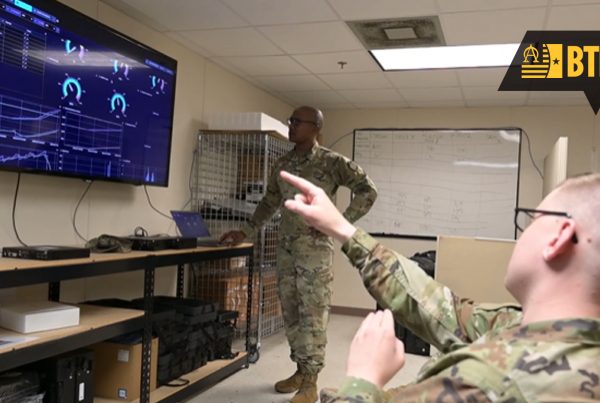
In 2025, my team within the Soldier Evaluation Directorate won the U.S. ATEC’s AI Challenge with a tool that could draft the first version of an AEP.
The nature of warfare is in constant flux, and with it, the demands on military logistics. As the U.S. Army shifts its focus toward Large-Scale Combat Operations (LSCO) and confronts the challenges of Anti-Access/Aerial Denial (A2/AD) environments, the ability to sustain dispersed forces becomes a principal concern.
Traditional approaches to Army prototyping efforts have been known to move at a lackluster speed, letting ideas gather dust, while near-peer adversaries field “good enough” solutions to operational units. FUZE is the U.S. Army’s flagship innovation program, which adopts a venture capitalist (VC) model to expedite military technology development.
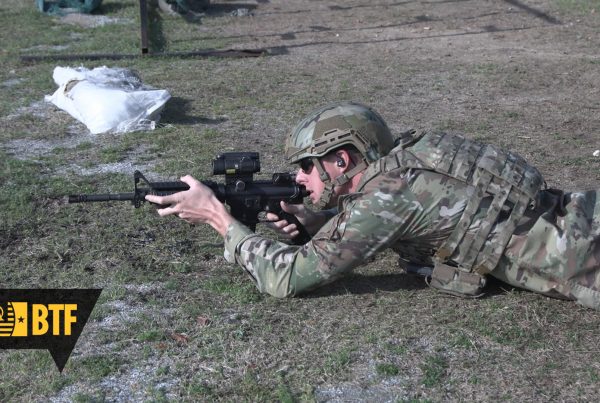
As the Army enhances Soldier lethality, Joint Program Executive Office for Armaments and Ammunition’s (JPEO A&A) Product Manager (PdM) Small Caliber Ammunition is developing the XM1224 Hybrid-Anti Materiel Round (HAMR) precision cartridge for the MK22 Precision Sniper Rifle.
The United States Army Communications-Electronics Command (CECOM) Software Engineering Center (SEC) will transfer the life cycle sustainment responsibilities of the Wideband Satellite Communications (SATCOM) Operational Management System (WSOMS) to the United States Space Force (USSF) in fiscal year 2026.
Near-peer adversaries now field a sophisticated arsenal of aerial threats capable of executing complex, multidomain attacks designed to overwhelm traditional defenses.
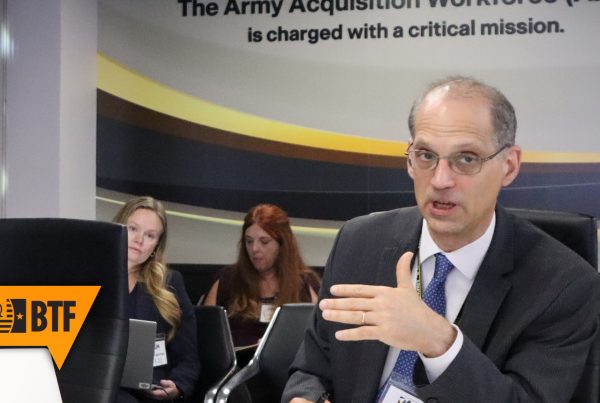
The DACM mission is to recruit, train and retain an agile, adaptive and professional workforce with the acquisition acumen and critical thinking skills to accelerate delivery capability to Soldiers.
New threat set is causing commanders to re-think the employment of armored formations, underscoring a fundamental shift in modern combat dynamics.
Foreign military sales, or FMS, is a cornerstone of U.S. security cooperation, enabling partner nations to acquire American military equipment and services.
The Army’s Joint Program Executive Office Armaments and Ammunition (JPEO A&A) is celebrating the success of its direct-hire Program Analysis Intern Program launched in 2021.
The Army launched its most ambitious procurement overhaul in decades—designed to slash bureaucracy, fast-track innovation and sharpen organizational agility.
Army agencies gathered to demonstrate their latest scientific and technological achievements on Fort Belvoir, Virginia. Among the demonstrations were key technologies from U.S. Army Engineer Research and Development Center (ERDC)…
Digital engineering and modeling and simulation (M&S) are transformative approaches that enable precision, efficiency and innovation in munitions production and warfighter capabilities.
The Army’s ability to adapt and innovate in real time is critical to mission success on the modern battlefield.
The U.S. Army prioritizes a shift to faster, more agile software development and acquisitions to deliver defensive cyber operations.
By directly enhancing capabilities in protection, intelligence, movement and maneuver, fires and sustainment, biometrics provide an operational edge.