
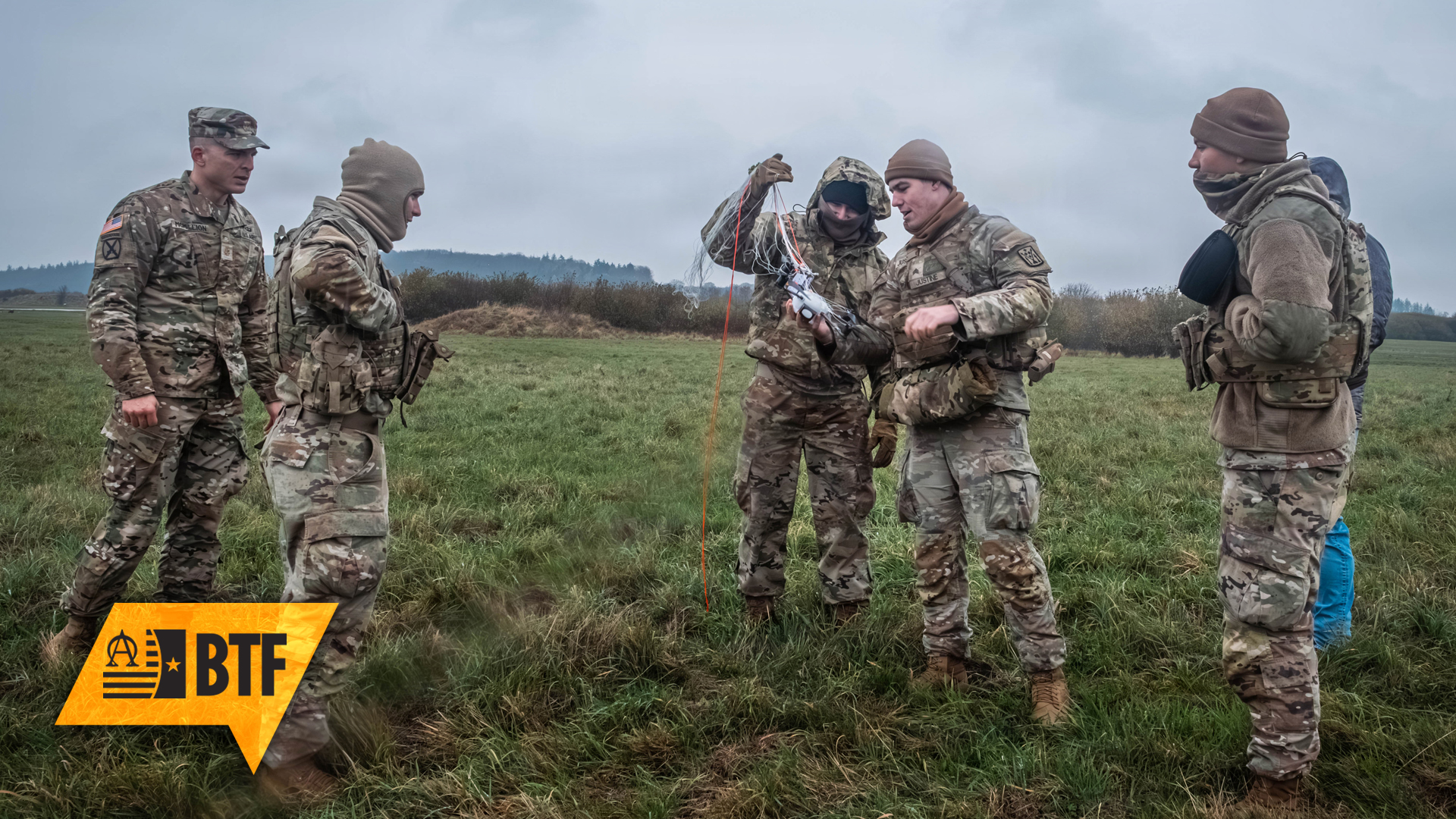
Army air defenders with 5th Battalion, 4th Air Defense Artillery Regiment, examine a captured drone during Project Flytrap 4.5, on November 19, 2025—part of a future where acquisition reform speeds delivery of advanced counter-drone capabilities to the force. (Photo by Staff Sgt. Yesenia Cadavid, 10th Army Air and Missile Defense Command)
THE ARMY’S 2025 ACQUISITION REFORMS REVOLUTIONIZE PROCESSES TO EXPEDITE CUTTING-EDGE CAPABILITIES
by Cheryl Marino
On November 7, 2025, the Army launched its most ambitious procurement overhaul in decades—designed to slash bureaucracy, fast-track innovation and sharpen organizational agility. Central to this vision is the Pathway for Innovation (PIT), a dedicated acquisition reform office anchoring this transformation and ensuring strategic alignment and operational impact.
By streamlining processes and consolidating oversight under newly empowered portfolio acquisition executives (PAEs), the reform strengthens unity across the Army enterprise—enabling the Army and its workforce to develop, test and field cutting-edge capabilities faster than ever before.
The six PAE organizations place a single leader in charge of every major aspect of their assigned capability area—requirements, science and technology, contracting, acquisition, testing, programming, sustainment and international sales—to oversee and integrate disparate acquisition functions across the enterprise; creating clear ownership, accountability and streamlined decision-making. Additionally, each PAE will have an embedded senior contracting official with the authority to award contracts quickly, eliminating bottlenecks and simplifying the process for industry.
This restructuring replaces current program executive offices (PEOs) with a structure that aligns programs under broader capability portfolios ensuring resources, priorities and outcomes are better synchronized across the Army’s modernization efforts.
The new PAE construct includes:
- Maneuver Air (PEO Aviation, Rapid Capabilities and Critical Technologies Office (RCCTO)).
- Maneuver Ground (PEO Soldier, PEO Combat Support and Combat Service Support (CS&CSS), PEO Ground Combat Systems (GCS)).
- Fires (PEO GCS, PEO Missiles and Space (M&S), Joint Program Executive Office for Armaments and Ammunition (JPEO A&A), RCCTO).
- Agile Sustainment and Ammo (JPEO A&A).
- Layered Protection and Chemical, Biological, Radiological and Nuclear Defense Command and Control (JPEO for Chemical, Biological, Radiological and Nuclear Defense (CBRND), PEO Intelligence, Electronic Warfare and Sensors (IEW&S)).
- Counter Command and Control (PEO for Simulation, Training and Instrumentation (STRI), PEO IEW&S, PEO Command, Control, Communications and Network (C3N)).
“Under the current fragmented process, accountability is distributed across multiple organizations and functions, creating misalignment between critical stakeholders,” said Brent Ingraham, assistant secretary of the Army for acquisition, logistics and technology (ASA (ALT)), and Army Acquisition Executive, in an Army release. “Aligning this reform with operational concepts better postures the Army to deliver capabilities our Soldiers need without delay.”
The new PAE structure gives the acquisition workforce clearer authority, faster decision making and stronger, more unified leadership across programs. By reducing layers and improving alignment, teams can focus more on delivering capabilities and less on navigating complex processes. The reforms also strengthen collaboration, provide more consistent guidance and create greater opportunities for professional growth, helping the workforce operate more efficiently and have a greater impact on Army readiness. This means greater agility for the Army in responding to evolving threats and more freedom to tap into emerging technologies from both traditional defense contractors and commercial industry; ensuring warfighters get what they need, when they need it, without unnecessary cost or delay.
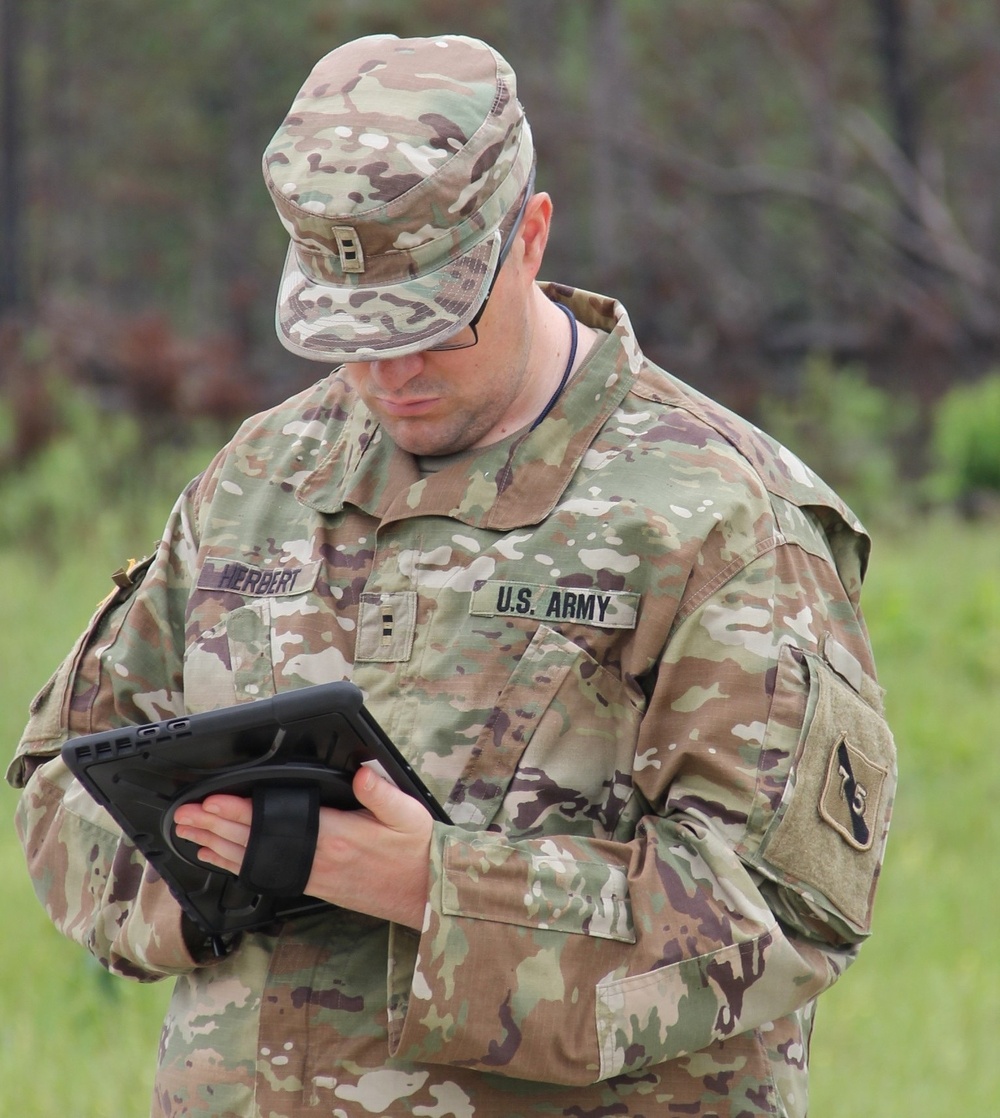
Chief Warrant Officer 2 Sean Herbert, 75th U.S. Army Reserve Innovation Command evaluates technology during Cyber Quest 25 on June 10, 2025, at Fort Eisenhower, Georgia. New acquisition reform accelerates delivery of cutting-edge tools, ensuring Soldiers get mission critical capabilities into their hands faster. (Photo by Master Sgt. Matthew Chlosta, 75th U.S. Army Reserve Innovation Command)
THE FORWARD EDGE
To drive innovation, streamline processes and accelerate technology development from concept to prototype to full-scale implementation, the Army has launched the PIT office, ASA(ALT)’s “forward edge” to deliver rapid, mission-focused solutions that transform acquisition into a warfighting advantage. Falling under ASA(ALT)’s Deputy Assistant Secretary of the Army for Research and Technology, the PIT operates under a synchronized framework to deliver advanced capabilities, bolster the industrial base, incorporate Soldier feedback and enhance readiness at the speed of relevance.
The initiative adopts a venture capitalist mindset—scouting broadly for new technologies, taking calculated risks and scaling the most promising solutions. It accelerates the adoption of emerging capabilities, supports non-traditional programs and companies that often struggle to enter the defense industrial base and consolidates efforts across organizations focused on bringing new capabilities to scale (such as parts of the RCCTO, the Army Applications Laboratory and the Joint Innovation Outpost).
“The PIT will consolidate work from a variety of organizations within and beyond the Army that focus on scaling new capabilities,” Ingraham stated. “By establishing an overarching unity dedicated to innovation, the Army hopes to address bureaucratic challenges that have stalled innovation—such as the lack of concrete plans for fielding and lengthy budget cycles.”
The Army Acquisition Workforce (AAW) will be the driving force behind guiding promising ideas from concept to prototype to full implementation, working with engineers and industry to quickly assess emerging technologies, shape early requirements and use flexible contracting tools to speed development. By managing risk, aligning resources and clearing process barriers, the workforce ensures innovative capabilities move rapidly and effectively into Soldiers’ hands.
ARMY ACQUISITION WORKFORCE LEADING THE CHARGE FOR CHANGE
The new reforms will bring meaningful changes for the AAW by enhancing decision-making agility and strengthening collaboration across programs. Leaders will be essential in shaping the organization’s course, demonstrating their commitment to progress and cultivating open communication that equips the workforce to navigate the transition.
As PEOs transition to Capability Program Executives (CPEs) under PAEs, acquisition professionals will play a direct role in shaping outcomes, rather than navigating layers of approvals. This means clearer responsibilities, quicker coordination and a culture that prioritizes getting needed capabilities into Soldiers’ hands without being slowed by unnecessary procedural steps.
“PAE Leaders” will act as change enablers—guiding acquisition’s path through reform, while “Enabler Leads” will lead teams across key divisions and regions and help model the reform in the day-to-day. The “Workforce” will be change drivers, carrying the reform forward, integrating new behaviors, daily actions and ways of working across the organization.
With a stronger emphasis on collaboration—both within the Army and with commercial industry—acquisition teams will work more closely with requirements developers, operational units and emerging tech companies to identify solutions earlier and integrate them more quickly. This underscores the strength of a workforce that’s adaptable, tech savvy and comfortable with rapid prototyping and iterative development cycles.
At the same time, the streamlined system reduces administrative burdens, freeing the workforce to focus on problem solving, risk assessment and direct engagement with industry partners. With improved training and more opportunities to apply real decision-making authority, acquisition professionals are positioned not just as managers of requirements and oversight, but as key drivers of innovation and readiness—central to ensuring the Army keeps pace with modern threats.
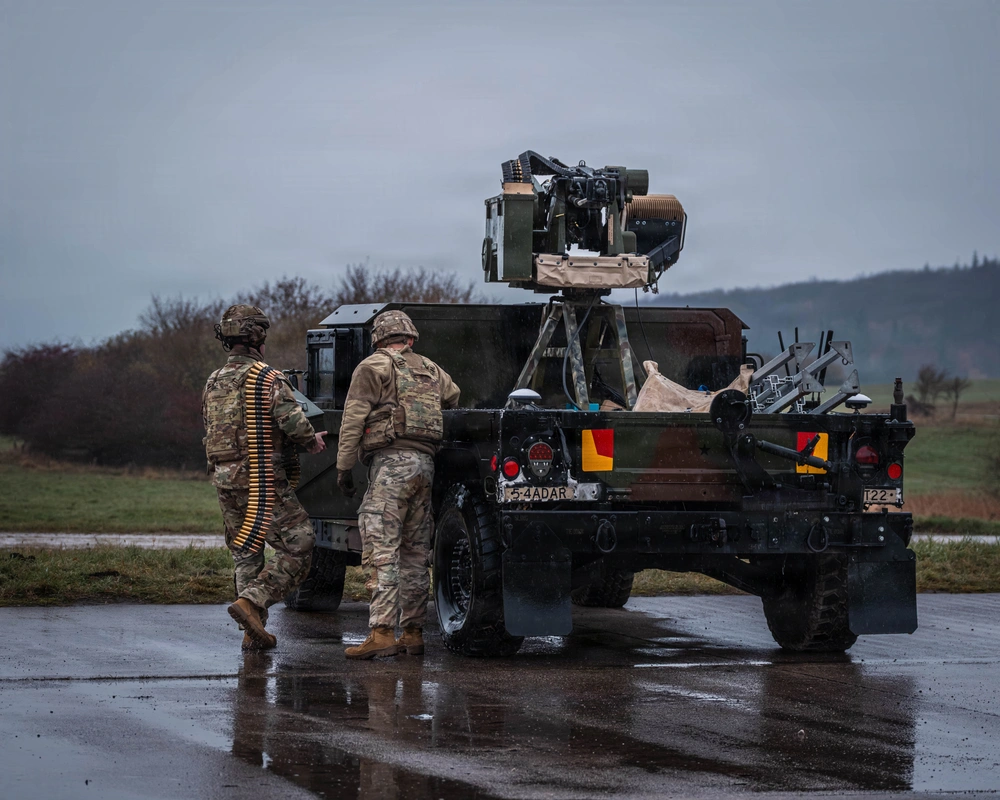
Soldiers engage a fixed-wing aerial drone target with a Counter-Unmanned Aircraft System during Project Flytrap 4.5, on November 19, 2025, underscoring how acquisition reform will accelerate delivery of advanced air defense capabilities to the field. (Photo by Staff Sgt. Yesenia Cadavid, 10th Army Air and Missile Defense Command)
CONCLUSION
The Army’s acquisition reform, officially set to roll out in January 2026, represents more than just a policy update—it’s a cultural shift toward speed, innovation and accountability. By bridging the gap between warfighters and decision-makers, the initiative aims to keep the military both agile and dominant in an era of rapid technological change. As these reforms take hold, the payoff will be substantial: faster delivery of advanced capabilities, stronger industry partnerships and a defense system that makes every taxpayer dollar count.
For the acquisition workforce this means greater authority, clearer responsibilities and the opportunity to directly shape and accelerate the technologies that keep Soldiers ahead of evolving threats.
Go to Behind the Frontlines at https://asc.army.mil/web/army-btf/ to keep up with the latest acquisition reform updates. For more information about official policies related to the Army Acquisition Workforce go to the Director of Acquisition Career Management Office website at https://asc.army.mil/web/dacm-office/ or visit the DACM Policy Library at https://asc.army.mil/web/policies/.
CHERYL MARINO provides contract support to the U.S. Army Acquisition Support Center at Fort Belvoir, Virginia, as a writer and editor for Behind the Frontlines and TMGL, LLC. Prior to USAASC, she served as a technical report editor at the Combat Capabilities Development Command Center at Picatinny Arsenal. She holds a B.A. in communications from Seton Hall University and has more than 25 years of writing and editing experience in both the government and private sectors.