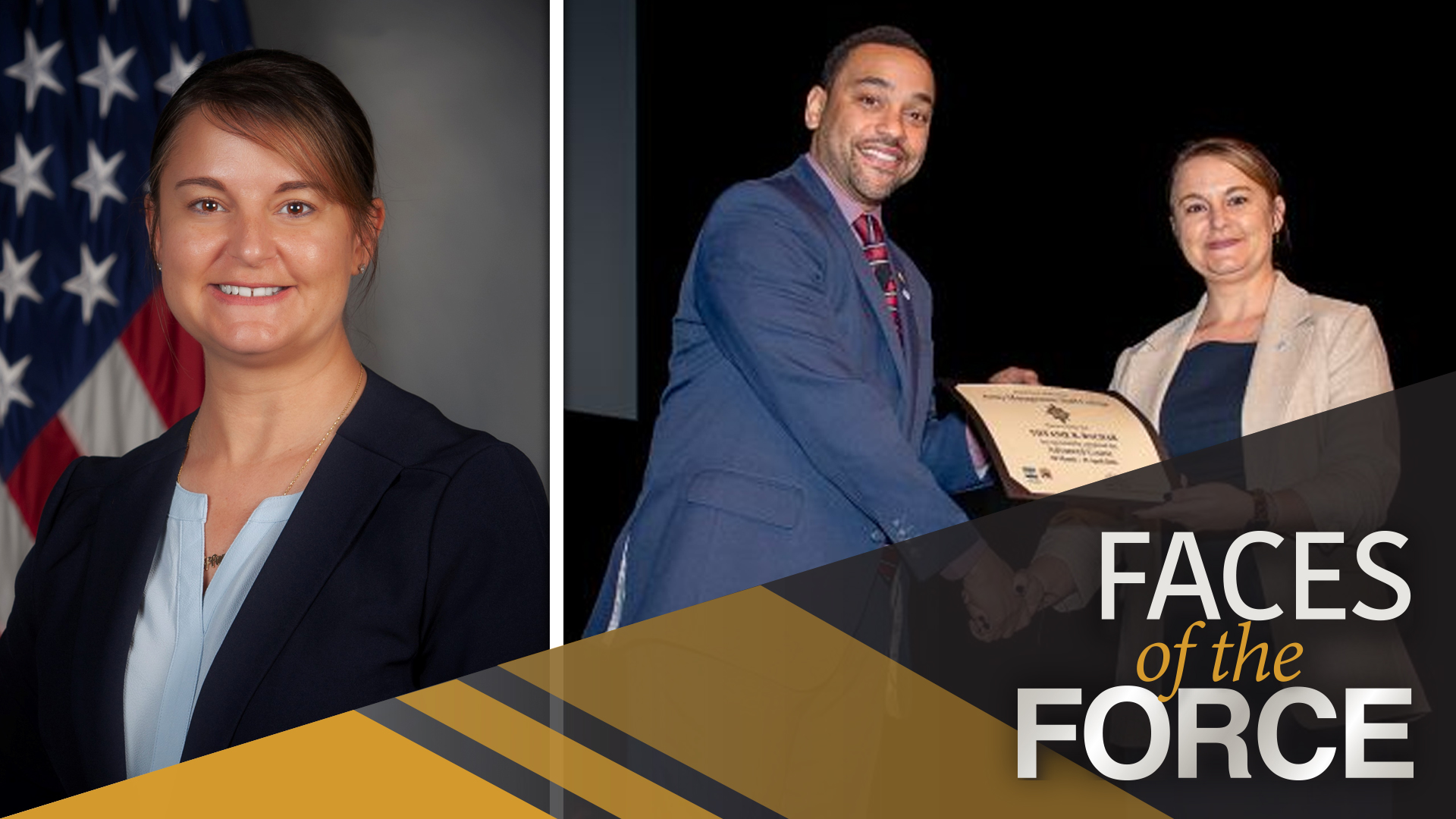

John Franklin
COMMAND/ORGANIZATION: Transformation and Training Command; U.S. Army Combat Capabilities Development Command; Command, Control, Communications, Computers, Cyber, Intelligence, Surveillance and Reconnaissance Center
TITLE: Senior scientific technical manager
YEARS OF SERVICE IN AAW: 15
DAWIA CERTIFICATIONS: Practitioner in engineering and technical management
EDUCATION: Ph.D., M.S. and B.S. in electrical engineering from Johns Hopkins University
AWARDS: Communications-Electronics Research, Development and Engineering Center (CERDEC) Employee of the Year (Network Vulnerability Assessment and Network 2030 Team, 2017); Federal Executive Board Excellence in Federal Career – Bronze (2016); Signal Corps Regimental Association Bronze Order of Mercury (2013); CERDEC Doctor William Novick Award (Co-site Mitigation Solution Team, 2011)
by Cheryl Marino
As a principal engineer specializing in tactical communications, John Franklin is dedicated to ensuring that science and technology (S&T) investments stay tightly aligned with the Army’s evolving priorities. Guided by a value-driven and teamwork mindset, he believes in challenging boundaries, asking the right questions and bringing a collaborative spirit to every mission.
In his role as senior scientific technical manager within the Transformation and Training Command (T2COM), under the U.S. Army Combat Capabilities Development Command (DEVCOM), Franklin provides strategic oversight and integration of S&T efforts across the Command, Control, Communications, Computers, Cyber, Intelligence, Surveillance and Reconnaissance (C5ISR) Center’s network and communications portfolio. His efforts ensure alignment with the Army’s transformation mission by maintaining awareness of emerging threats and technology trends, fostering collaboration with industry and government organizations, and overseeing experimentation events to map research objectives to the delivery of operationally relevant solutions to Soldiers.
“Soldiers must operate globally in contested and congested electromagnetic environments with minimal infrastructure. While commercial communications technologies offer exceptional capabilities in civilian life, they often fall short in operational environments,” he explained. “My focus is on identifying Army-unique needs that require S&T investment, ensuring we develop solutions that directly support the warfighter and enhance mission success.”
Franklin joined the former Communications-Electronics Research, Development and Engineering Center (CERDEC) within U.S Army Research, Development, and Engineering Command, shortly after graduating college, following a brief stint as a systems engineering and technical assistance support contractor. Since then, he’s held various roles, including assistant product manager (in two product manager offices), team leader, branch chief and division chief within the C5ISR Center. Each previous position prepared him for his current role, by providing a broad perspective on both technical development and acquisition processes.
His first acquisition position was assistant product manager in the Counter Radio-Controlled Improvised Explosive Device Electronic Warfare program office, working with a lab team to develop solutions to mitigate electromagnetic compatibility issues, and preventing jammers from interfering with communications.
“After proving these solutions in operational environments in Afghanistan, I transitioned to overseeing production and fielding as an assistant product manager,” he said. “This assignment gave me valuable insight into the relationship between the acquisition community and the labs, allowing me to apply formal acquisition training while seeing a project I helped develop reach the finish line.”
Being new to his current position, Franklin said his goals will evolve to align with the Army Transformation Initiative. “Currently, my focus is ensuring our S&T investments align with Army priorities and deliver results. Our program manager [office] teammates are challenged to buy and adapt commercial solutions wherever possible, and my team directly assists them in assessing the technical maturity of those products. My goal is to help focus the S&T team’s precious resources on the truly unique Army problems and discovering the ‘art of the possible’ in the network and communications field.
“Another goal is to better communicate the benefits and impact of S&T, as successful efforts often don’t follow the traditional linear acquisition process. By highlighting both short-term wins and long-term breakthroughs, I aim to demonstrate the value of disruptive technologies that address Soldier needs.”
Two key points stand out in Franklin’s career. First, during a detail assignment supporting a study aimed at converging the Army’s mission, intel, sustainment and telemedicine networks, he gained insight into the challenges of synchronizing technical solutions with requirements, acquisition and budget processes. “This experience taught me that technical hurdles are often easier to overcome than organizational ones,” he said.
Second, transitioning from an individual technical contributor to leading interdisciplinary teams was a pivotal shift. Delivering capabilities to Soldiers requires balancing competing perspectives from multiple domains. “Leadership training helped me develop the skills to guide teams toward results while managing diverse viewpoints.”
Franklin credits the Student Loan Repayment Program for the opportunity to have his student loans repaid, which was a “big recruitment and retention tool” early in his career. As well as the Academic Degree Training program within the C5ISR Center, which contributed toward his Ph.D. and helped further develop technical depth when working with industry partners on S&T efforts.
“For engineers and scientists, my advice is to focus on developing technical proficiency early in your career. Leadership opportunities will come, but it’s essential to first become an expert in your domain. A deep understanding of the technical opportunities and limitations related to Soldier capability gaps will enable you to effectively communicate complex concepts to senior leaders,” he said. “I believe the ‘Back to Basics’ initiative has been beneficial in allowing junior employees to concentrate on building their technical skills without an early emphasis on acquisition processes. Those aspects will naturally come with time and experience.”
Outside of work, Franklin enjoys playing lacrosse recreationally—a sport he’s enjoyed for years. “I feel like sports teaches you how to become a good teammate, which has direct carry over into our work,” he said. “Everything the Army acquisition community achieves is a team of teams effort and knowing how to be a good teammate is key.”
He’s also learned the importance of questioning barriers, whether they stem from policy, process or personalities. “Good S&T is inherently disruptive and often challenges the status quo. By filtering out noise and focusing on solving problems aligned with Army priorities, I’ve found that delivering results to Soldiers can overcome initial resistance,” he said. “Once a solution is proven in Soldiers’ hands, other obstacles often resolve themselves.”
“Faces of the Force” highlights the success of the Army Acquisition Workforce through the power of individual stories. Profiles are produced by the Behind The Frontlines team, working closely with public affairs officers to feature Soldiers and civilians serving in various Army acquisition disciplines. For more information, or to nominate someone, go to https://asc.army.mil/web/army-btf/.
Subscribe to BTF – the premier source of Army acquisition news and information.
For question, concerns, or more information, contact us here.
RELATED NEWS
Aligned for Impact – John Franklin

Acquisition is a Team Effort – Brice Ott