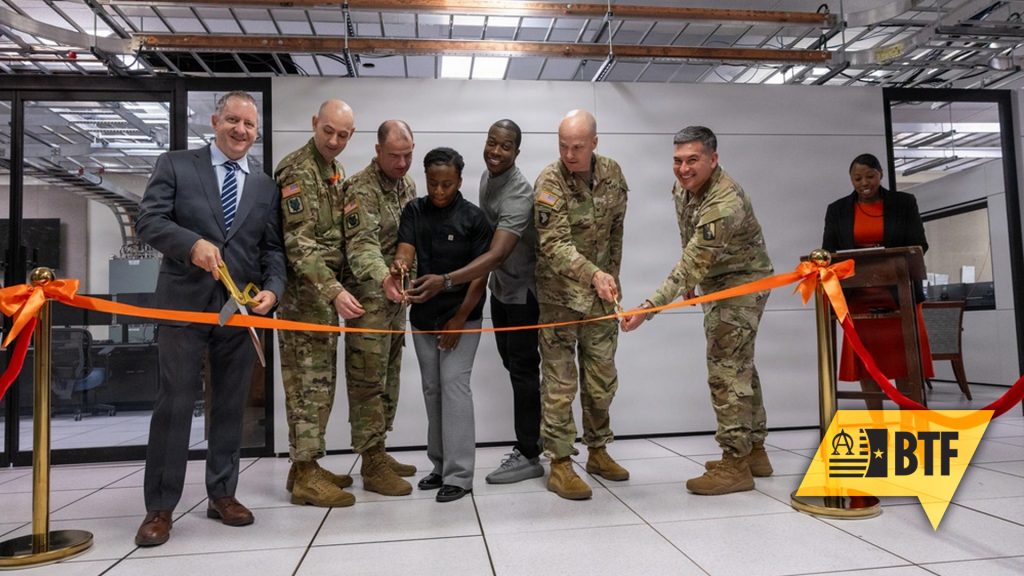

Getting the right equipment to Soldiers at the right time is the goal of Army acquisition—embracing the cultural change of new reform initiatives will help the workforce achieve that goal. (Photo by Staff Sgt. Michael Martin, 1st Special Forces Group (Airborne))
by Hon. Kevin M. Fahey
I’m no stranger to acquisition reform—either in the Army or in the Department of War. I’ve been with the U.S. Army Acquisition Corps from the start, working my way through a couple of program executive officer assignments up to my last federal service assignment as assistant secretary of defense for acquisition. During my time as secretary of defense for acquisition in 2017, I oversaw acquisition policy. That was around the same time we enacted the Adaptive Acquisition Framework, among other things.
We’re always in reform.
But in the wake of Secretary of War Pete Hegseth’s address on acquisition reform, it’s clear that the Army is not just reacting but proactively leaning into a transformative approach. This is an opportunity we cannot afford to miss. The Army’s alignment with the Adaptive Acquisition Framework is essential, but it requires more than just policy adjustments—it demands a cultural shift that empowers leaders and engages all stakeholders.
Accountability and Empowerment
Accountability is critical—at the heart of this reform is the imperative to hold Capability Portfolio Executives and program managers (PMs) accountable for developing robust, risk-balanced acquisition programs that deliver capabilities in a timely manner. This alignment is not merely a bureaucratic exercise; it is a vital step toward ensuring our Soldiers receive the tools they need when they need them. However, achieving this alignment will require a fundamental change in our approach and mindset.
Testing must evolve to provide leaders with actionable insights into the capabilities and limitations of commercial products, enabling informed purchasing decisions. Program estimates should reflect commercial pricing and incentivize effective contracts. It is critical that authority accompanies responsibility. The Portfolio Acquisition Executive (PAE) must be empowered to align the institution with the needs of acquisition programs, ensuring that decisions are made swiftly and effectively.
Navigating Institutional Challenges
Throughout my career as a PM, Program Executive Officer and as the assistant secretary of defense for acquisition, I witnessed firsthand the challenges of aligning institutional support with acquisition goals. There were so many undersecretaries that sometimes it was especially difficult to make progress. Everyone had their own opinion about how to do acquisition, though sometimes they may not have had a good understanding of it.
Successful acquisition hinges on clear, stable and executable requirements; adequate funding; a sound acquisition strategy; and the ability to make timely decisions. Yet, achieving this alignment is often hindered by the multitude of stakeholders involved in the decision-making process. However, it’s hard to get a budget aligned with the requirement, and hard to get a timely decision from stakeholders at the Pentagon—everyone is worried about their own piece of the program, their own section of policy. And when things get hard, the ‘acquisition guy’ gets blamed.
But the new construct the Army is executing eliminates a multitude of those difficulties by giving the PAE the responsibility of aligning the enterprise.
We must recognize that a high-ranking individual focused on institutional alignment is not just beneficial but essential for timely decisions and successful acquisition outcomes. Too often, stakeholders adopt a narrow view, demanding specific deliverables without considering the broader implications for cost, schedule or technical risk. While empowering the PAE to make trade-offs within the portfolio is a step in the right direction, we must confront the reality that decisions have historically been made at the 4-star level, often bogged down by consensus-driven processes that take far too long.
Cultural Change as a Necessity
Cultural change is daunting, but it is not impossible. With strong leadership and determination, we can reshape our approach to acquisition. I wholeheartedly support the notion of the PAE being responsible for determining requirements. Many acquisition failures stem from unclear or unaffordable requirements, and the secretary of war’s proposal for PAEs to have a minimum four-year term is a significant step toward stability. Historically, the tenure for requirements development leads has been around two years—far too short to establish and oversee stable requirements.
Concerns about the PAE’s readiness to navigate complex technological trade-offs are valid. However, these risks can be mitigated by surrounding the PAE with a skilled team equipped with critical thinking abilities and experience. While some may worry about the four-year term impacting promotions, if this reform is truly vital for the Army, we must find solutions that support this initiative.
It is crucial to acknowledge the inherent risks of a new organizational structure. Clarity of roles and responsibilities is paramount. A Responsibility Assignment Matrix can clarify roles, ensuring everyone understands their specific responsibilities and enhancing communication across the board.
We must not allow inertia to dictate how we work. Enforcing delegation of authorities is essential, and we must hold individuals accountable for stepping outside their designated roles. The ongoing debate about rating chains should be resolved immediately; those who assign the majority of work should be responsible for performance evaluations.
Managing Portfolio Size and Complexity
Another significant risk lies in the size of the portfolios and whether the span of control is manageable. If handled correctly, with accurate data and facts, this can be manageable. We need simple metrics to measure success and track program execution, supported by a consistent and effective management dashboard that all stakeholders can use daily.
Training programs must also be prioritized to prepare personnel for this new organizational structure. While acquisition professionals undergo rigorous training, areas like requirements development lack robust programs. We must assess the overall structure to identify where new training initiatives are necessary. Additionally, as the Army reduces the acquisition workforce and command positions, incentivizing top officers to join the acquisition corps remains a pressing challenge that requires continuous attention.
Industry’s Role in Reform
From an industry perspective, behavior is largely shaped by government incentives and rewards. I fully understand the urgency of delivering capabilities to our Soldiers. However, we must tread carefully in implementing these changes. If schedule becomes the primary evaluation criterion, we risk favoring low-risk, proven technology solutions. While this may work for commercial items, developing new technologies or innovations will inevitably require more time.
Industry will likely support the PAE construct, as many stakeholders will operate under the same leadership, facilitating more constructive engagements. A clearer and more consistent demand signal from this structure will help clarify decision-making authority.

Conclusion
The new organizational framework presents tremendous potential. For success, we must unite the best talent around common goals. Effective execution management is critical, and anyone perceived as an impediment to change must be addressed promptly.
Army leadership—both military and civilian—needs to be clear and firm in the message that this isn’t just a new organizational structure, it’s real culture change, and it is expected that the workforce embrace that change and act differently than they have in the past.
As we move forward, there will undoubtedly be some tweaks and additions to the new framework, but our commitment to reform must be unwavering. The time for action is now. Let us embrace this opportunity to reshape the future of Army acquisition for the better.
NOTE: The views and opinions expressed in this article are those of the author and do not reflect the official policy or position of the U.S. Army.
For more information on the PAE structure, go to https://www.army.mil/article/288957/army_revolutionizes_acquisition_process_to_deliver_warfighting_capabilities_faster.
HON. KEVIN M. FAHEY formerly served as the assistant secretary of defense for acquisition. In this position he advised the undersecretary of defense for acquisition and sustainment, the deputy secretary of defense and the secretary of defense on matters relating to defense acquisition, acquisition program management and the development of strategic, space, intelligence, tactical warfare, command and control and business systems. He holds a B.S. in industrial engineering/operations research from the University of Massachusetts.
Recent Posts
Read more of our recent Behind The Frontlines Posts.

Acquisition is a Team Effort – Brice Ott

Protect Your Time – Tiffanie Bachar

Army Acquisition Hall of Fame Welcomes Four New Inductees in 2026