
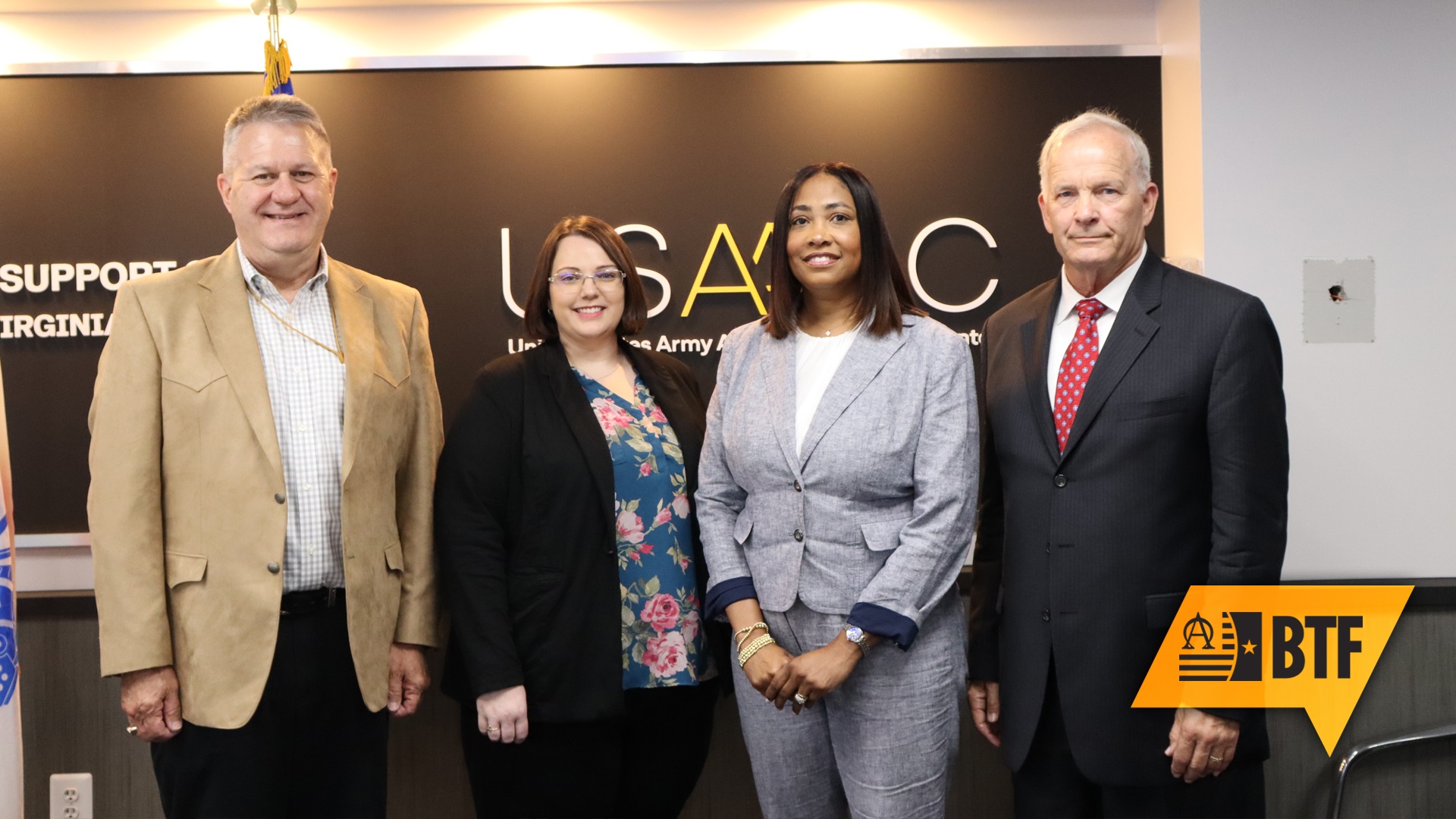
Two Army Acquisition Workforce members graduated from the DACM’s LEAD program in a ceremony held on August 12, 2026, at USAASC Headquarters, Fort Belvoir, Virginia. From left, Ronald R. Richardson, Jr., Army DACM; Alison M. Brann, PME Command and Control Information Network; Jennifer L. Parker, PME Fires; and George J. Mitchell, PME Combat Sustainment. (Photos by Rebecca Wright, USAASC)
by Rebecca Wright
On August 12, 2026, two Army Acquisition Workforce members graduated from the Leadership Excellence and Acquisition Development (LEAD) program. Sponsored by the U.S. Army Acquisition Support Center’s (USAASC) Director, Acquisition Career Management (DACM) Office, LEAD is a 12-month leadership development program that is designed to develop future Army acquisition program managers by offering selected participants expanded training, leadership and other career development opportunities.
Held at USAASC’s headquarters located on Fort Belvoir, Virginia, the ceremony was hosted by Kim Gibbons, USAASC program manager for LEAD. “I am grateful for this group of fellows as they exhibited a great deal of patience as the LEAD program continues to evolve. They persevered through the transition of working in a new developmental assignment while maintaining focus and commitment during the challenges of a 45-day furlough,” said Gibbons. “For those of you who are new to the program, our fellows participate in a series of education, leader development and broadening assignments to build skills required for positions of great responsibility.”
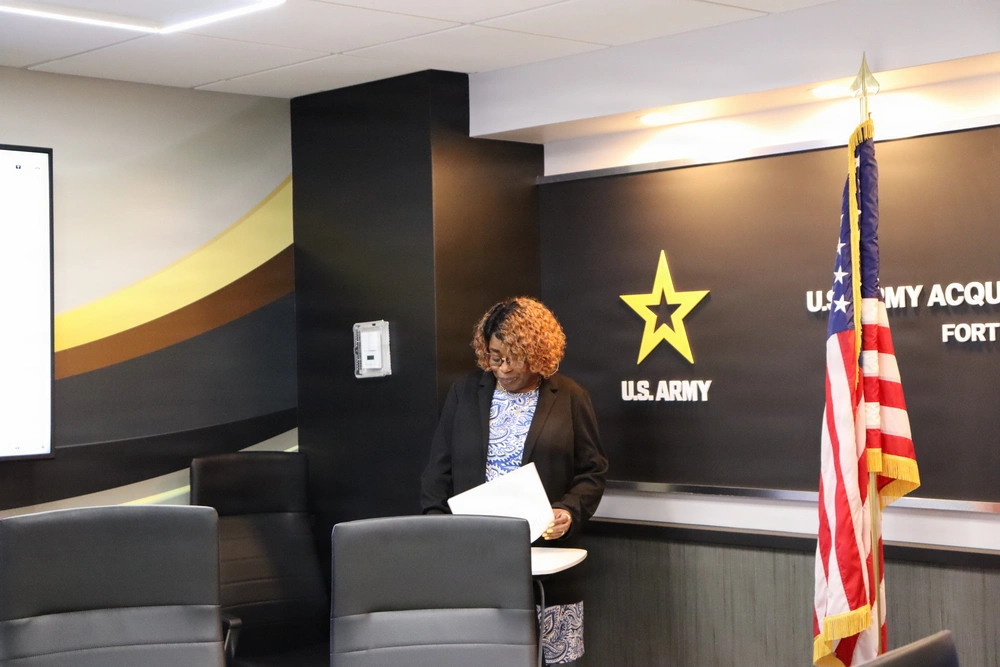
Ronald “Rob” Richardson, Jr., the Army DACM and director of USAASC, welcomed this year’s graduates and delivered opening remarks. “First of all, to the graduates, congratulations on completing the program. The last year, while you’ve been in the program, the Army has been under continuous transformation and we continue under continuous transformation,” said Richardson. “Here at [USA]ASC and the DACM, we’re relooking [at] how we recruit, retain, certify, [and] manage all those things to the acquisition workforce. You all were kind of Ground Zero at that … because the program that you completed, I don’t think is exactly the program that you thought you were applying for when you started.”
Richardson stated that adjustments were made to make the LEAD program more efficient while still retaining the value and best parts of the program, adding that the DACM Office was able to cycle the graduates through quicker and return them to their primary positions faster and well-trained.
The Year Group 2025 graduates are Alison M. Brann, Portfolio Management Executive (PME) Command and Control Information Network, and Jennifer L. Parker, PME Fires. Both provided commentary on their experience in the LEAD program.
Brann described her experience as a challenging opportunity. “When I applied to the LEAD program back in December of ‘24, I honestly had no idea what to expect. I had spent eight years in foreign military sales, never directly touching acquisition,” Brann said. “I knew there was a massive amount that I would need to learn very quickly in an enterprise experiencing seismic change. Learning acquisition in a reform environment provided challenges, but opportunity. I like challenging learning environments, so LEAD came at the perfect time.”
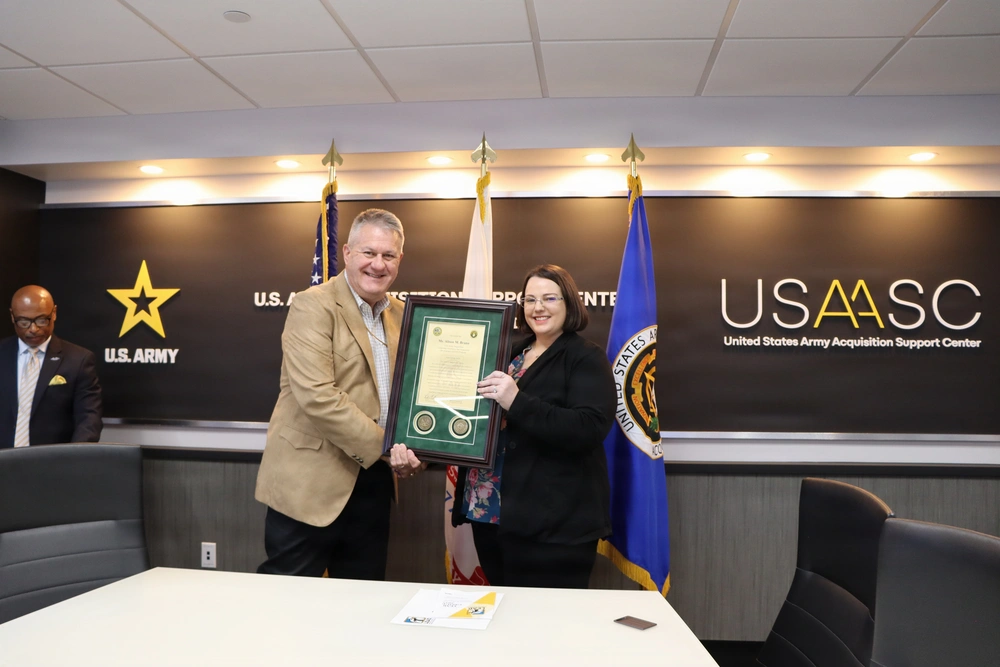
Brann reflected on her experience while attending the “How the Army Runs” (HTAR) course. “My perspective widened further when I attended ‘How the Army Runs’ at the Army Force Management School here on Fort Belvoir. HTAR illuminated exactly how acquisition fits into the broader Army structures and processes. It showed me how force management decisions dictate the fielding of our products and the complex considerations that go into that level of planning. It also gave me time to talk to Soldiers outside acquisition who use our equipment but don’t understand the massive effort that goes into the design and fielding of the gear they use every day.”
Parker said of the LEAD program, “I knew that stepping into this would be an opportunity for me to grow professionally, but I did not fully [understand] just how I would gain the experience along the way.” She described one of her opportunities serving as a Department of the Army Systems Coordinator at the Pentagon stating, “working in the environment, it gave me a different perspective of how decisions are made and how my work contributes to something much larger than … ourselves. I had the opportunity to observe senior leaders, participate in important discussions and see how information moves from one organization at the strategic level.”
Parker explained that the experience challenged her in a different way. “I had to learn how to become comfortable operating in uncertainty. I had to learn the importance of collaboration, communication, flexibility and leadership. And most importantly, I learned that sometimes leadership isn’t about having every answer; Sometimes it’s about bringing the right people together and asking the right questions and helping to find the right answer. That’s what makes the LEAD program so valuable.”
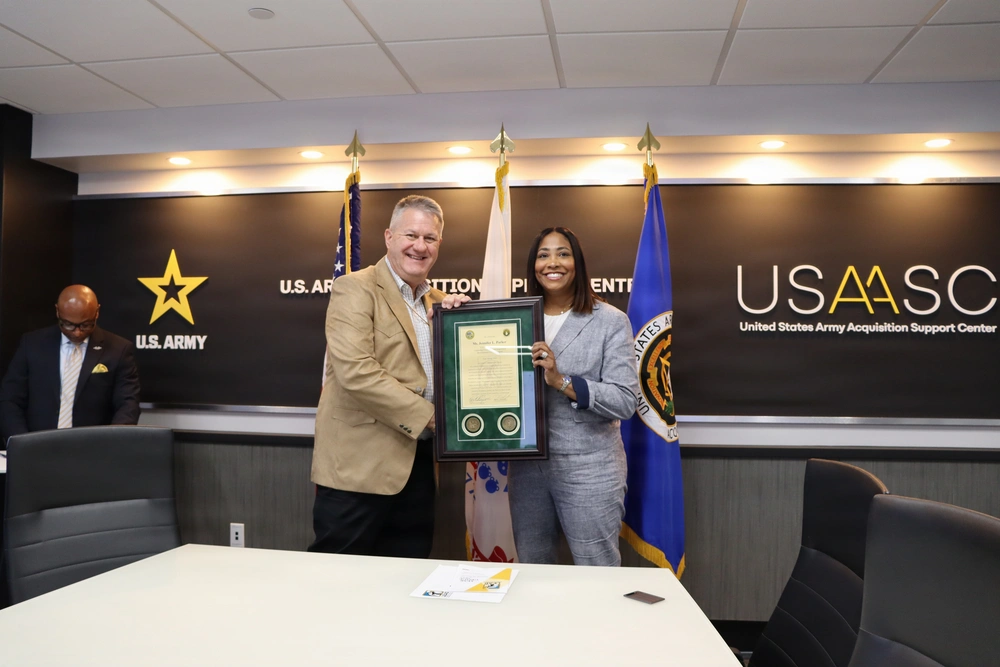
Also in attendance was special guest speaker George J. Mitchell, program officer, International Programs PME Combat Sustainment, who provided insights into his leadership experience, and offered guidance and words of encouragement to the graduates. “What I challenge you to do is not just bring a problem to your boss … bring a solution,” said Mitchell. “What I do call upon you is to be the best leader … Strive to be excellent and for the sake of yourself and those around you, enjoy what you do and have fun.”
Gibbons and Richardson then presented each of the graduates with their program certificates.
Following the certificate presentation, Richardson delivered closing remarks and asked graduates to “pay it forward,” by encouraging peers at their organizations to consider enrolling in the LEAD program. “We have some holes in the workforce with all the deferred resignations and the hiring freeze and all the things that have happened over the last 18 months. So, we need our best people to be ready to step in and take charge of these programs because at the end of the day the acquisition workforce is responsible for getting kits into the hands of Soldiers,” said Richardson.
“Job one as an Army Acquisition Workforce, an integral part of [the] modernization enterprise, is to ensure that no American Soldier is in a fair fight. …That’s why we exist as a workforce. So, seek out those people, encourage them, seek out challenging opportunities, continue to do those things that you did that brought you to this program. I expect to see nothing but great things out of both of you in the future.”
For more information about the LEAD program, go to https://asc.army.mil/web/career-development/programs/lead/.
REBECCA WRIGHT is a writer and editor at the U.S. Army Acquisition Support Center’s Director of Acquisition Career Management Office at Fort Belvoir, Virginia. Before USAASC, she served as an explosive ordnance disposal technical writer at NSWC Indian Head. She has more than 16 years of experience writing and editing for the DoW and the U.S. Department of Justice.
Recent Posts
Read more of our recent Behind The Frontlines Posts.

Aligned for Impact – John Franklin

HIRING CONTRACTING SPECIALISTS, THE SMART WAY

Acquisition is a Team Effort – Brice Ott