
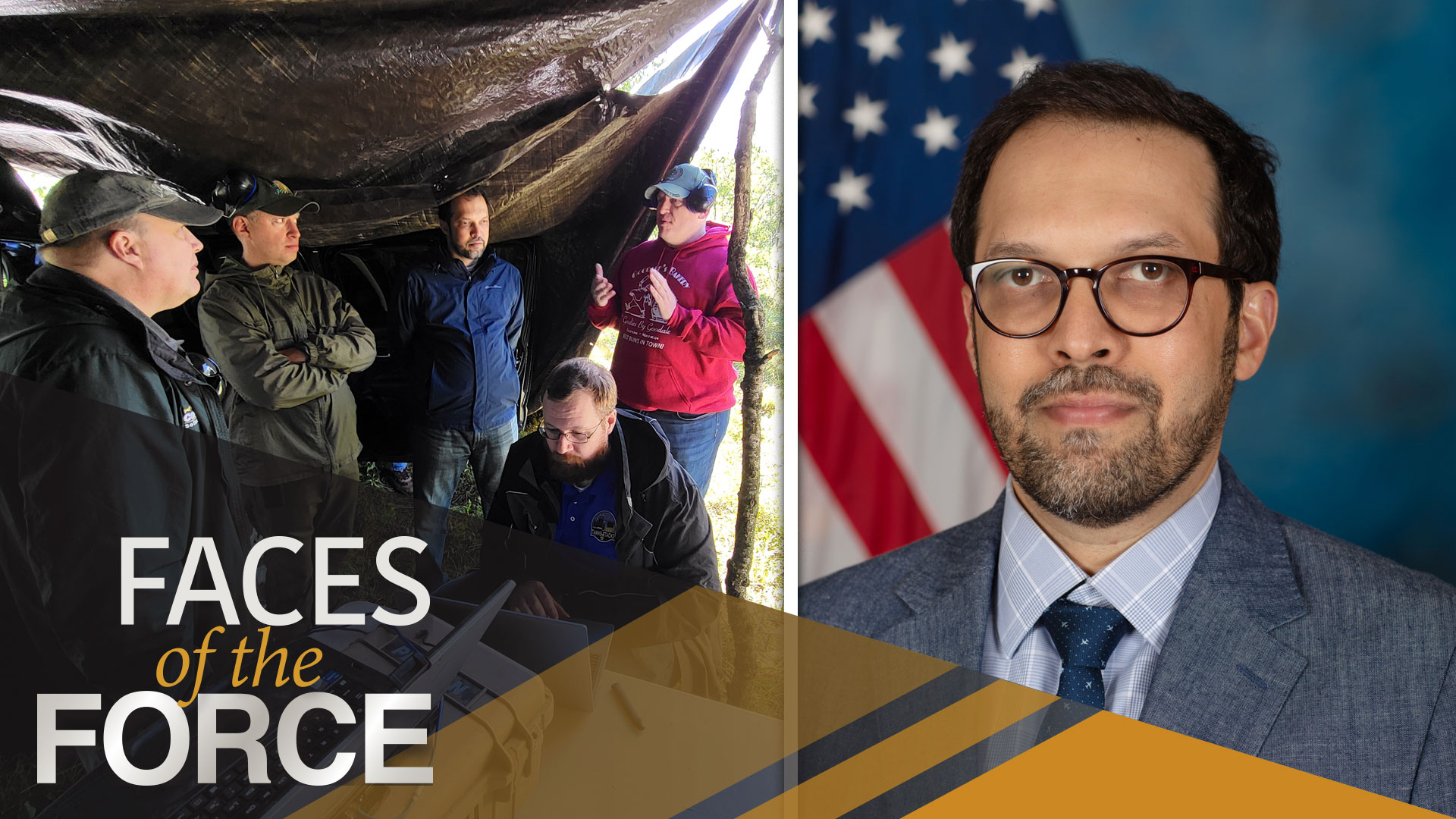
Mustafa Rawat
COMMAND/ORGANIZATION: Portfolio Acquisition Executive Agile Sustainment and Ammunition (PAE AS&A)
TITLE: Assured Munitions lead
YEARS OF SERVICE IN AAW Workforce: 14
DAWIA CERTIFICATIONS: Advanced, program management; Practitioner, engineering and technical management
EDUCATION: M.S. in industrial and systems engineering, Rutgers University – New Brunswick; B.S. in mechanical engineering, University of Mumbai
by Cheryl Marino
To lead effectively in a complex role like assured munitions, it’s essential to embrace new challenges and step beyond your comfort zone. By fostering trust and encouraging collaboration, Mustafa Rawat has shown how openness to diverse perspectives can drive stronger decisions and team success. This commitment to understanding others has become a cornerstone of effective leadership.
Rawat assumed the role of assured munitions lead for the Portfolio Acquisition Executive for Agile Sustainment and Ammunition (PAE AS&A, formerly Capability Program Executive for Ammunition and Energetics), Directorate of Integration in September 2025. He focuses on assessing and mitigating risks within the munitions industrial base—to ensure the security of both domestic commercial and organic munitions supply chains to maintain availability of end items and constituent components during peacetime and wartime. He also establishes international partnerships and develops strategic second-sourcing arrangements to support resilient supply chain operations under all conditions and collaborates with subject matter experts in energetics throughout the Department of War (DoW) to advance alternative production methods for key chemicals, thereby reducing reliance on foreign sources.
“The acquisition process can be protracted and complex, particularly within a budget-constrained environment. Nevertheless, the Army Acquisition Workforce [AAW] remains committed to provide the best next-generation capabilities to our Soldiers despite these obstacles,” he explained. “I consider it to be a privilege to be serving in this capacity at a time when the DoW is prioritizing investments in our industrial base and placing confidence in the acquisition workforce to advance national defense objectives.”
Rawat began his career with the AAW in 2010, when he joined the U.S. Army Combat Capabilities Development Command Armaments Center (DEVCOM AC), as a project management engineer supporting ammunition logistics research and research and development (R&D) initiatives. Prior to this position, he served as a contractor (systems analyst) for the same office at Picatinny Arsenal for seven years.
“When an opportunity came up to join the federal workforce, my government supervisor at the time strongly encouraged me to apply, and I am grateful for that guidance,” he said. “Being part of the federal workforce is rewarding; beyond the obvious benefit of contributing to national security as a civilian employee, it offers valuable opportunities for leadership development, broadening assignments across disciplines beyond one’s formal education, and the possibility to seek opportunities not only in the United States, but also internationally.”
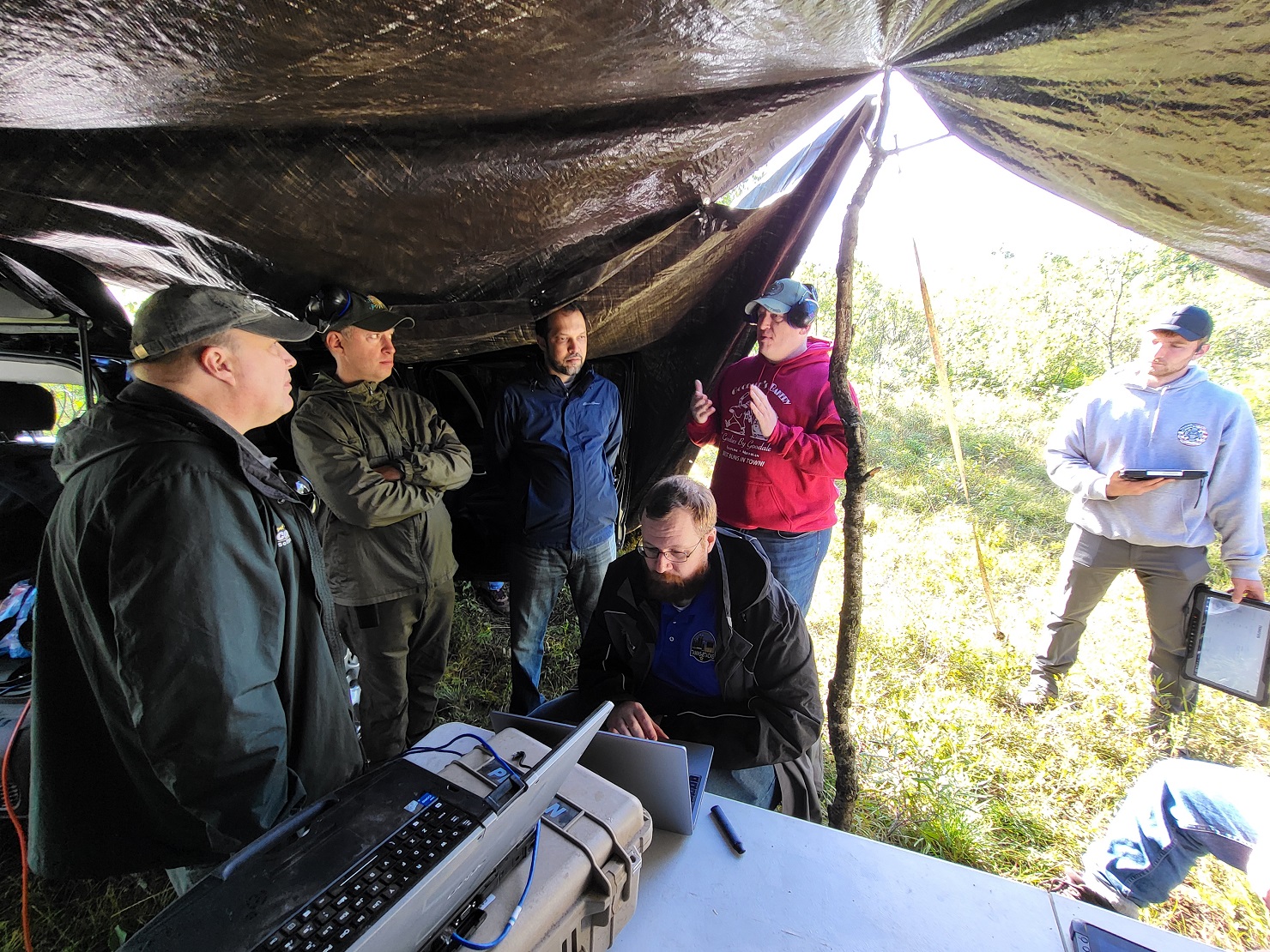
As a project management engineer, Rawat led several ammunition logistics R&D initiatives. At that time, the ammunition logistics R&D portfolio encompassed the entire supply chain, from production to final use—often referred to as “factory to foxhole.” The primary objective of his team was to develop solutions that optimized the entire ammunition logistics process, including production, packaging, handling, storage and transportation up to their use in weapons systems.
“This broad mandate provided opportunities to contribute to a diverse array of projects focused on both hardware and software advancements,” he said.
More recently, Rawat led a team responsible for developing integrated hardware and software interfaces designed to connect with weapons systems, transmitting inventory status and round counts over tactical networks to sustainment personnel.
“This information supported data-driven resupply decisions and enabled the application of AI [artificial intelligence] techniques for ammunition forecasting,” he said. “Our team successfully introduced these technologies to operational units for experimentation, collected user feedback, and rapidly iterated solutions to ensure relevance and continual improvement. By adopting a system-of-systems approach, the project effectively bridged the logistics and lethality domains, delivering a unified solution.”
Rawat’s experience as a project management engineer provided him with extensive knowledge in all aspects of project responsibility including managing cost, schedule and resources.
“The field of logistics is inherently broad, necessitating coordination with stakeholders from multiple DEVCOM laboratories and PAEs and CPEs, (formerly PEOs), which presents challenges when the goal is to expedite processes and minimize development cycles for new technologies,” Rawat said.
“In transitioning to my current role as the assured munitions lead, my focus shifted to strategic thinking, evaluating decision impacts not only at the individual project level, but across the broader portfolio,” he explained. “Over the past three months, I have provided input to congressional reports, attempted to understand the financial ownership structures of companies receiving DPA Title III investments and collaborated with stakeholders at the Office of Under Secretary of War level.”
Moving forward, he is committed to sharing the assured munitions team’s extensive work, which includes mapping the munitions industrial base supply chain, developing scorecards for critical materials and assessing risks related to single sources and geopolitical influences. “This critical work demands continued collaboration with all program manager offices and external stakeholders to advance these initiatives,” he said.
Rawat’s career development has been supported by the willingness of supervisors and teammates from DEVCOM AC and PAE AS&A to share their experiences and provide guidance. He said PAE AS&A demonstrates a strong commitment to workforce development by providing opportunities to “skill up” through various continuous learning programs and leadership courses.
“A highlight of my career was serving as the ammunition logistics R&D manager, overseeing the RDT&E [research, development, test and evaluation] portfolio,” he said. “This position opened the aperture for me beyond managing the cost, schedule and performance of individual projects to a portfolio-wide perspective.”
Rawat has informally mentored early- and mid-career scientists and engineers. Based on his experiences he advises that the Army, specifically the PAE AS&A, provides excellent developmental assignments and numerous opportunities to acquire new skill sets.
“The key is to overcome the initial reluctance and be willing to step outside of one’s comfort zone, something I, too, was hesitant to do early in my career,” he said. “I emphasize the importance of seeking out diverse assignments, whether technical, program management or contracts management to discover one’s true passion and define a long-term career direction.”
Early in his career, Rawat’s supervisors provided him with opportunities to present project status briefings to senior leaders. Though nerve wracking at the time, he remains appreciative of these formative experiences and encourages junior acquisition personnel to embrace similar opportunities.
“I believe the ability to clearly convey information, present well thought out courses of action, and being prepared to respond to unexpected questions is a critical, indispensable skill for all acquisition professionals—one that is honed and perfected through consistent practice,” he said.

Rawat has recently returned to his childhood hobbies of sketching and watercolor painting by signing up for classes in his town. “This reintroduction has been very relaxing, and I’m encouraging my two sons, Naeem and Azim, to pick it up as well, hoping they will find it beneficial,” he said. “As a family, my wife Wazila, the boys and I enjoy traveling and hiking. Our goal is to visit all the major national parks, and we’ve already checked a few off our list. Another recent family addition is a hobbyist 3D printer, which I enjoy using to design and print various models, some of which have practical use around the house.”
He also enjoys occasional home improvement projects because they appeal to his methodical nature. “I find the process of breaking down a problem, planning the steps to a solution and iterating until satisfied is a natural extension of my work,” he said.
Throughout his career, the most valuable lesson Rawat has learned is the importance of dedicating time to building strong relationships with colleagues and stakeholders. “Gaining their trust is essential for forming genuine collaborative partnerships.” It’s also crucial, he said, to remain open to differing opinions and to make an effort to understand your coworkers’ perspectives and how these influence their decisions.
“By applying this mindset to both past and current projects, I’ve been able to form long-lasting connections with civilian employees and contractors—relationships I maintain and value even after a project’s completion.”
“Faces of the Force” highlights the success of the Army Acquisition Workforce through the power of individual stories. Profiles are produced by the Behind The Frontlines team, working closely with public affairs officers to feature Soldiers and civilians serving in various Army acquisition disciplines. For more information, or to nominate someone, go to https://asc.army.mil/web/army-btf/.
Subscribe to BTF – the premier source of Army acquisition news and information.
For question, concerns, or more information, contact us here.
RELATED NEWS

Aligned for Impact – John Franklin

Acquisition is a Team Effort – Brice Ott