
Check back daily as we will be publishing the award-winning essays, here.
Category: Future Operations
Winner
Transforming the Army Acquisition Corps Approach to Leader Development
We must transform the leader development domains—institutional, operational and self-development—to build credibility, trust and increase the Army Acquisition Corps relevance to the Operational Force.
by Anthony Cortese, Maj. Nathan LaSorba, Maj. James Salerno, Capt. Robert Kitch and Sgt. 1st Class Andrew Procter
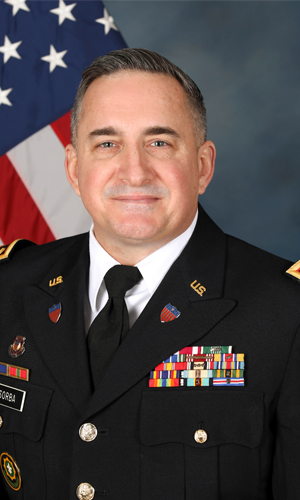
MAJ. NATHAN LASORBA

MAJ. JAMES SALERNO
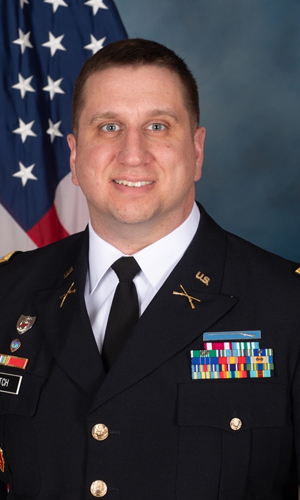
CAPT. ROBERT KITCH
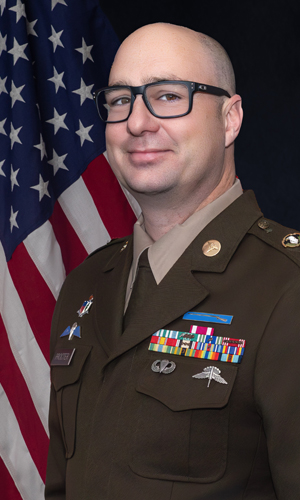
SGT. 1ST CLASS ANDREW PROCTER

ANTHONY CORTESE
Adapting the Army Acquisition Corps for Future Warfare
The Chief of Staff of the Army’s 2025 guidance rightly emphasizes adaptation as the cornerstone of maintaining battlefield superiority. This imperative necessitates comprehensive reform across all leader development domains within the Army Acquisition Corps (AAC) to preserve and enhance its value to the force. This analysis focuses on improvements to the institutional and operational domains, with recommendations to cultivate a more agile and effective acquisition workforce capable of delivering decisive capabilities to the warfighter. A key element of this adaptation is optimizing the self-development of both military and civilian acquisition professionals and recognizing the critical role of the Non-Commissioned Officer (NCO) Corps.
Institutional Domain: Reimagining Education at AATC
The Army Acquisition Transition Course (AATC) currently serves as the foundational educational experience for new AAC members, fulfilling Warfighting Acquisition University (WarU) accreditation requirements through extensive lectures and “death by PowerPoint.” However, its methodology often falls short of fostering genuine understanding and long-term retention. The current model’s reliance on memorization, assessed through multiple-choice quizzes focused on knowledge recall—the lowest level of Bloom’s Taxonomy—creates a disconnect between instruction and practical application. Feedback from recent graduates confirms this, with many reporting a need to “re-learn concepts” upon arrival at their first assignments.
A more effective approach lies in adopting the Army Experiential Learning Model (ELM), originally developed at the Command and General Staff College. Now doctrinal for Army instruction, the ELM emphasizes a cyclical process of concrete experience, publishing and processing, generalizing new information, developing and applying. This model promotes higher-order cognitive skills—comprehension, application, analysis, synthesis and evaluation—crucial for navigating the complexities of the acquisition process. The Maneuver Captain’s Career Course (MCCC) demonstrates the ELM’s success, cultivating practical skills and analytical thinking, enabling students to confidently tackle complex scenarios.
Implementing the ELM at AATC requires addressing WarU accreditation and optimizing the student experience. Accreditation can be maintained through a WarU audit of revised course material, mirroring the approach taken by other Army institutions. Crucially, it is recommended that officers should complete at least 90 days of on-the-job training within their gaining Portfolio Acquisition Executive (PAE) before attending AATC. This contextualizes learning, enabling students to apply knowledge to real-world challenges and contribute meaningfully to peer discussions. In addition, re-structuring AATC into separate, focused courses for 51A (program management) and 51C (contracting) officers would further enhance networking and relevance, allowing for tailored instruction addressing the unique challenges of each functional area. This approach will move AATC from a “check-the-box” requirement to a value-added experience.
Operational Domain: Strengthening Experience and Leadership
ADP 6-22 underscores the importance of learning through experience within the operational domain. To optimize leader development, the AAC must re-evaluate career paths, create opportunities for engagement with operational forces and prioritize centralized leadership training. Currently, new AAC officers are typically first positioned as Assistant Product Managers (APMs) in their first acquisition job and often assigned directly to highly visible programs or programs in Engineering and Manufacturing Design (EMD)—a critical, yet often technically demanding, phase of the acquisition life cycle—with little to no acquisition experience. This steep learning curve can hinder both the officer’s development and the program’s success.
A more effective approach involves initial broadening assignments to expose officers to diverse stakeholder perspectives before assuming key developmental roles (APMs) within highly visible and/or EMD programs. These assignments could include rotations with operational units, Combat Development Commands (CDCs) or even short-term details to foreign military partners. Furthermore, establishing permanent opportunities for AAC officers to embed with operational formations would bridge the gap between acquisition and the warfighter. This direct exposure to capability gaps would improve relevance and strengthen relationships with the operational force. There have been numerous successes, one example being a PAE Maneuver Ground APM embedded as an Acquisition Advisor to XVIII Corps which demonstrated the tangible value of such a liaison, providing real-time feedback and accelerating the delivery of critical capabilities.
Finally, implementing centralized, mandated leadership training is crucial for fostering organizational agility. While some organizations conduct valuable leadership seminars, a similar Army-wide initiative is lacking. This training should focus on dynamic leadership, networking and adaptability—cultivating “agile samurai” capable of navigating complex interactions with both DoW and industry partners. The curriculum should emphasize systems thinking, risk management and the ability to operate effectively in ambiguous environments.
Leveraging the NCO Corps: A Force Multiplier
Currently, NCOs assigned to PAEs are primarily functional experts, bringing valuable operational experience and a critical understanding of the Soldier’s perspective. However, their full potential is unrealized due to a lack of standardized acquisition training. To maximize their effectiveness, it is recommended that NCOs attend AATC, similar to acquisition officers. This shared baseline knowledge will enable NCOs to contribute meaningfully from the outset, providing critical input on new equipment training, acting as the “Soldier’s voice” in development, and leveraging their extensive contacts across the operational force.
Crucially, this proposal does not advocate for a wholesale shift to the 51A/C Acquisition Military Occupational Specialty (MOS). Maintaining NCOs’ flexibility to return to the operational force is paramount. Instead, a program similar to the 75th Ranger Regiment’s Abrams Charter—facilitating rotational assignments between operational units and the AAC—should be explored. Existing programs like the 8X (medical acquisition officer) program for Army Medical Department (AMEDD) acquisition officers and Project Warrior offer models for structured, utilized tours. Reciprocal arrangements with Capabilities Development and Integration Directorate (CDID) and other user representative counterparts responsible for requirements and/or doctrine, organization, training, materiel, leadership and education, personnel, facilities and policy (i.e., Army Capability Managers) could further expand opportunities. The same would be beneficial for Army civilians as well as acquisition officers. Ultimately, attracting and retaining talented NCOs requires establishing a voluntary career track, potentially a dual-MOS or a formalized utilization tour, recognizing their unique contributions to the acquisition process.
Optimizing APM Self-Development: Cultivating Future Leaders
While the Army emphasizes self-development—planned, goal-oriented learning—APMs face unique challenges. A steep learning curve coupled with short assignment timelines (typically two years) hinders informed career decisions. The current system often feels like a pre-determined path towards becoming a Centralized Selection List (CSL) product manager, leaving little room for individual agency, and acquisition officers are just “along for the ride.”
To address this, several improvements are recommended:
- Senior civilian mentorship: Formally assign new APMs a senior civilian mentor outside their chain of command to provide a safe space for questions and guidance on acquisition and training opportunities.
- Knowledge sharing: Encourage APMs to share their recent operational experience and relevancy of acquisition with the civilian workforce. Conversely, civilian experts who have a lot more acquisition experience should actively engage with APMs to bridge knowledge gaps.
- Extended APM roles: Consider extending APM assignments by a year or providing opportunities for multiple APM tours before selection for a CSL product manager. This would allow for deeper engagement and a more comprehensive understanding of the acquisition life cycle and how different PAEs operate. In the current model, after officer’s initial APM time, they would not see another PM for 8-10 years when they assume command as a CSL product manager and that does not set them up to be the most successful they can be.
- AATC integration: Allow officers attending Intermediate Level Education (ILE) to utilize electives for AATC courses, providing a head start on acquisition-specific training.
- Advanced civil schooling focus: Re-focus capstone projects at schools like the Naval Postgraduate School on real-world Army problems, mentored by ASL/COCOM commanders, ensuring relevance and practical application.
- Expand acquisition officer’s access to Civilian Education System (CES): Make the valuable CES courses, currently exclusive to civilians, available to military officers, fostering a shared understanding of leadership and advanced acquisition concepts.
Bridging the Civilian-Military Gap: A Unified Workforce
A significant disparity exists in self-development opportunities between military officers and civilian employees. Civilians, with longer career tracks and fewer moves, are generally more proactive in pursuing professional development. However, a critical gap exists in civilian understanding of the operational force. To address this:
- Operational embedment: Assistant Secretary of the Army for Acquisition, Logistics and Technology civilians should have developmental opportunities to embed with operational units (i.e., Transforming in Contact Brigades) or serve as liaison officers with user communities such as CDID’s.
- Reciprocal learning: Foster a culture of reciprocal learning, encouraging both military and civilian personnel to share their expertise and perspectives through cross-functional training and mentorship programs.
Conclusion
Transforming talent management within the AAC requires a proactive and holistic approach. By embracing these recommendations—fostering a culture of continuous learning, bridging the civilian-military gap, leveraging the expertise of the NCO Corps and empowering both military and civilian personnel—the Army can build a more lethal, agile and productive acquisition workforce. This workforce will be equipped to deliver the capabilities needed to succeed in an evolving threat landscape. A willingness to challenge the status quo, embrace innovation and adapt to changing realities is essential to realizing this vision and ensuring the warfighter maintains a decisive advantage on the battlefield.
ANTHONY CORTESE is currently serving as the product director for Crew Served Weapons in PAE Maneuver Ground Project Manager (PM) Soldier Lethality. He is responsible for development and procurement of light, medium, heavy and grenade machine guns, shoulder fired recoilless rifles, non-standard weapons and optics and remote weapon systems in support of the Army, DoW organizations and U.S. allies and partners.
MAJ. NATHAN LASORBA transitioned to the Army Acquisition Corp in 2020 after serving 21 years as a Power Generations Non-Commissioned Officer and Human Resources Officer. He is currently serving in PAE Maneuver Ground PM Soldier Lethality as an assistant product manager in support of Crew Served Weapons and Remote Weapons Division.
MAJ. JAMES SALERNO transitioned to the Army Acquisition Corps in 2024 after serving for 10 years as an infantry officer. He is currently attending the Naval Postgraduate School after successfully completing his assignment as the assistant product manager for the Next Generation Squad Weapons program in PAE Maneuver Ground PM Soldier Lethality.
CAPT. ROBERT KITCH transitioned to the Army Acquisition Corps in 2023 after serving for eight years as an infantry officer. He has served in PAE Maneuver Ground PM Soldier Lethality as an assistant product manager in support of the XM157 Next Generation Fire Control and medium machine guns.
SGT. 1ST CLASS ANDREW PROCTER is a special operations combat medic and senior enlisted advisor for PAE Maneuver Ground PM Soldier Medical Devices. He has served as noncommissioned officer in charge for the Strategic Trauma Readiness Center, Combat Paramedic Instructor and Team Sergeant for Special Operations Resuscitation Team – C. He has deployed seven times to multiple theaters, bringing extensive operational experience to his role.