

Check back daily as we will be publishing the award-winning essays, here.
Category: Future Operations
Winner
What’s the big I.D.E.A? The G-TEAD Process for Innovation
We must transform the leader development domains—institutional, operational and self-development—to build credibility, trust and increase the Army Acquisition Corps relevance to the Operational Force.
by Lt. Col. Edwin L. Kolen, Maj. Robert E. Davis, Maj. Joseph Cody Lucas, Maj. Joshua K. McMillion, Maj. Lee Whitfield, Meghan M. Murphy Ruddick and Traci B. Williams.
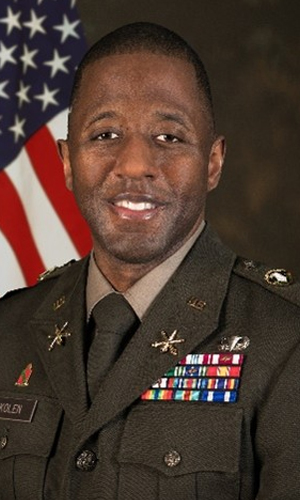
LT. COL. EDWIN L. KOLEN
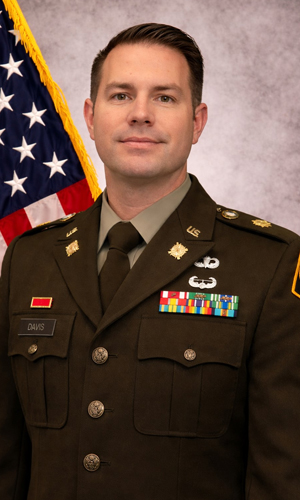
MAJ. ROBERT E. DAVIS
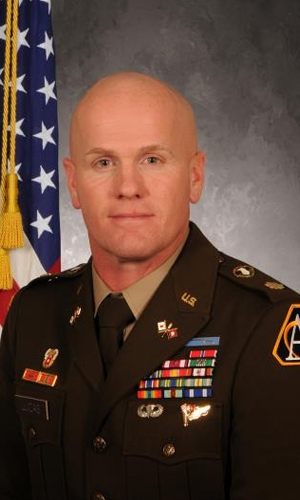
MAJ. JOSEPH CODY LUCAS

MAJ. JOSHUA K. MCMILLION

MAJ. LEE WHITFIELD

MEGHAN M. MURPHY RUDDICK

TRACI B. WILLIAMS
We argue that innovation within the Army must be executed at a level capable of achieving speed, relevance and measurable impact. True innovation cannot survive in bureaucracy-laden environments or operate in isolation from the operational realities faced by Soldiers and commanders. The Global Tactical Edge Acquisition Directorate (G-TEAD) establishes a compelling example of how tactical-level innovation, guided by strategic synchronization, offers the right balance between agility and alignment. We contend that the Army should institutionalize the I.D.E.A. process—Innovate, Demonstrate, Equip, Acquire—as the foundation for future capability development.
Rethinking Innovation Across Levels
Too often, debates on Army innovation revolve around the speed of the acquisition process rather than its appropriateness at different echelons. Enterprise-level acquisition, governed by the Planning, Programming, Budgeting and Execution (PPBE) system, serves its purpose for large-scale, deliberate development but lacks agility. Tactical-level innovation, however, allows for rapid, mission-driven adaptation. The key is ensuring that bottom-up tactical innovation informs and influences top-down processes like PPBE, ensuring continuous alignment between operational needs and institutional investments.
Innovation must not function as an isolated experiment but as a deliberate input pipeline for future Army capabilities. Predicting the exact nature of future warfare has always been elusive; therefore, innovation must be iterative, responsive and directly linked to those facing adversaries on the ground.
Addressing Legacy Gaps in Innovation
Past innovation efforts produced promising ideas but lacked full execution and integration. Some neglected direct Soldier participation; others failed to test in authentic operational conditions. Many operated in isolation, limiting the cross-pollination of data and ideas across commands. Worse still, numerous demonstrations ended with no lasting capability in the hands of Soldiers.
The G-TEAD’s integrated I.D.E.A. process resolves these deficiencies by ensuring all components—innovation, demonstration, equipping and acquisition—are interdependent and continuous. Through this method, feedback flows both from the field up to the enterprise and from leadership down to the tactical edge.
Innovation at the tactical edge: The G-TEAD way!
G-TEAD provides a tested mechanism for blending operator feedback with strategic intent. Operating under the Deputy Assistant Secretary of the Army for Research and Technology, G-TEAD addresses immediate risks faced by Army Service Component Commanders while feeding insights into the Army’s broader acquisition ecosystem. Its success originates from its disciplined execution of the I.D.E.A. process:
- Innovate: Focus on new and improved solutions outside existing Programs of Record. This approach allows G-TEAD to explore capabilities unencumbered by legacy structures while still leveraging lessons from established systems.
- Demonstrate: Conduct Soldier-led demonstrations in operationally relevant environments. Realistic use under field conditions, not laboratory simulations, ensures that the Soldier’s voice is primary. G-TEAD’s use of unbiased evaluations, led by Soldiers of the correct Military Occupational Specialty and supported by the Army Test and Evaluation Command, produces credible data that guides both industry and the Army.
- Equip: Immediately provide demonstrated equipment for extended Soldier use and feedback. This “leave-behind” phase enriches development cycles, directly informing industry improvements and giving commanders rapid capabilities to mitigate current operational risks.
- Acquire: Translate proven capabilities into formal acquisition channels. By bridging temporary field equipping with long-term sustainment, G-TEAD ensures that successful innovations do not stall after demonstrations but transition into enduring, scalable Army solutions.
Codifying a Playbook, Not creating another regulation
We collectively maintain that while G-TEAD’s I.D.E.A. process has demonstrated value, the Army must codify it in a living playbook, not as another static regulation. Regulations restrict flexibility and slow adaptation—the very antithesis of innovation. A playbook, akin to the Department of War’s Risk, Issue and Opportunity Management Guide, would enable continual iteration as conditions evolve. It would formalize principles without constraining the process, ensuring innovation remains responsive to emerging threats and technologies.
Conclusion
Army innovation must occur where speed and relevance intersect—the tactical edge. G-TEAD exemplifies this by empowering commanders to solve immediate challenges while informing the enterprise system. The I.D.E.A. process transforms innovation from disconnected experimentation into a disciplined, Soldier-centered capability pipeline. To remain competitive and prepared, the Army must adopt the I.D.E.A. approach across its innovation ecosystem and institutionalize it through a dynamic, accessible playbook that evolves with every lesson learned. The I.D.E.A. process principles listed below are simple and easy to follow, but require being a good teammate, being unreasonable when it comes to providing value to Soldiers and a relentless desire to ensure the Army wins!
- Innovate boldly and specifically outside the confines of legacy acquisition channels.
- Demonstrate solutions rigorously with actual Soldiers under realistic conditions.
- Equip units rapidly to validate capabilities and gather essential feedback.
- Acquire successfully through integration with institutional processes, ensuring sustainability and scale.
The I.D.E.A. process works. It is proven. It bridges tactical urgency with disciplined acquisition, ensuring the Army moves at the speed of relevance. We believe the time to adopt it across the innovation enterprise is not tomorrow, not next fiscal year, but now.
LT. COL. EDWIN L. KOLEN is the military deputy for the U.S. Army Pathway for Innovation and Technology (PIT) and the former military deputy for the G-TEAD. He falls under the Joint Project Manager for Integration, a component of the Capability Program Executive for Chemical Biological, Radiological and Nuclear Defense headquartered at Aberdeen Proving Ground, Maryland.
MAJ. ROBERT E. DAVIS is the regional capability lead for the G-TEAD and the assistant product manager for Integrated Battle Command System, Integrated Fires Mission Command at Portfolio Acquisition Executive Fires.
MAJ. JOSEPH CODY LUCAS is the theater lead for the G-TEAD. He holds an M.S. in criminal justice and public administration from Liberty University, an M.S, in systems engineering management from the Naval Postgraduate School and a B.S. in physical education and activity management from South Carolina State University.
MAJ. JOSHUA MCMILLION is the lead strategy and plans officer in ASA(ALT) CHOPS, supporting the G-TEAD, where he focuses on accelerating capability delivery to the warfighter.
MAJ. LEE WHITFIELD is the program manager for the Army Applications Lab (T2COM). He is responsible for transitioning emerging technologies to Army labs, capability developers, capability portfolio executives or directly to Soldiers. He holds an MBA from Virginia Commonwealth University, and a B.S. in psychology from Lynchburg University.
MEGHAN M. MURPHY RUDDICK is the portfolio acquisition executive implementation lead and the Army systems acquisition review council secretariat for the Office of the Assistant Secretary of the Army for Acquisition, Logistics and Technology. She has served in several positions throughout the acquisition enterprise, including as a member of the transformative team that established G-TEAD. She holds an M.Eng. in industrial engineering from Lamar University and a B.S. in engineering physics from the University of Wisconsin – Platteville.
TRACI B. WILLIAMS is the acquisition management division director for Project Manager Acquisition, Training and Readiness and a former capability lead for the Global Tactical Edge Acquisition Directorate. She falls under CPE Enterprise Software and Services.