
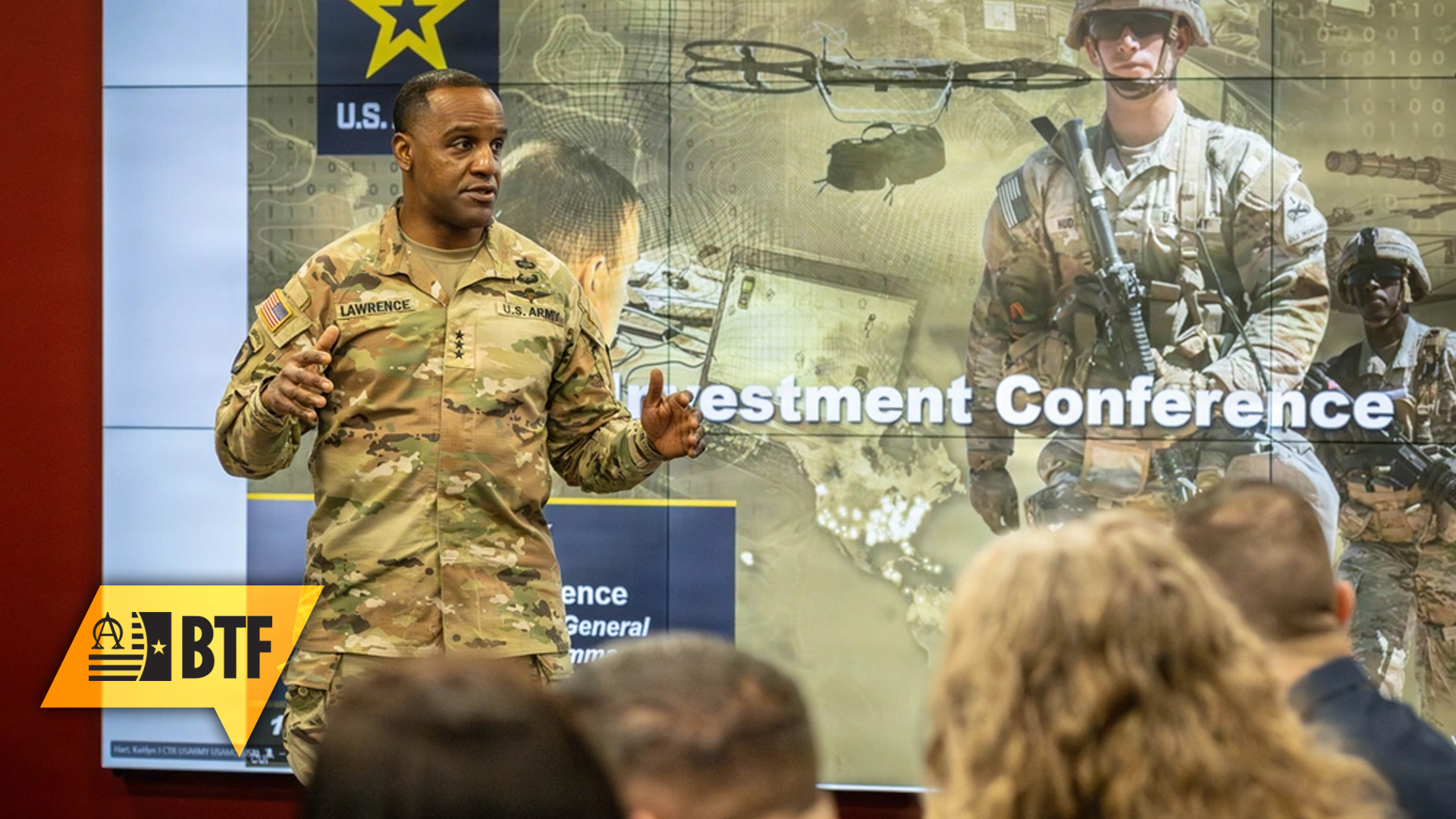
Lt. Gen. Gavin Lawrence, Army Materiel Command deputy commanding general gave opening comments for the Organic Industrial Base Site Investment Conference, Jan. 13-15, 2026, at Redstone Arsenal, Alabama. (Photo by Joseph M. Lee, U.S. Army Materiel Command)
HON. BRENT G. INGRAHAM
Every acquisition professional in this workforce has heard some version of the same message over the past year—we must move faster.
That’s true, but speed isn’t something we create by shortening a briefing or asking a program office to work harder. We’ve changed structures, authorities, processes and organizations to give ourselves more room to move. The question now is whether we’ll use that room differently.
A new org chart won’t make us faster on its own. Neither will a new authority, an earlier industry touch point or a streamlined process if we continue to make decisions the same way we did before. We need to understand the operational problem, bring the right expertise to it early, make the risks visible and decide when the evidence is sufficient to move.
That requires us to accept informed acquisition risk now to reduce operational risk later. It doesn’t mean lowering standards, and it certainly doesn’t mean compromising safety.
CAPACITY IS PART OF THE CAPABILITY
We can develop the best technology in the world and still fail our Soldiers if we can’t build enough of it, repair it, replenish it or keep it operating under stress.
Those questions belong in our strategy from the start. We need to understand supplier depth, producibility, sustainment, personnel, tooling, technical data and critical materials before our options narrow. If we discover those problems only after a design is mature or a contract is awarded, we’re already reacting.
At Red River Army Depot in Texas, we’re combining organic infrastructure with commercial advanced-manufacturing expertise to strengthen the supply chain and increase production speed. The significance is broader than one depot. We need to be willing to combine public and private strengths where doing so gives us greater resilience and responsiveness.
Those considerations should influence decisions long before production begins. We need to understand where private investment can expand output, where the Organic Industrial Base gives us resilience the commercial market alone cannot, and where our own choices are creating unnecessary dependence on a fragile source.
Production isn’t the last phase of the work. It’s one of the conditions that should shape a program from the beginning.
BRING INDUSTRY INTO THE PROBLEM EARLIER
We have more ways than ever to reach companies early. That access has value only if it changes our approach before the important choices harden.
The Pathway for Innovation and Technology, or PIT, can help us reach firms that may not have worked with us before. But opening the door isn’t enough. We should be using those engagements to test our assumptions about what already exists, what can be manufactured at scale, which commercial standards are sufficient and which government-unique requirements are buying us cost and time without enough operational return.
The Low-Cost Interceptor effort is a useful example. We didn’t tell industry that only a complete system was worth bringing forward. A seeker, rocket motor, software solution or other component could be part of the answer. That thinking widened the competition and created room for combinations we might not have designed on our own.
Operation Jailbreak showed a different side of the same issue. Companies that had never worked together integrated systems in a matter of days because Soldiers, engineers, acquisition professionals and industry were working the same operational problem together. We didn’t solve every interface problem before bringing industry in. We created the conditions for technical teams to solve them.
That’s the kind of engagement we need more often: early enough to matter, specific enough to focus the work and open enough to let the best solution emerge.
ALLIED DEMAND BELONGS IN THE PORTFOLIO
Foreign Military Sales (FMS) can’t remain something we account for after U.S. requirements, production quantities and configurations are already set.
If we know allies and partners are likely to need the same systems, we should see that demand early enough to influence our planning. Otherwise, a partner can ask for equipment after production is already committed, delivery timelines stretch and both sides are left managing a problem that could have been visible much earlier.
Our[RW2.1] Demand Capacity initiative gives us a more complete view of U.S. and FMS demand against what industry can actually deliver. International sales aren’t separate from industrial planning. They affect supplier workload, production schedules, long-lead items, sustainment and the business case behind a company’s decision to invest.
We should judge FMS reform by more than how quickly we move paperwork. A better system gives our partners greater predictability, gives industry a clearer demand signal and improves our ability to plan across a portfolio rather than one case at a time.
It also strengthens interoperability. Systems our allies can field, sustain, train with and operate alongside us increase the combat power available to the coalition, not simply the volume of U.S. defense exports.
MANAGING RISK WITHOUT LOSING RIGOR
Most of us don’t need another definition of risk. The harder issue is whether we’re prepared to act when uncertainty remains.
The Mid-Range Capability program moved from requirement to fielded system in just over two years because the team didn’t assume every activity had to occur sequentially. Work proceeded in parallel where the risks could be understood and managed. Prototypes were used to learn rather than judged against an expectation that everything had to be perfect on the first attempt.
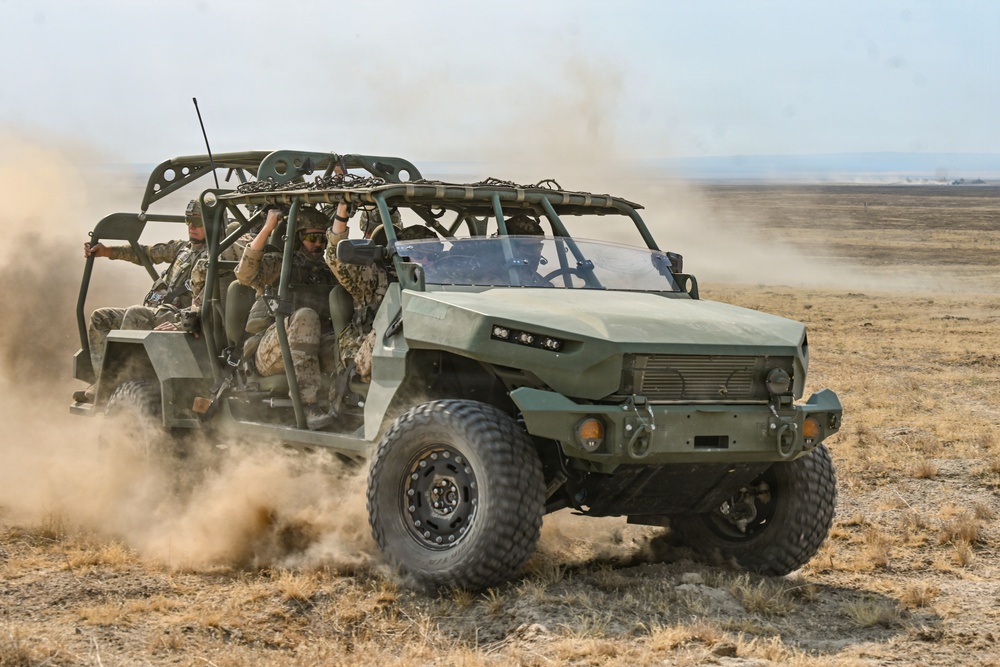
The Infantry Squad Vehicle team made similar choices. It relied on mature commercial technology, maintained a focused requirement and incorporated continuous Soldier feedback rather than allowing the pursuit of refinement to delay fielding.
Neither program succeeded by ignoring risk. The teams distinguished between risks that required additional work and uncertainties that could be carried forward.
That distinction should become more important under the Portfolio Acquisition Executive construct. Bringing contracting, testing, sustainment, programming and other functions closer to portfolio decisions creates value only if we use that proximity to resolve issues sooner and make decisions at the right level.
We also need to use the authorities already available to us. Not every delay points to a missing statute, policy or delegation. Sometimes the obstacle is a process we’ve continued to follow long after the conditions that created it have changed. Recognizing that difference is part of the judgment this work requires.
SAFETY IS NOT A TRADE
One boundary should remain clear. Speed doesn’t come at the expense of safety.
The streamlined materiel release process gives our leaders greater ability to tailor requirements to the risk and operational context of a system. Factors such as urgency, expected lifespan, fielding scale, available data, program cost, acquisition approach and potential impact on Soldier safety all affect how much evidence is necessary before a decision.
We should use that flexibility, but it shouldn’t be mistaken for permission to ignore hazards or conceal uncertainty. Necessary safety assessments still must be completed, accepted risks documented and those risks communicated to those who will employ the system.
The objective isn’t less rigor. It’s better judgment about where rigor matters most.
That also requires an environment where we can identify a problem early without assuming that doing so will be treated as failure. We should be able to tell leaders what we know, what remains uncertain, what risk we’re accepting and what we recommend. Leaders must be prepared to exercise judgment on that basis.
WHAT WE OWE SOLDIERS
We’ve spent considerable effort changing the acquisition system. The value of those changes won’t be measured by how many processes we rewrote or organizations we realigned. Soldiers will experience the results in much more practical terms—whether relevant equipment reaches them sooner, whether we can build and sustain enough of it, whether it can adapt as the threat changes and whether our allies can operate alongside us.
Many of the decisions that determine those outcomes happen years before a system reaches a formation. They happen when we shape the requirement, decide how much of the solution to prescribe, bring industry into the problem, plan for production, account for allied demand and decide when we know enough to move.
We’ll never eliminate uncertainty from this work, and we shouldn’t try. Our responsibility is to understand the risks we’re accepting, protect what can’t be compromised—especially Soldier safety—and make sound decisions while there’s still time for those decisions to matter.
Delay doesn’t make risk disappear. Too often, it shifts that risk to Soldiers.
This We’ll Defend.
Recent Posts
Read more of our recent Behind The Frontlines Posts.

HIRING CONTRACTING SPECIALISTS, THE SMART WAY

Acquisition is a Team Effort – Brice Ott

Protect Your Time – Tiffanie Bachar