
Sgt. 1st Class Ryan Johnson instructs students at The Army Acquisition School (TAAS). TAAS is transitioning from a purely classroom model to a blended, scenario-driven and technology-enabled training environment that emphasizes core competencies, ensuring the Army Acquisition Workforce is equipped to support modernization, digital transformation and rapid capability delivery. (Photo courtesy of Sgt. 1st Class Ryan Johnson)
FROM THE DIRECTOR OF ACQUISITION CAREER MANAGEMENT RONALD R. RICHARDSON JR.
The Army stands at a pivotal moment, one defined not by incremental change but by deliberate transformation. At the center of this evolution is a concept often discussed but not always fully understood: workforce optimization. This initiative, tied directly to broader acquisition transformation, is reshaping how the Army Acquisition Workforce is structured, trained and employed. While the journey has not been without disruption, it is fundamentally about one outcome—delivering the right capability into the hands of Soldiers faster and more effectively than ever before.
UNDERSTANDING WORKFORCE OPTIMIZATION IN A TIME OF TRANSFORMATION
Workforce optimization does not exist in isolation. It is a direct response to a larger strategic imperative, the need to build a leaner, more lethal force capable of outpacing peer and near-peer competitors. This imperative has driven the Army to rethink not only what it acquires, but how it acquires, and critically, how it organizes the people responsible for delivering those capabilities.
At its core, workforce optimization is about alignment.
Over the past year, the Army undertook a series of workforce reductions and realignments intended to reduce fixed costs and redirect resources toward capability development. These measures, including programs encouraging voluntary departures, achieved the goal of shrinking the workforce by 10%. While this lowered overhead, it also introduced unintended consequences. Reductions did not occur evenly across skill sets or organizations, leaving some areas critically short of talent, while others retained excess capacity.
This created a new challenge—how to rebuild the workforce in a smarter, more intentional way. Optimization, therefore, is not simply about reducing numbers; it is about redistributing talent, reskilling personnel and ensuring that the Army has the right expertise positioned where it matters most. It is a deliberate effort to correct imbalances and create a workforce aligned with modern acquisition goals.
At the same time, acquisition transformation has introduced new organizational constructs, most notably structures led by portfolio acquisition executives (PAEs) and capability portfolio executives (CPEs). These are designed to unify previously fragmented functions—requirements, contracting, testing and funding—under a single accountable leader. The result is greater unity of effort, faster decision-making and a sharper focus on outcomes rather than process.
KEY CHANGES AND STRATEGIC SHIFTS
Several key changes define how the Army is improving and rebalancing the acquisition workforce. While each initiative stands on its own, together they represent a coherent shift toward speed, agility and mission-first execution.
- Organizational Realignment for Unity of Effort
The most significant structural change is the move away from fragmented “tribal” processes toward integrated structures led by PAEs and CPEs. By consolidating authorities and responsibilities under a single executive, the Army is eliminating gaps between functions that historically slowed progress. Decision-making is now closer to the work, reducing delays that once took months to resolve. - Flattened Structures and Faster Decision Cycles
Workforce optimization is also about reducing layers. Flatter organizations empower individuals at lower levels to make decisions, eliminating approval bottlenecks. This not only accelerates timelines but encourages accountability and initiative across the workforce. - Agile Development and Iterative Feedback
The Army is shifting from rigid, long-cycle acquisition models to agile, iterative approaches. Instead of spending years defining exhaustive requirements, teams now prototype early, gather feedback from Soldiers and refine solutions in cycles. This approach ensures that what is delivered is not just what was asked for, but what is actually needed. - Reducing Redundancy and Increasing Efficiency
Simplifying organizational structures has been a priority. Redundant processes and duplicate functions are being removed to streamline operations. The goal is a system where every role contributes directly to delivering capability, rather than sustaining bureaucracy. - Adopting Commercial Practices
The acquisition model itself is evolving. The Army is moving to an “adopt, adapt or develop” approach, favoring existing commercial solutions where possible. This reduces development timelines and leverages industry innovation, enabling faster fielding of effective capabilities.
Together, these changes reflect a broader cultural shift—from process compliance to mission execution, from perfection to practicality and from static planning to continuous adaptation.
BUILDING THE RIGHT WORKFORCE
Optimizing structure is only part of the equation. Equally important is ensuring that personnel possess the skills required to succeed in this new environment.
The Army is addressing this through a combination of reskilling, upskilling and active talent management. Employees may find themselves moving into new roles, sometimes outside their previous specialty areas, supported by targeted training and development opportunities. This approach recognizes that the workforce already contains significant talent, it simply needs to be applied more effectively.
Training itself is evolving. Traditional classroom-based instruction is giving way to more modern, practical approaches including:
- Scenario-based and gamified learning environments that simulate real-world decision-making.
- On-the-job training and embedded experiences, such as participation in testing events.
- Short-term developmental assignments that broaden skill sets and exposure.
- Closer collaboration with industry including exchange programs, like Training With Industry, that bring commercial best-practices into the workforce.
These efforts are complemented by a push for greater visibility into workforce capabilities and opportunities. Improved data and systems will allow leaders to match people with roles more effectively, ensuring both organizational needs and individual career development are addressed.
These initiatives also aim to address emerging challenges. The Army has experienced a significant loss of institutional knowledge, with many senior experts departing alongside early-career personnel. This creates a “bathtub” effect in experience levels, leaving gaps in mentorship and leadership pipelines. Workforce optimization must therefore not only fill current positions but also rebuild a sustainable talent pipeline for the future.
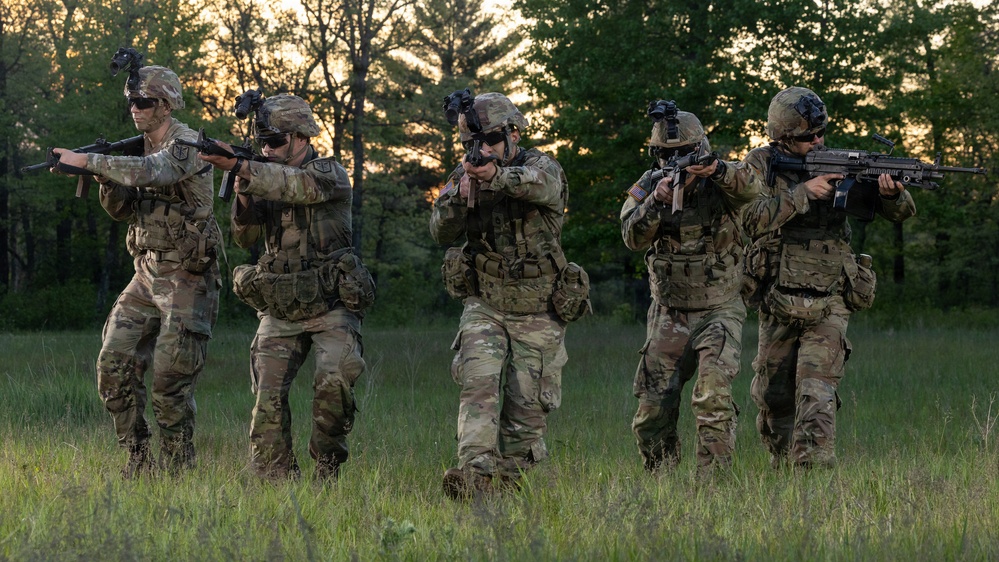
Army Reserve Best Squad Competitors, representing the 200th Military Police Command at Fort McCoy, Wisconsin, on May 24, 2026. Workforce optimization is fundamentally about one outcome, delivering the right capability into the hands of Soldiers faster and more effectively than ever before. (Photo by Calvin Reimold, U.S. Army Reserve Command)
COMMUNICATING CHANGE AND FOSTERING TRUST THROUGH TRANSPARENCY AND LEADERSHIP
For any transformation of this magnitude, communication is critical. Change can create uncertainty, and the past year has undoubtedly felt turbulent for many members of the workforce. Leaders recognize this and are taking steps to ensure that employees understand both the “what” and the “why” behind these efforts.
A multi-layered communication strategy is underway, including:
- Enterprise-level town halls led by senior leadership to outline strategy and progress.
- Portfolio and organizational briefings tailored to specific workforce segments.
- Recurring meetings and forums to provide updates and gather feedback.
- Standardized messaging tools, such as talking points and briefing materials, to ensure consistency.
However, communication extends beyond formal channels. Perhaps most importantly, leaders are being called to lead by example. Changing culture requires more than words, it requires visible actions that reinforce new expectations. For example, encouraging innovation and risk-taking must be matched by a willingness to accept and learn from failure. If employees see that prudent risks are supported rather than punished, the cultural shift will take hold.
Ultimately, the goal of communication is to replace uncertainty with understanding. Employees need to know how these changes affect them personally, how they contribute to the mission and what opportunities lie ahead.
CONCLUSION
Army workforce optimization is not a one-time adjustment, it is an ongoing process of refinement, learning and improvement. While the path has been challenging, it is guided by a clear and compelling objective to create an agile, adaptive acquisition workforce capable of delivering critical capabilities at the speed of relevance.
At its best, this transformation is about more than efficiency. It is about purpose. Every realignment, every training initiative and every structural adjustment ultimately serves the same end, ensuring that the Soldier in the field has the tools needed to succeed.
This is a moment to adapt, to innovate and to engage with the mission in new ways. The constraints that once slowed progress are being removed. The systems are aligning to support speed and creativity. And the opportunity to make a meaningful impact has never been greater.
Workforce optimization, then, is not simply about management—it is about empowerment. It is about placing the right people, with the right skills, in the right roles and giving them the authority and support to deliver. When done correctly, the result is not just a more efficient organization, but a more effective one that fulfills its ultimate responsibility to equip Soldiers with the capabilities they need, when they need them, to succeed.
Recent Posts
Read more of our recent Behind The Frontlines Posts.
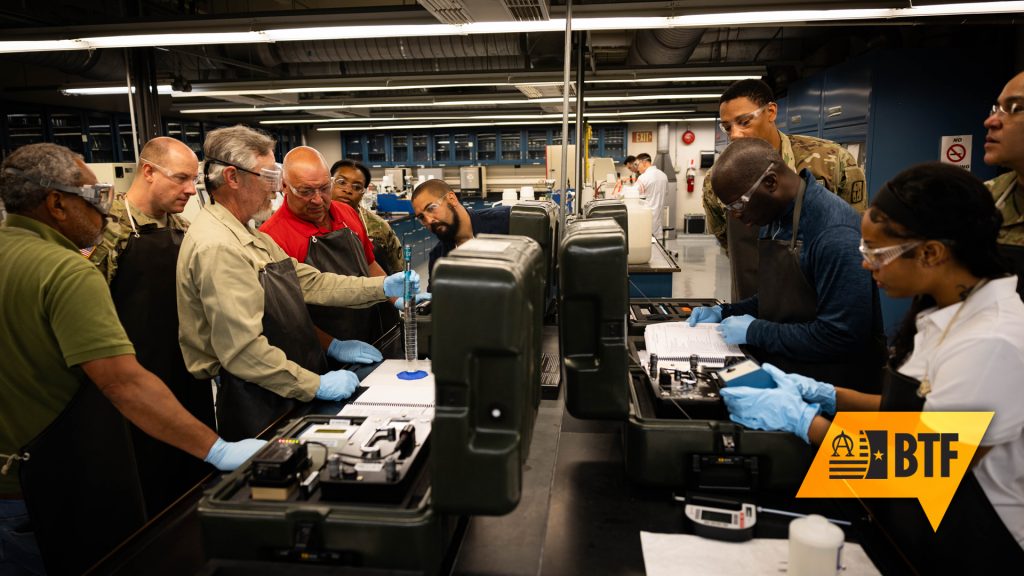
PDM PAWS Fields Modernized Liquid Logistics Systems

Collaboration is Key – Joseph M. Carson IV

NSA/JTNC Biannual Collaboration Drives Modernization of Secure Military Communications