
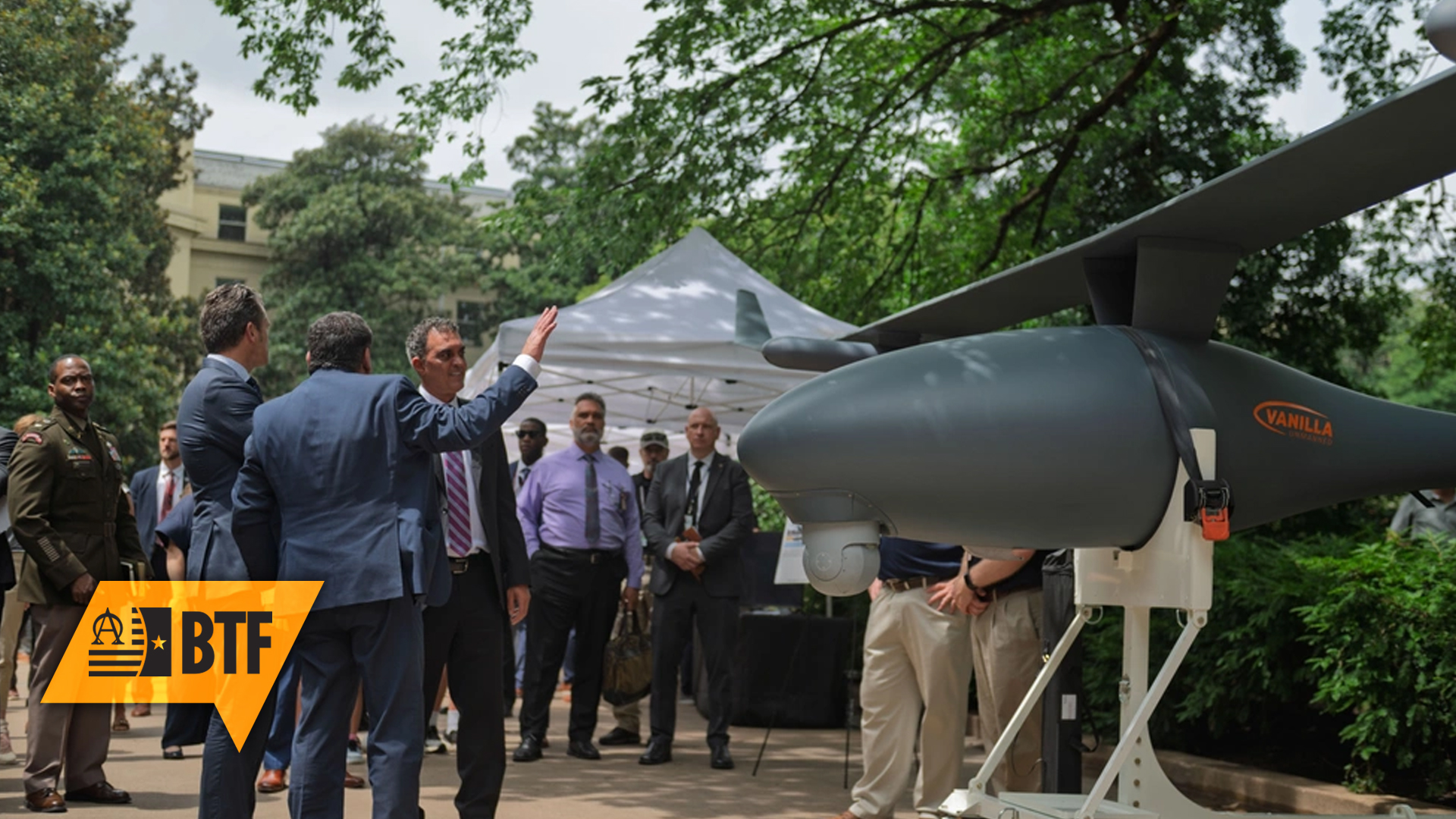
Secretary of War Pete Hegseth, Emil Michael, under secretary of war for research and engineering, and Alexander R. Lovett, deputy assistant secretary of war for prototyping and experimentation, look at a multidomain autonomous display during the Rapid Prototype Display event at the Pentagon Center Courtyard, Arlington, Virginia, on July 16, 2025. The event showcased cutting-edge technologies under accelerated development to support joint operations in multiple domains. (Photo by Pfc. Jose Rolando Garcia, Army Multimedia and Visual Information Division)
by Robert F. Briar
If we project ourselves into the future and see that sustainment costs ultimately become operationally or fiscally unaffordable, will acquisition leaders still defend the decision to accelerate programs while accepting reduced analytical rigor? Or will the Army discover that it merely shifted risk from the present into the future where the consequences became harder, more expensive and potentially irreversible?
The Department of the Army is operating in an era defined by strategic competition with China, technological disruption and software-defined warfare. Traditional acquisition timelines, often measured in decades, are frequently misaligned with the pace of modern conflict. In response, the Army has shifted toward rapid prototyping, experimentation and accelerated pathways, leveraging Middle Tier Acquisition (MTA) authorities, rapid capability offices and iterative software models to compress delivery timelines and maintain strategic advantage. This institutional shift is a necessary evolution; speed is no longer optional. Accelerated pathways allow the Army to integrate user feedback earlier, adapt to evolving threats and deliver capabilities at the speed of relevance.
However, while the Army is becoming more proficient at accelerating capability delivery, a critical vulnerability has emerged: Institutional pressure for speed can inadvertently compress the analytical rigor applied to long-term sustainment. During rapid development, priorities naturally center on functionality, demonstration success and deployment timelines. Consequently, essential life cycle considerations including maintenance scalability, software supportability, supply chain resilience and technical data rights may receive less attention during experimentation and prototyping.
The issue is not the absence of sustainment policy. Existing acquisition policies, such as DOD Instruction 5000.91, “Product Support Management for the Adaptive Acquisition Framework,” and Army Regulation 70–1, “Army Operation of the Adaptive Acquisition Framework,” require life cycle sustainment planning, affordability analysis and product support strategies. Existing frameworks such as the Life Cycle Sustainment Plan; Product Support Business Case Analysis, Independent Logistics Assessments; and Reliability, Availability, Maintainability, and cost analyses provide mechanisms for evaluating sustainment risk. However, these activities may not always mature at the same pace as experimentation and prototyping efforts. The challenge is whether sustainment risk becomes visible and decision-relevant early enough to influence experimentation, prototyping and transition decisions before the Army becomes operationally dependent upon a capability.
The Army routinely establishes measurable criteria to evaluate technical performance, operational effectiveness and schedule execution during experimentation and prototyping. Yet, it is far less clear what criteria are used to determine whether these capabilities will remain affordable and supportable once fielded. If experimentation and prototyping proceed without meaningful sustainment analysis, how do leaders know they are creating enduring capabilities rather than future liabilities? Where are the product support managers, life cycle logisticians and cost analysts whose responsibility is to evaluate long-term supportability? If these perspectives are absent from the process, the Army may be making decisions about future readiness without fully understanding the sustainment obligations being created today.
The central challenge facing Army acquisition is not whether rapid experimentation and prototyping should continue, but whether the Army possesses adequate frameworks to ensure these capabilities, once delivered, remain operationally sustainable. An experimental capability that performs brilliantly in a limited demonstration may eventually confront escalating maintenance demands, software sustainment costs or contractor dependencies that were insufficiently analyzed prior to deployment. Current institutional incentives largely reward visible, short-term delivery while obscuring these long-term life cycle liabilities. Incentivized metrics such as completed prototype demonstrations, capabilities fielded, schedule acceleration and transition decisions achieved are often easier to observe and measure than sustainment outcomes that may not emerge for years after fielding.
By confusing rapid experimentation and prototyping with enduring operational capability, the Army risks unintentionally transferring operational and fiscal risk into the future. If future sustainment costs become unaffordable, the Army will discover that it did not eliminate acquisition complexity through acceleration; it merely shifted the risk to a time when the consequences are harder, more expensive and potentially irreversible.
This article does not argue that experimentation, prototyping or accelerated experimentation are flawed. Rather, it argues that as these approaches become increasingly central to modernization, equal attention ought to be given to understanding the long-term sustainment risks that may accompany accelerated capability delivery.
THE ILLUSION OF SUCCESS: DEFERRED SUSTAINMENT RISKS
One of the most dangerous characteristics of accelerated acquisition is temporal risk displacement, the transfer of risk forward in time rather than resolving uncertainty during development. Programs born through experimentation or rapid prototyping can create an “illusion of success.” Because they demonstrate technological promise and reach operational users quickly, they satisfy near-term demands and generate institutional enthusiasm.
For example, the current rapid expansion of unmanned aerial systems demonstrate how operational urgency can accelerate fielding decisions while potentially creating long-term sustainment, manpower and contractor support requirements that only become fully apparent after widespread adoption. While the operational benefits are substantial, the enduring support structure required to sustain those capabilities will evolve over time as the systems mature into enduring operational assets.
Success in rapid acquisition can become narrowly defined as meeting cost, schedule and performance objectives for the experimental capability or prototype rather than the enduring capability. Every acquisition professional learns in their first acquisition courses that we must deliver a sustainable and affordable operational capability that meets user needs throughout its life cycle.
This dynamic creates a severe accountability asymmetry. Institutional incentives reward experimentation and prototype champions and acquisition leaders for visible delivery speed, while sustainment failures, escalating costs, fragile supply chains and readiness degradation frequently emerge years later under different leadership, budgets and operational realities. As a result, sustainment analysis can become secondary to demonstration success.
Based on the author’s professional observations, the following four sustainment areas appear most susceptible to reduced emphasis during accelerated experimentation and prototyping activities.
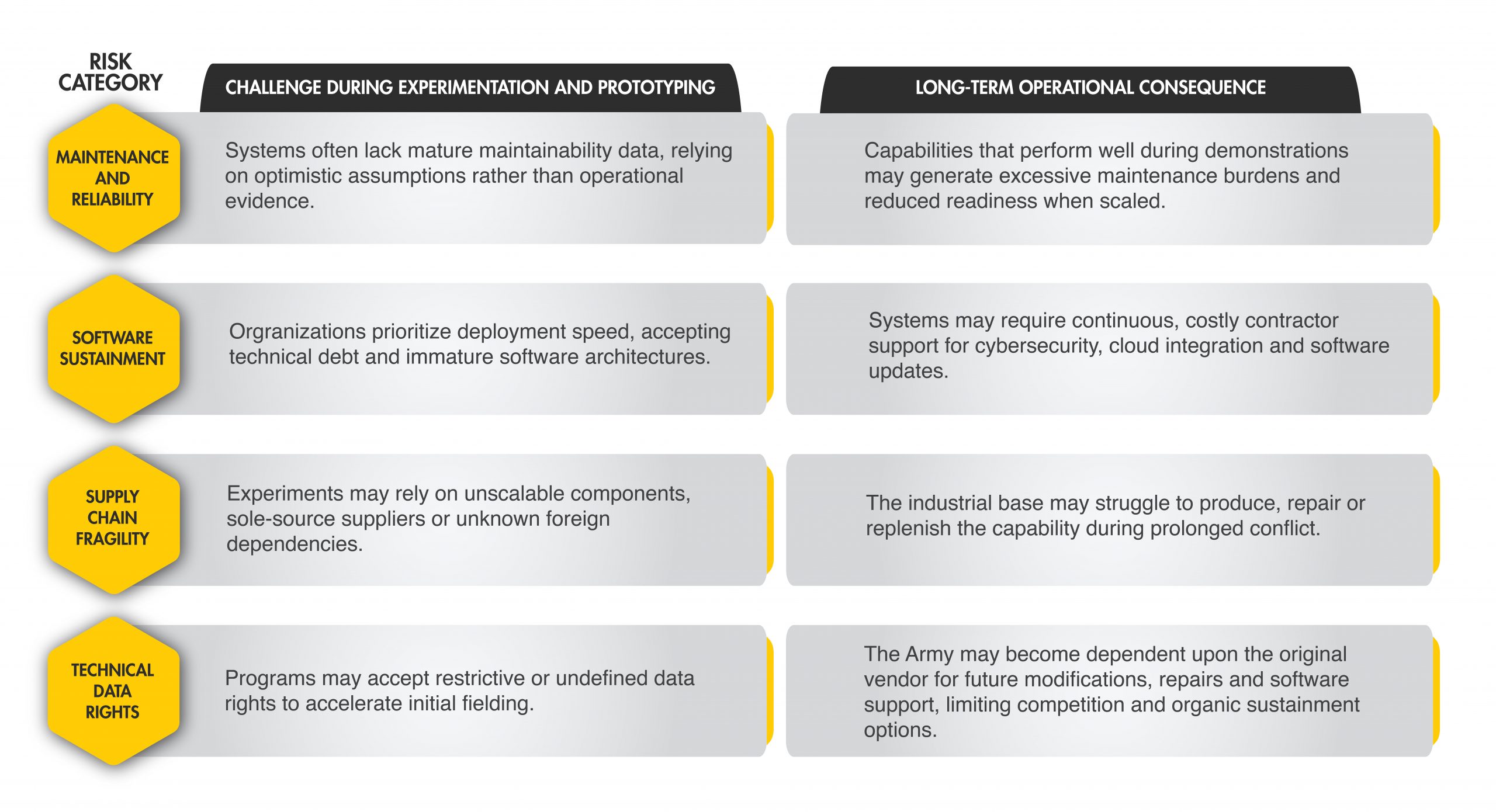
Table 1- Sustainment Blind Spots
The transition from experimentation or prototype to enduring operational capability therefore represents one of the most critical phases in modern acquisition. Experimental and prototype systems may move into operational use before sustainment assumptions are fully validated. The Army may become institutionally committed to systems whose long-term maintenance, software support, affordability and supply chain resilience remain insufficiently understood.
A FRAMEWORK FOR SUSTAINABLE INNOVATION
One of the most persistent misconceptions in acquisition reform is the assumption that analytical rigor and acquisition speed inherently conflict. In reality, bureaucracy and rigor are not synonymous. The Army does not require exhaustive, milestone-heavy analysis for every experiment or prototype. Instead, it requires focused rigor applied to the sustainment factors most likely to create irreversible long-term liabilities.
The Experimentation/Prototype-to-Sustainment Risk Framework proposed below is the author’s conceptual model for integrating sustainment considerations into accelerated acquisition activities. It is not a formal Army or Department of War framework, but rather a proposed approach intended to stimulate discussion regarding how sustainment risk can be more effectively considered during accelerated acquisition efforts.
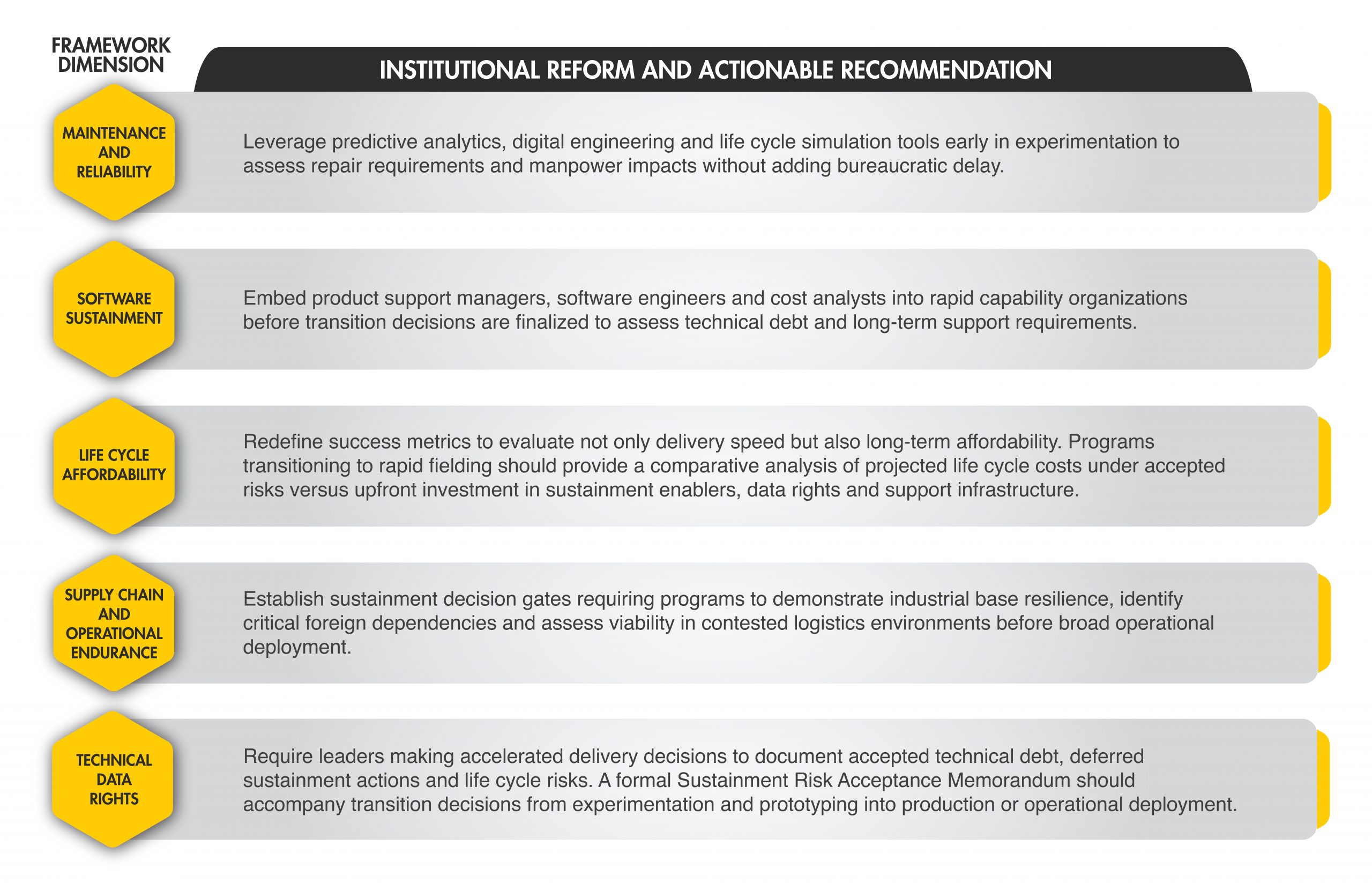
Table 2 – Proposed Experimentation/Prototype-to-Sustainment Risk Framework
These reforms do not seek to slow innovation. Rather, they ensure that decision-makers understand the long-term sustainment liabilities they may be accepting in pursuit of accelerated schedules. Sustainable innovation requires balancing delivery speed with life cycle realism.
CONCLUSION
Experimentation and rapid prototyping are essential components of modern defense acquisition. The Army cannot afford to abandon speed in an era defined by technological disruption and strategic competition. However, the pursuit of accelerated capability delivery must not obscure the long-term sustainment consequences of these decisions.
The central challenge facing Army acquisition is not whether the Army should move faster. It is whether the Army fully understands the future operational and fiscal risks it accepts when accelerating experimentation and prototyping while compressing or forgoing sustainment analysis.
Programs that deliver rapidly, but become operationally or fiscally unsustainable, may create the illusion of modernization while weakening long-term readiness. Speed does not eliminate risk. It often transfers risk into the future where the consequences become operationally harder, fiscally larger and strategically more dangerous.
If future maintenance and sustainment costs ultimately become unaffordable, acquisition leaders may discover that they did not eliminate complexity through acceleration. They merely postponed it until the consequences became more expensive, less reversible and more damaging to long-term military effectiveness.
NOTE: The views and opinions expressed in this article of those of the author and do not reflect the official policy of position of the U.S. Army.
For more information, contact the author at robert.f.briar.civ@army.mil.
ROBERT F. BRIAR is the G-4/director of product support for the Capability Program Executive for Simulation, Training, Test and Threat. He holds a B.S. in business administration/project management from Columbia Southern University and is a Harvard Senior Executive Fellow. He holds DAWIA Advanced Certifications in life cycle logistics and program management, and Foundational Certifications in engineering and technical management and test and evaluation.
Recent Posts
Read more of our recent Behind The Frontlines Posts.

Keep Pushing the Needle – Anand Bahadur

JIATF-401 LEADS A NEW ERA IN COUNTER-SUAS DEFENSE

Aligned for Impact – John Franklin