

The PrSM was recently fired from a U.S. Army M270A2 and HIMARS at White Sands Missile Range, New Mexico. (Photo by Christopher Bohn, U.S. Army)
by Cheryl Marino
As the Army accelerates its transformation for an increasingly contested operational environment, the acquisition enterprise is redefining how programs are developed, decisions are made and risks are owned. The Precision Strike Missile (PrSM) program exemplifies this shift—showing how speed and relevance are achieved not by avoiding risk, but by accepting and managing it. This emerging mindset is reshaping acquisition pathways feedback loops, and workforce expectations across Capability Program Executive (CPE) Offensive Fires and the broader Army.
“The PrSM program serves as a prime example for how CPE Offensive Fires aggressively defines, assigns and manages risk throughout the acquisition life cycle,” explained Lt. Col. Daniel Newell, PrSM product manager, CPE Offensive Fires. “By prioritizing operational speed, iterative development and informed decision-making, the program has achieved a healthy balance between operational urgency and technical and programmatic risk through an incremental development approach.”
DEFINING AND OWNING RISK IN OFFENSIVE FIRES
Building on that approach, the PrSM program shows how intentional risk management drives accelerated development and earlier fielding. CPE Offensive Fires structured the program to ensure risks are not ignored but deliberately mapped and managed throughout the acquisition life cycle. This incremental development model allows the Army to field meaningful capability while maturing technology through successive improvements.
PrSM Increment 1 demonstrates this strategy in action. Rather than waiting for a fully matured system, the Army delivered early operational capability missiles that provided a combat capable weapon quickly. This reduced schedule risk up front, while deliberately carrying forward technical risk, would be addressed through modular upgrades informed by open-systems architecture. The result is a program that recognizes risk cannot be eliminated—but it can be deliberately shaped.
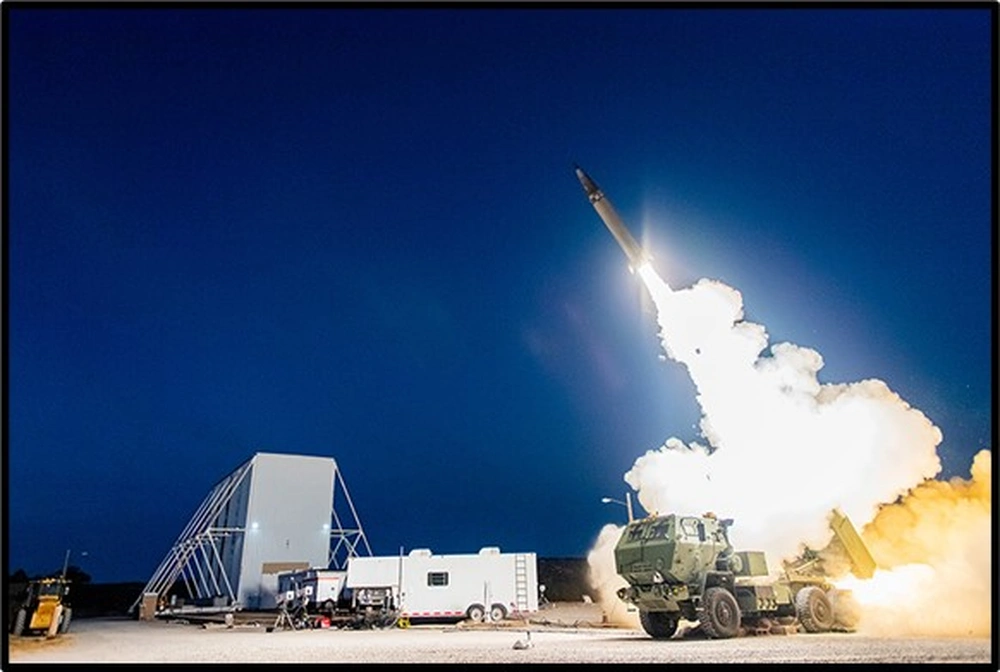
PrSM models this approach through close collaboration across government and industry. The program accelerated design reviews, production decisions and requirement updates to shorten timelines and allow informed choices even as technology evolved. Multiple early test events reflect this mindset, including Limited User Tests (LUTs) in May and September 2025, at White Sands Missile Range, New Mexico, that validated performance under realistic conditions—GPS jamming, updated software and operational scenarios—before formal initial operational test and evaluation. These LUTs enabled system refinement prior to broader fielding.
Simultaneously, executing cooperative vulnerability and penetrations assessments conducted in parallel with operational testing identified cyber vulnerabilities early, allowing the program to validate fixes prior to fielding. Complementing these efforts were operational test shots conducted with representative threat countermeasures. These shots validate lethality and reliability under real world conditions, providing a clearer understanding of risks within the operational context.
“Ultimately, these proactive changes ensure that risk ownership is deeply embedded in the acquisition process—from high-level decisions to technical design and test planning—reducing the likelihood of late-stage surprises, shortening developmental timelines and significantly increasing the probability of delivering a combat-ready system to the warfighter,” Newell said.
ACQUISITION PATHWAYS AS ACCELERATORS FOR DELIVERY
To meet emerging threats, the Army increasingly treats acquisition pathways as strategic tools rather than rigid regulatory lanes. The PrSM program also demonstrates how pathways within the Adaptive Acquisition Framework can be leveraged to align capability needs with efficient development approaches.
PrSM Increment 2 illustrates this flexibility. Newell said the PrSM Increment 2 program is using the Middle Tier of Acquisition – Rapid Fielding (MTA RF) pathway to deliver an early capability to engage moving maritime targets with residual PrSM Increment 1 capability. Originally aligned with the Major Capability Acquisition pathway, Increment 2 transitioned to the MTA-RF pathway to better meet operational timelines. This decision—grounded in technical maturity, production readiness and the operational threat environment—allowed the program to bypass traditional bureaucracy and accelerate capability deployment.
By reusing hardware, software and testing results from Increment 1, Increment 2 reduced verification timelines, accelerated integration and enabled early engagement of moving maritime targets. The program further capitalized on MTA-RF advantages such as streamlined oversight, early production options and continuous integration of maturing technology. Applying proven components and test data preserved momentum and streamlined verification activities, highlighting how this approach accelerated capability delivery.
This decision—made at the intersection of risk, urgency and technical readiness—shows how acquisition pathways can serve as agile instruments for delivering timely capability. It reflects a broader cultural shift in which acquisition professionals strategically use regulatory tools to align development pace with warfighter needs.
INTEGRATING SOLDIER FEEDBACK THROUGHOUT DEVELOPMENT
A defining characteristic of the PrSM program is its commitment to integrating operational user feedback early, often and meaningfully. Soldier input shapes design decisions, requirement refinements and training approaches.
One of the most significant examples is the Army’s decision to maintain launcher compatibility. Soldiers emphasized the importance of minimizing additional training and sustaining familiar operational procedures. As a result, the program preserved compatibility with the M142 High Mobility Artillery Rocket System (HIMARS) and M270A2 Multiple Launch Rocket System, reducing transition burden, while enabling units to move from the Army Tactical Missile System to PrSM without sacrificing readiness.
Testing events reinforced this continuous feedback loop. During the PrSM Increment 1 LUT conducted at Fort Wingate Launch Complex, New Mexico, on December 11, 2024, Soldiers launched two missiles from a HIMARS launcher. Their hands on experience informed assessments of mission planning, training, usability and operational integration. Feedback collected through focus groups and after action reviews directly shaped subsequent system updates.
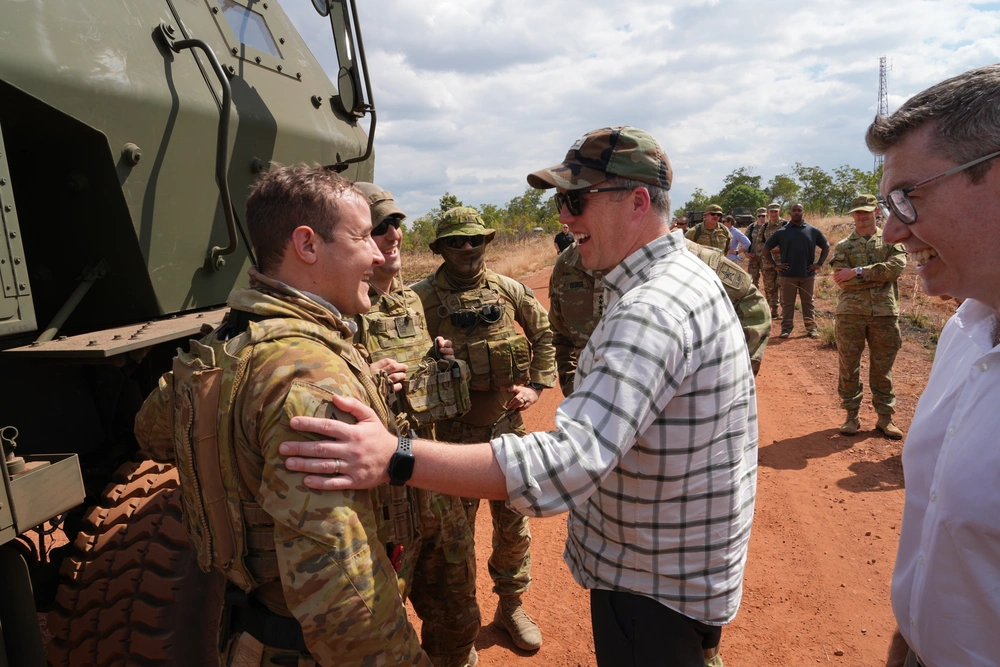
This process continued during the initial operational test in May and September 2025. Soldiers validated system performance and confirmed that training before the test was adequate—ensuring fielding was both safe and intuitive.
PrSM Increment 2 continues this proactive engagement model. The team works closely with user communities across the Army, Navy and Marine Corps, including recurring engagements with United States Army Pacific. These engagements help refine “left of launch” information needs, real world scenarios and cross service interoperability, ensuring the next increment aligns with future operational requirements.
SHAPING THE WORKFORCE FOR SPEED AND CRITICAL THINKING
The shift toward faster, risk informed acquisition is reshaping the acquisition workforce, especially within Offensive Fires. Flexibility, speed and critical thinking are becoming core professional competencies.
Partnerships with Warfighting Acquisition University have expanded to bring targeted, high value expertise directly into program execution; strengthening decision-making and accelerating workforce development in rapid acquisition techniques.
Cross training further reinforces workforce resilience.
“We’re also training PrSM personnel on each other’s duties and responsibilities, hiring new talent and always working to ‘build the bench’ to ensure there is redundancy within the team,” Newell said. “Critical thinking and problem-solving skills have always been significant but are becoming more and more essential.” It is an ongoing effort to ensure continuity and adaptability as personnel transition or requirements evolve.
“Looking ahead, success for the future of the acquisition workforce means recognizing that the greatest risk is not technical imperfection, but operational delay,” Newell said. “Success is no longer defined by delivering a perfectly mature system at the end of a prolonged, decade-long cycle.” Instead, he said, success is measured by the rapid, iterative deployment of combat-credible, highly lethal systems that seamlessly integrate into existing formations and directly address the immediate needs of the warfighter at the speed of relevance.
“By actively owning risk, leveraging agile acquisition pathways and integrating Soldier feedback from day one, we are no longer just procuring systems—we are rapidly delivering decisive overmatch to the warfighter at the speed of need.”
CONCLUSION
The Army’s accelerated acquisition transformation—exemplified by the PrSM program—marks a decisive cultural and procedural shift. By embracing informed risk ownership, applying flexible acquisition pathways, integrating Soldier feedback from the start and empowering a critically minded workforce, the Army is delivering capabilities designed for today’s contested operational environment and ensuring continued overmatch.
For additional information, go to https://www.army.mil/PAEFires.
CHERYL MARINO is a writer-editor at the U.S. Army Acquisition Support Center at Fort Belvoir, Virginia, providing contract support for Behind the Frontlines and TMGL, LLC. Before USAASC, she served as a technical report editor at the Combat Capabilities Development Command Center at Picatinny Arsenal. She holds a B.A. in communications from Seton Hall University and has more than 25 years of writing and editing experience in both the government and private sectors.
Recent Posts
Read more of our recent Behind The Frontlines Posts.

PrSM Program Exemplifies Rapid Delivery Through Proactive Risk

Commitment to Completion – William (Bill) Parker-Combs
LEAD Program Celebrates Year Group 2025 Graduates