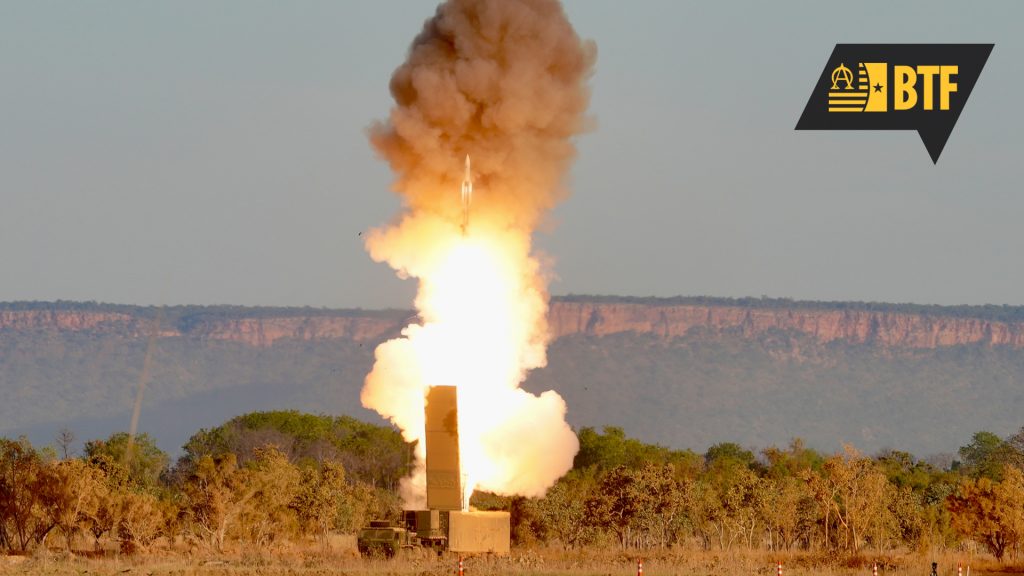
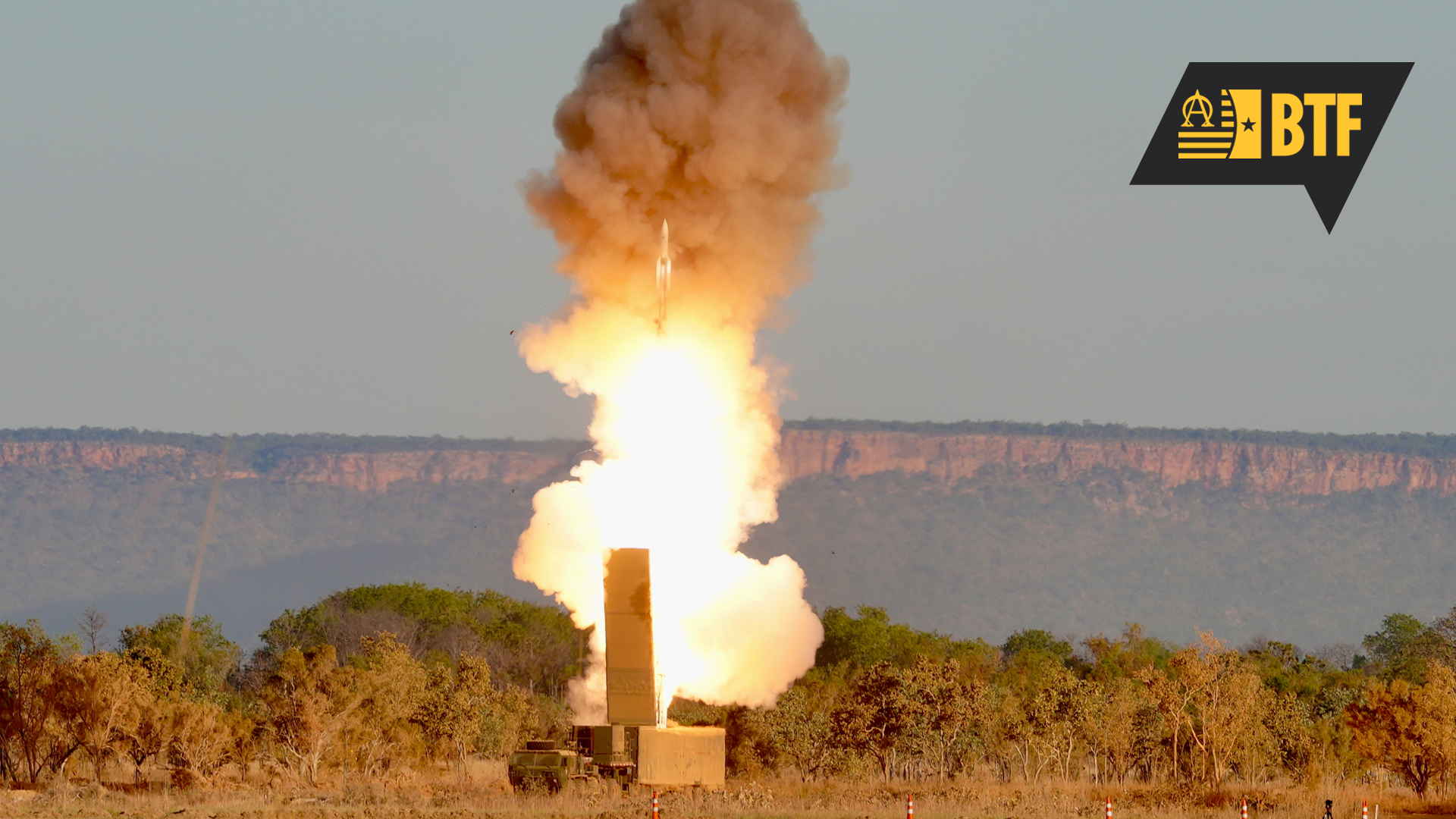
The 3rd Multi-Domain Task Force conducts the first MRC live-fire exercise outside of the continental United States successfully sinking a maritime target with a Standard Missile-6 Force during Exercise Talisman Sabre 25 on July 16, 2025. The Army was able to field the MRC in just over two years through calculated risk-taking such as leveraging mature, proven components and existing joint-service technologies. (Photo by Sgt. Perla Alfaro, U.S. Army Pacific Public Affairs Office)
by Rebecca Wright
For years, Army acquisition has operated using antiquated processes that resulted in new technologies stuck in multi-year planning and slow fielding. This risk-aversion sometimes led to years of effort wasted and billions of dollars spent on acquisition programs.
In an era when the U.S. Army is undergoing rapid reform and modernization, speed and flexibility are at the forefront. This reform encourages acquisition professionals to take measured and calculated risks to develop and deliver warfighting capabilities faster.
The Portfolio Acquisition Executive (PAE) Fires has embraced this shift to rapidly develop, test and field some of the Army’s most vital capabilities such as hypersonic weapons and integrated air and missile defense. This includes managing and taking risks during program development to deliver to the warfighter quickly—programs like the Mid-Range Capability (MRC) system.
THE MID-RANGE CAPABILITY SYSTEM
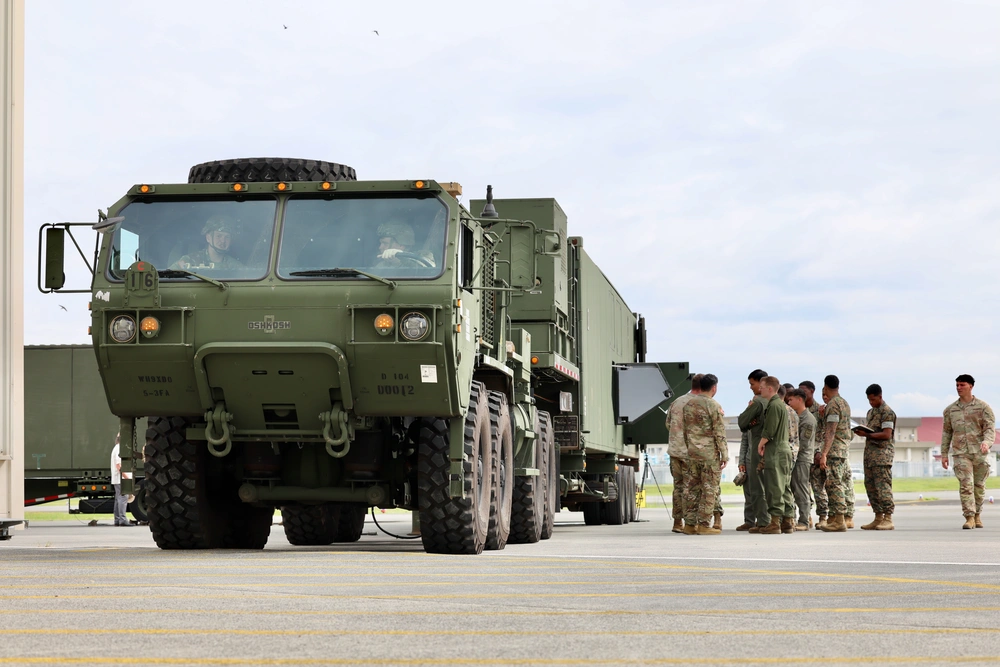
The MRC is a mobile, ground-launched missile system designed for inclusion in the Army’s long-range precision fires portfolio, to fill the range gap between the Precision Strike Missile and the Long-Range Hypersonic Weapon. While the MRC is an Army program of record, to execute rapid delivery required collaboration from joint services. The MRC, also referred to as the Typhon, was developed using existing hardware such as the Navy’s Mk 41 Vertical Launch System, Standard Missile-6 and the Tomahawk Cruise Missile.
“The Mid-Range Capability program is highly complex, operating at the intersection of joint operations,” said Lt. Col. Christopher Blackwell, Product Manager Mid-Range Capability with PAE Fires’ Advanced Fires Project Office. “It requires seamless synchronization across Army, Navy and DoW [Department of War] leadership, as well as diverse acquisition disciplines and operational units.”
Blackwell describes the MRC as closing a critical capability gap that will deliver decisive lethality at the exact speed the strategic environment demands. “We needed to equip Army commanders with a land-based, multidomain fires capability that could actively hold adversaries at risk from mid-range distances,” said Blackwell. “By delivering a land-based option that integrates seamlessly into joint operations, we give commanders the flexibility, range and responsiveness required to provide commanders additional options, range, responsiveness and flexibility in support of joint operations.”
TAKING RISKS TO DELIVER
The MRC was fielded at record speed. Instead of spending nearly a decade developing a new system, the Army was able to field the MRC in just over two years. This rapid delivery was accomplished through calculated risk-taking such as leveraging mature, proven components and existing joint-service technologies, from using Other Transaction Authority to using rapid acquisition authorities and flexible contracting mechanisms to streamline development, while maintaining statutory oversight and accountability and deploying prototypes that aren’t quite “perfect” to receive feedback from Soldiers.
“To accelerate from a blank slate to a delivered combat capability, the most significant risks we accepted centered around schedule, integration and process. To achieve that speed, we adopted a strategy of concurrency—executing activities in parallel that traditional DoW acquisition models typically run in sequence,” said Blackwell.
He explained that integrating mature Navy components into an Army formation—while simultaneously building the sustainment structure and aligning training, logistics, safety and testing—was a calculated risk but it also had a significant impact on fast delivery of the MRC. This involved highly disciplined coordination and transparent communication across the Army, the joint force and industry partners. “Ultimately, the key was not attempting to eliminate risk but actively managing it by ensuring our leadership always had the precise, timely information required to make informed decisions and maintain momentum,” said Blackwell.
Additional risk involves deciding when a prototype is “good enough” to move forward, even knowing that there may still be known limitations, maturing components or areas identified for follow-on improvement in the system. Having the requisite data, confidence and mitigations in place to advance to the next phase of development can help teams determine when the risk is worth taking to advance with a prototype.
“A prototype does not have to be flawless to be invaluable. In fact, waiting for perfection actively delays learning,” said Blackwell. “On the MRC program, we treat prototypes as vehicles for discovery—especially when it comes to Soldier engagement. By integrating user feedback at the earliest possible stages, we iteratively mature the system and buy down technical risk. The key to moving at this speed is making those ‘good enough’ decisions deliberately and transparently, always keeping safety, mission effectiveness and the warfighter at the center of the calculus.”
A primary risk taken by Blackwell’s team involved challenging the traditional paradigm that acquisition phases must be sequential. He explained that the program’s ability to execute this philosophy was made possible through rapid acquisition authorities—initially through the Rapid Capabilities and Critical Technologies Office, and subsequently through Capability Program Executive Offensive Fires via the Middle Tier of Acquisition pathway. “It is crucial to emphasize that this was never about bypassing statutory oversight; rather, it was about eliminating bureaucratic drag and ensuring the process served the warfighter. To do that, we had to distinguish between actual oversight and administrative roadblocks.”
Additionally, by aligning decision-makers early, the team was able to bypass roadblocks and prevent the fast-paced effort from fracturing. Leadership stressed achieving a common understanding and a shared visualization to ensure that every stakeholder across the Army, the joint community and industry was operating on the same wavelength.
“Calculated risk-taking means acting decisively when waiting for 100% certainty would cost the Army its operational advantage. It’s the exact opposite of recklessness; it’s about isolating variables, mitigating the hazards we can control and accepting the residual risk required to win,” said Blackwell. “But a critical part of that equation—one that frequently gets overlooked—is that you cannot solely calculate the risk of taking action; you must equally weigh the risk of inaction.”
IT STARTS WITH LEADERSHIP
Blackwell emphasized that the true catalyst for speed is top-down support. When senior leaders provide clear priorities, drive a shared vision and empower their teams to clear bureaucratic roadblocks, Army acquisition can respond with extraordinary speed.
“You build that environment by establishing clear boundaries, encouraging absolute transparency and treating developmental setbacks as critical data points rather than programmatic failures. ‘Safe to fail’ is not synonymous with a lack of accountability. It means creating a culture where Soldiers and acquisition professionals can identify shortcomings early and recommend solutions without fear of professional penalty,” said Blackwell.
If the Army wants to accelerate innovation, leaders must establish the conditions where teams and Soldiers feel empowered to experiment, speak openly and actively shape the final capability. “The Soldiers closest to the problem are always the first to see the solution—this is why integrating their continuous feedback is invaluable,” said Blackwell. He added that this mindset must be modeled by senior leadership. It demands professional humility—the understanding that no program, process or leader possesses every answer at the beginning of an effort. The most successful acquisition teams treat the development cycle as a continuous feedback loop: they capture lessons objectively, act on Soldier feedback decisively and relentlessly refine the system.
INNOVATION OVER STAGNATION
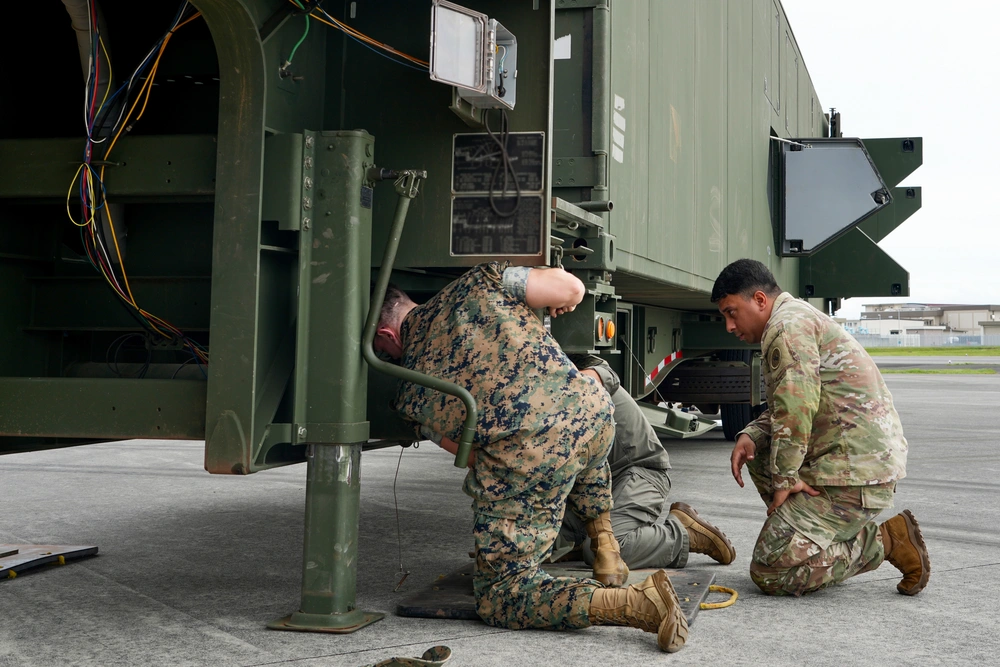
While the new DoW framework encourages calculated risk-taking, it also promotes commercial industry innovation and fosters an active training environment. By training forces on the ground with new and emerging technologies, the Army can leverage immediate Soldier feedback to identify capability gaps to make improvements.
“Innovation is the fundamental driver of our success, both in combat and in acquisitions,” said Blackwell. “On the battlefield, it’s what gives the warfighter the agility to adapt, survive and maintain decisive overmatch. But the reality is that tactical innovation is impossible without institutional innovation. Off the battlefield, if we rely on legacy processes to solve emerging threats, we will lose our advantage.”
Blackwell stated the Army must radically rethink how it acquires capabilities and partner with industry to move solutions from the whiteboard to the formation faster than the adversary can react. “Innovation isn’t just about buying better technology; it’s about leading a culture and a process that refuses to accept the status quo,” adding that the future of Army innovation will be defined by three operational imperatives: speed, integration and adaptability. He explained that the Army needs to reduce the timeline from concept to capability, however speed alone is not enough. Systems must be seamlessly integrated into formations, sustainably supported and immediately relevant to the tactical commander.
“During the 1st Multi-Domain Task Force’s deployment of MRC to the Philippines, we gained important lessons from operating in a realistic theater environment. But the real breakthrough came from how we approached the problem,” said Blackwell. “We didn’t try to solve integration challenges from a desk. We brought engineers from the MRC Product Office and our industry partners directly out to the unit in the Philippines to see the equipment in operation firsthand. Seeing the system in action, combined with direct visual and verbal feedback from the Soldiers using it, brought the necessary prototype iterations to life in a way a report never could.”
He explained the importance of keeping the Soldier in the prototyping loop—getting their hands-on involvement to identifying shortcomings, ideate solutions and vet the engineering process. He added that the most valuable, yet frequently overlooked, facet of continuous feedback is closing the loop. It is not enough to only solicit input for Soldier-centered design; the program must return and deliver the final product. “We did exactly that,” he said. “We gathered their feedback, designed the upgrades based on their specific operational needs and delivered those prototype upgrades directly back onto their equipment before those Soldiers even left the unit.”
“That was profoundly impactful. When you ask how we support the team and give them the motivation to ‘keep going’ during tough development cycles, it comes down to that connection. Seeing how our engineers and partners can make an immediate, tangible impact on a warfighter’s morale, lethality and survivability continues to be the ultimate driving force for our MRC team,” Blackwell continued.
He described the next step in calculated risk-taking will be elevating focus from individual program success to broader, portfolio-level integration, stating that lessons learned from the MRC must be applied across the Army’s modernization enterprise, particularly in areas where urgent operational gaps align with mature technology. Blackwell explained this will require continuous refinement in how to integrate joint capabilities, scale production bases, establish robust sustainment and partner with operational units early in the life cycle. “The most dangerous risk we face today is allowing ourselves to be satisfied with an isolated success,” he said. “Our true opportunity is to institutionalize this culture—ensuring that speed, disciplined risk management and continuous learning become the foundational way the Army conducts business.”
CONCLUSION
The rapid fielding of the MRC proves that the Army’s acquisition process is shifting successfully. Prioritizing speed and flexibility, soliciting Soldier feedback and accepting calculated risks demonstrate that the Army’s modernization is delivering results.
“Ultimately, MRC’s success doesn’t hinge on a single person or office; it is the direct result of a fully integrated, cross-functional team that deeply understands the urgency of the mission and remains relentlessly focused on the warfighter at the tactical edge,” said Blackwell. “If we wait for a flawless, risk-free baseline, what is the cost of doing nothing? In modernization, the reality is that our adversaries aren’t waiting for perfect conditions, and neither can we. When fielding long-range fires, we must push the envelope. We accept programmatic and developmental friction today to minimize the tactical risk on the warfighter tomorrow. It’s about learning and adapting faster than the threat, without ever compromising Soldier safety or mission effectiveness.”
For more information, go to https://www.army.mil/PAEFires.
REBECCA WRIGHT is a writer and editor at the U.S. Army Acquisition Support Center’s Director of Acquisition Career Management Office at Fort Belvoir, Virginia. Before USAASC, she served as an explosive ordnance disposal technical writer at NSWC Indian Head. She has more than 16 years of experience writing and editing for the DoW and the U.S. Department of Justice.
Recent Posts
Read more of our recent Behind The Frontlines Posts.