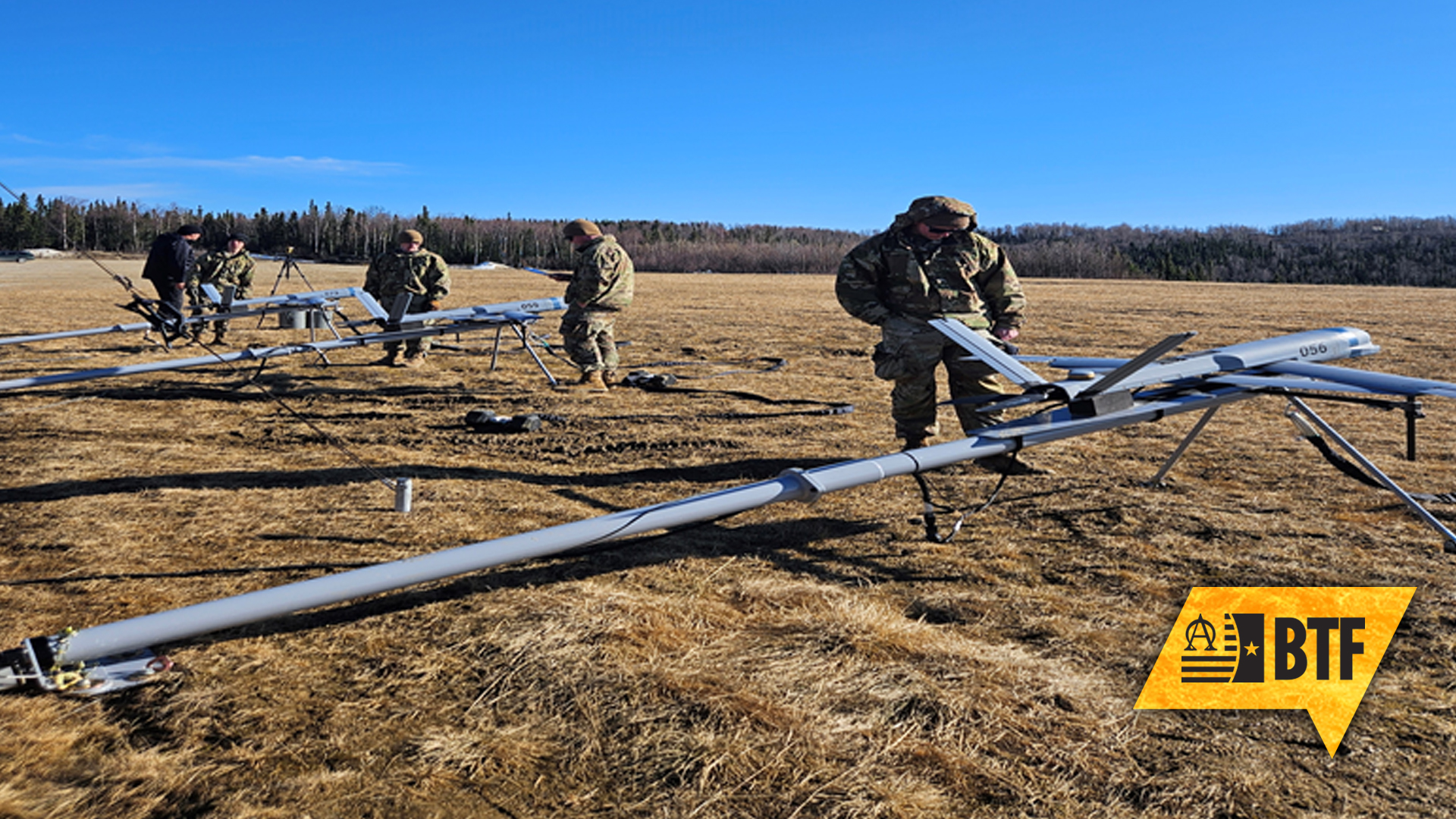
Soldiers at Fort Wainwright in Fairbanks, Alaska, receive the Short Range AEVEX Altas capability as part of the Launched Effects (LE) program in May 2026. As one of the 14 programs participating in the Army’s materiel release, LE leveraged the new streamlined process to expedite fielding and accelerate delivery by over eight months. (Photo courtesy of the Unmanned Aircraft System Launched Effects Program Office)
by Jared L. McCallum
The Army has signed a new policy that fundamentally transforms the materiel release process, replacing decades of administrative friction with a risk-informed, enabling framework that delivers capabilities to Soldiers faster, without compromising the safety, suitability and supportability standards that protect the force.
The streamlined Materiel Release Policy, signed by the Assistant Secretary of the Army for Acquisition, Logistics and Technology (ASA(ALT)), reassigns materiel release decision authority to the Army’s newly established Portfolio Acquisition Executives (PAEs), aligning the authority to release capability with the leaders accountable for delivering it. The policy applies to all Army programs and replaces the previous process outlined in Army Regulation 770-3.
Why Materiel Release Needed to Change
Materiel release is the Army’s fundamental assurance that a system is safe, suitable and supportable before it reaches Soldiers in the field. It is a critical function, but over time, the process became weighed down by layers of administrative requirements that often duplicated work already completed under existing acquisition statutes, Army regulations and test and evaluation processes.
Programs frequently found themselves dedicating significant resources to drafting, staffing and routing documents and memoranda that did not always translate into measurable improvements. The result was misaligned priorities: time and energy spent on process compliance rather than on the underlying data and engineering judgment that inform a sound release decision.
The Army recognizes that meeting today’s ever-changing threat, which is the intent of the Army’s Transformation Initiative, requires a fundamentally different approach.
Building on Proven Success: From Software to Hardware
The streamlined process did not emerge in a vacuum. It was built on the foundation of a successful Software Materiel Release reform effort led under the former Principal Deputy to the former ASA(ALT), Young Bang. In 2023, the Army piloted a streamlined approach for software programs, granting exceptions to existing policy and allowing programs to design release processes that aligned with modern, agile software development. Lessons learned from that pilot informed a complete rewrite of the software materiel release policy and demonstrated that risk-informed, tailored approaches could accelerate delivery without compromising safety, suitability and supportability rigor.
In the fall of 2025, ASA(ALT) and Army Materiel Command (AMC) teamed up to turn that same lens on the remainder of the materiel release process, primarily hardware and integrated hardware and software systems. Under the leadership of the Deputy Assistant Secretary of the Army for Sustainment, in partnership with the Assistant Deputy for Acquisition and Systems Management (Data, Engineering and Software) and AMC G-3, the Army launched a six-month hardware materiel release pilot involving 26 programs.
How the Pilot Worked
The pilot exempted participating programs from existing materiel release policy and instead asked them to follow a new set of frameworks designed to make the materiel release process more responsive and effective.
Programs began by assessing their risk tolerance, considering key criteria such as operational urgency, intended lifespan, fielding scale and system complexity. This assessment provided a clear understanding of what the critical programmatic requirements and operational risks are for each materiel solution, allowing teams to focus their efforts on where they would have the greatest impact on providing safe, suitable and supportable capability to our Soldiers.
Building on this risk profile, programs then engaged the Materiel Release Requirements Library, a flexible toolkit of requirements that replaced the old, rigid checklist. Instead of starting with a lengthy list and seeking to remove unnecessary items, teams now tailored-in only those requirements that were truly relevant and value-added for their specific solution. This approach eliminated duplication with other acquisition processes and ensured that every requirement served a clear purpose.
Finally, the pilot introduced Materiel Release Agreements, collaborative, up-front arrangements between programs and functional area stakeholders that defined needed evidence and engagement to support a materiel release decision. By establishing these agreements early, the process shifted from reactive, end-of-cycle disputes to proactive alignment, fostering greater efficiency and partnership across the Army enterprise.
To rigorously assess the effort, the pilot included both a participating group and a control group, enabling direct comparison of timelines, workload and outcomes. The Army also leveraged an automation capability developed by Govini to track program metrics, providing data-driven insight into where the streamlined approach delivered the greatest benefit. Throughout the pilot, the team conducted in-progress reviews, surveyed participating programs on barriers and successes, and compared the streamlined approach against statutory and regulatory requirements to ensure full compliance.
Pilot Results
The pilot was a clear success. Programs reported significantly reduced administrative burden, faster decision timelines and a more collaborative relationship with functional area stakeholders, including safety, test and sustainment communities. The findings validated that a risk-informed, tailored approach can both accelerate delivery and preserve the assurance Soldiers depend on. Reflecting on the significance of this transformation, Theresa Smith, Ph.D., deputy assistant secretary of the Army for sustainment, noted, “We aren’t just speeding up the process; we are revolutionizing Army acquisition. The new streamlined materiel release shatters rigid bureaucracy, replacing it with a modern, risk-informed and mission-focused model. By empowering our program managers and product support managers to tailor requirements, we ensure that every decision drives one ultimate goal: delivering uncompromising readiness to the warfighter.”
The streamlined process was shaped by the full breadth of the Army enterprise. Army Safety, the U.S. Army Test and Evaluation Command, program manager offices, sustainment organizations and the legal and policy communities all contributed to the design and validation of the new framework. This new framework unfolded even as the Army was simultaneously standing up the new PAE structure, and the two transformations reinforced one another.
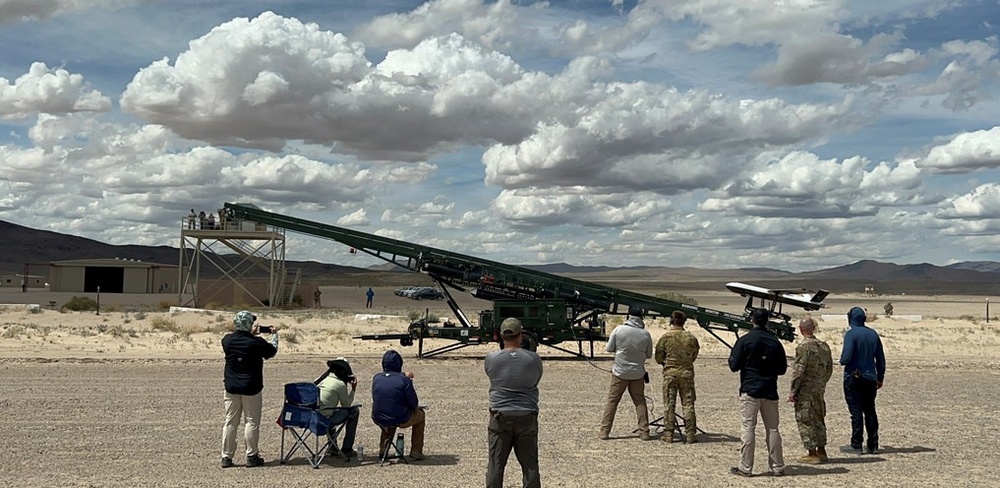
The LE program fields the Long Range AEVEX Disruptor capability at the National Training Center at Fort Irwin, California, in April 2026. Participation in the materiel release pilot enabled the LE team to deliver this capability to Soldiers faster, demonstrating how the reformed process accelerates and streamlines Army modernization. (Photo courtesy of the Unmanned Aircraft System Launched Effects Program Office)
Authority Where Accountability Lives: The PAE Construct
In parallel, the Army conducted a risk analysis of transitioning materiel release authority to the PAE structure, evaluating coordination, readiness and sustainment considerations to ensure the authority shift would succeed.
A central feature of the new policy is the reassignment of materiel release decision authority. Under the streamlined process, materiel release approval authority now rests with the respective PAE. This shift aligns decision authority with accountability. PAEs are responsible for capability delivery across all functional areas that a materiel release decision spans, making them uniquely positioned to integrate risk, schedule, sustainment and operational considerations into a single, informed decision. It directly supports the Army’s transformation guidance to empower PAEs to streamline, make trades and deliver capabilities within their portfolios.
Aligned with Army Transformation and Acquisition Modernization
The streamlined materiel release process is exactly where the Army, and the broader Office of the Secretary of War acquisition enterprise, is heading. It directly aligns with the acquisition transformation objectives in Executive Order 14265 and the Army Transformation Initiative: centralized decision-making at the portfolio level, risk-informed judgment and the elimination of duplicative process layers that slow delivery without adding value.
The new materiel release framework gives programs and PAEs the flexibility to navigate the acquisition process while preserving the Army’s commitment to safe, suitable and supportable systems. This is not deregulation, it is re-purposing effort toward what matters: getting the right capability to Soldiers, at the speed of relevance, with the assurance they deserve.
What’s Next?
The Army recognizes that this is a significant cultural and procedural shift for the acquisition community. To support implementation, ASA(ALT) and AMC are taking several steps to ensure a smooth transition. A Materiel Release Playbook will be developed to capture lessons learned, best practices and provide detailed guidance for programs. In addition, ASA(ALT) is building a new materiel release process tool to streamline workflow, offer real-time visibility into ongoing and completed materiel releases and enable data-driven decision making. The update to Army Regulation 770-3 will fully institutionalize the streamlined process.
To further support the community, ASA(ALT) will provide comprehensive training, resources and direct engagement with programs throughout the transition. Assessments will be conducted to ensure the new process is being implemented effectively and adjustments will be made as necessary to address challenges and optimize outcomes.
CONCLUSION
For the Soldier in the field, the streamlined materiel release process means one thing above all else: capability arrives faster, informed by needed safety, suitability and supportability data, tailored to the materiel solution. Equipment that once waited months in administrative review or was held up without the awareness of senior leaders, can now move through a risk-informed, accountable decision process aligned to the urgency of the mission.
This is what transformation looks like in practice: empowered leaders, evidence-based decisions and a relentless focus on delivering for the Soldier.
For more information, contact the author at jared.l.mccallum.civ@army.mil.
Jared McCallum is a senior acquisition logistician for the Office of the Deputy Assistant Secretary of the Army for Sustainment, operates as the deputy sustainment technology executive and serves as a portfolio manager supporting PAEs and Army acquisition leadership. He is also the Army-wide lead for Materiel Release and Type Classification and directs logistics policy development as the publications policy lead. He holds an M.S. in systems engineering from the Naval Postgraduate School and a B.S. in organizational leadership from Central Michigan University. He is DAWIA Certified Advanced in program management and life cycle logistics.
Recent Posts
Read more of our recent Behind The Frontlines Posts.

Unlock Collaborative Leadership: FY27 Seats Open for Program Manager’s Cross-Functional Training (CFT 4010)

From the Director of Acquisition Career Management: The Watchword Is Change

Keep It Simple – Francesco (Frank) A. Rizzi