
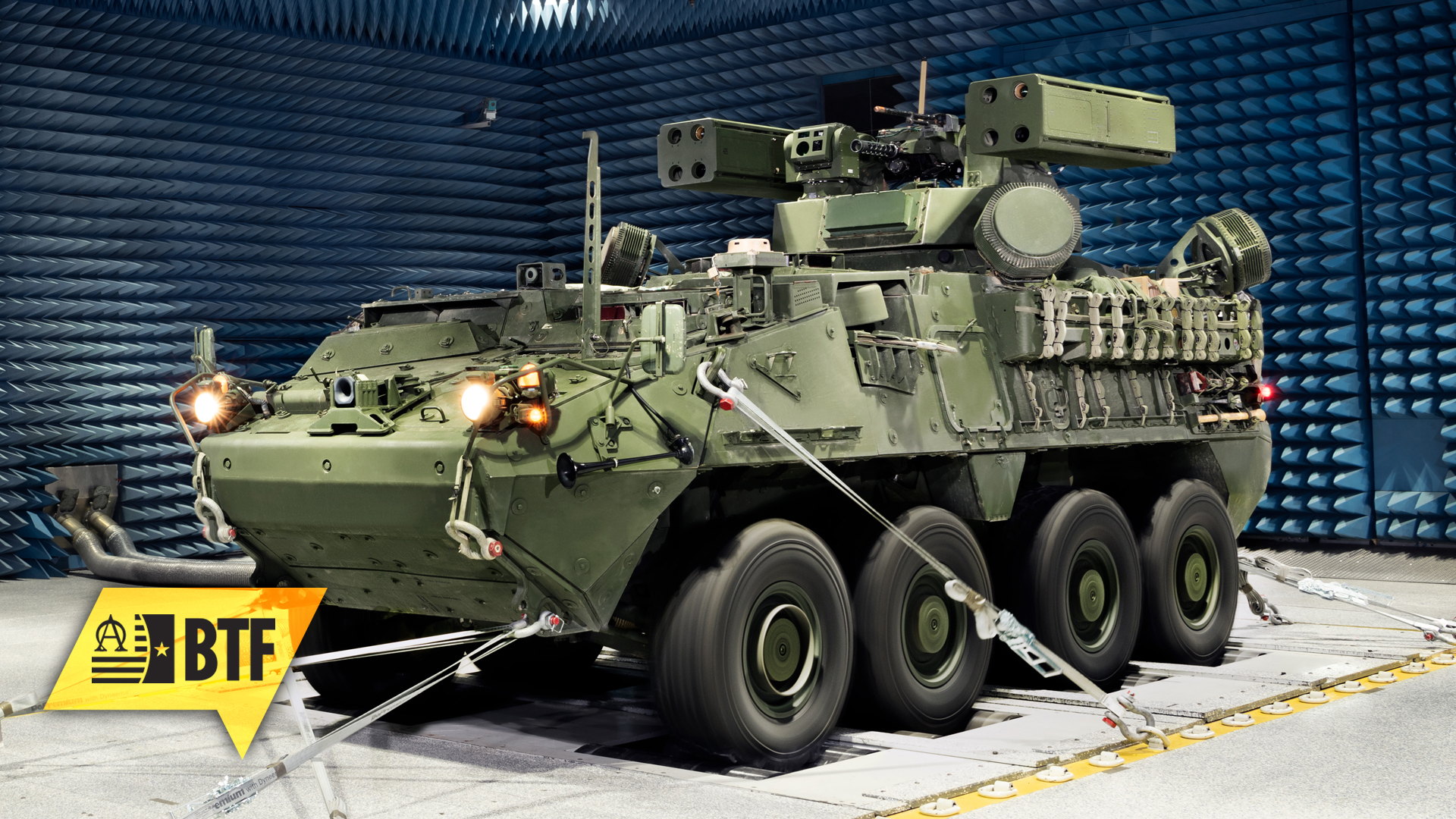
A SGT STOUT mobile short-range air defense vehicle undergoes electromagnetic interference testing at Aberdeen Test Center, Aberdeen Proving Ground, Maryland, in April 2021. ATEC’s Continuous Evaluation Campaign approach to test and evaluation was a key contribution to the SGT STOUT’s initial fielding in just four years. (Photo by Steve Lowther, Aberdeen Test Center)
ATEC Continuous Evaluation Campaign: Purpose-Driven Learning
by Maj. Gen. Patrick Gaydon and Christopher Barrett
Testing costs too much and takes too long. Guilty.
The Army Test and Evaluation Command (ATEC) is committed to doing better. As the Army moves at speed toward continuous transformation, ATEC is fundamentally changing how we support decisions to deploy new capabilities that defeat emerging threats. The linear, sequential model—contractor testing followed by independent government developmental testing, followed by an independent government operational test, with little feedback before a final summary evaluation report—does not support the Army’s need to exploit emerging technologies, quickly, to field new or improved capabilities.
To better inform acquisition reform and Army transformation, ATEC is adopting Continuous Evaluation Campaigns: agile, integrated strategies that deliver Soldier-validated feedback early and continuously to enable responsible, risk-informed decisions. These campaigns are tailored to learning demands that inform Army senior leader decision criteria: What decision are they trying to make? What do they need to know? What’s important to them? Where can they assume risk? What can they defer?
The Continuous Evaluation Campaign introduces risk-informed strategies that span the life of a program. Rather than deferring learning until a system is mature and production representative, ATEC integrates learning from the outset, using every opportunity to collect suitable data and observations, then provides meaningful feedback using rapid, continuous feedback loops. Campaigns are deliberate, outcome-focused learning activities that provide insights and actionable information to inform Army decisions concerning system capabilities and limitations; doctrine, organization, training, materiel, leadership, personnel, facilities and policy (DOTMLPF-P); and requirements and acquisition strategies. They reduce risk, compress timelines and enable Army leaders to balance speed, safety and effectiveness as new capabilities are developed, improved and fielded.
FROM LINEAR TO LAYERED: REDESIGNING THE T&E PARADIGM
Under the traditional test and evaluation (T&E) model, the process typically began only after a prototype system was developed, often years after a requirement was identified. The developmental testing was followed by bespoke, time-intensive, expensive operational tests with units, culminating in a final ATEC evaluation report published too late to influence early decisions or design improvements. This paradigm, while thorough, could not meet the accelerating pace of technological change and threat evolution.
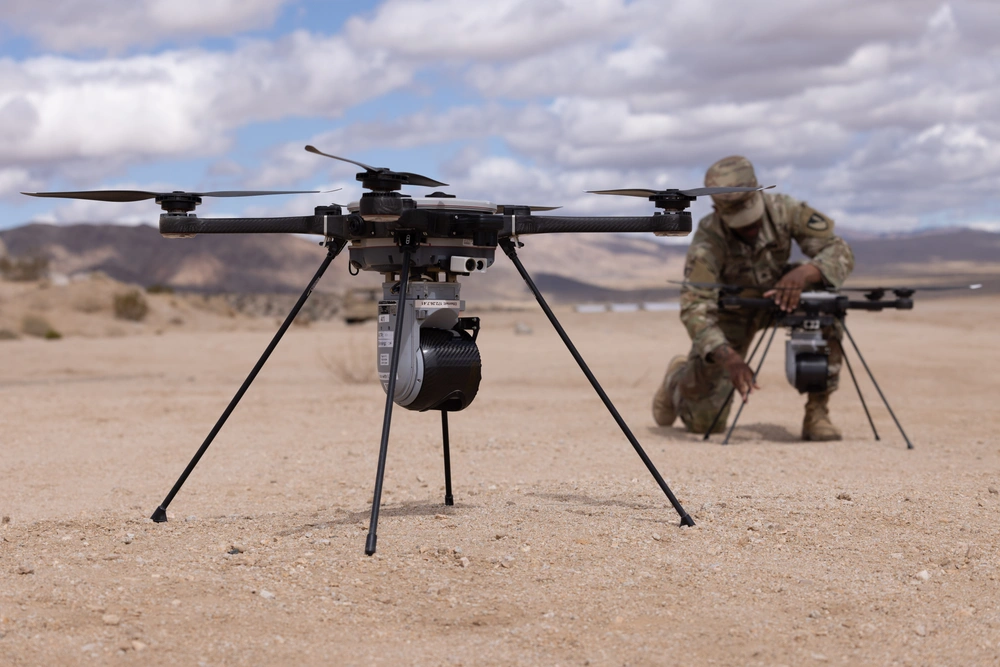
U.S. Army Staff Sgt. Jeremy Ephriam, assigned to 36th Engineer Brigade, prepares a Ground Obstacle Breaching Lane Neutralizer drone for launch during Project Convergence-Capstone 5 (PC-C5) on Fort Irwin, California, in March 2025. Army experimentation events such as PC-C5 are key opportunities for data collection and learning under ATEC’s Continuous Evaluation Campaign approach to test and evaluation. (Photo by Sgt. Marita Schwab, 55th Public Affairs Company)
ATEC is breaking that mold. By adopting continuous evaluation and leveraging learning opportunities and data sources across the program life cycle, ATEC is enabling persistent feedback loops and real-time learning. Evaluations are integrated into the developer’s process to build and deploy systems, then synchronized with planned unit training events and experiments, designed to maximize value to both the testing enterprise and the operational force. Throughout, evaluators maintain running estimates, produce emerging results briefs within seven days of an operational event and publish full evaluation reports within 60 days.
This approach ensures the Army can rapidly iterate, adjust and make risk-informed decisions while maintaining the rigor of an independent government assessment. In essence, ATEC is doing testing with units, not to them, and bringing unprecedented speed and fidelity to the acquisition process.
ENABLING LEARNING THROUGH RISK-INFORMED SAFETY
A foundational element of the Continuous Evaluation Campaign is risk-informed safety assessments that inform early and continued experimentation. As the Army increasingly relies on experimentation and prototype systems to drive innovation, ATEC has modernized how it approaches safety releases to identify hazards and consequences and provide mitigation strategies that enable learning, while still protecting Soldiers.
Using all available suitable data, ATEC rapidly publishes safety releases that support controlled, risk-informed experimentation. Rather than treating safety as a binary gate, these products provide commanders with clear assessments of hazards, consequences, mitigation strategies and residual risk, empowering them to make informed decisions aligned with mission and learning objectives.
Other reforms have streamlined and accelerated the safety release process, delegated approval authorities, reduced administrative friction and provided broad applicability across units and locations. These changes are especially critical during Army Transformation in Contact (TiC) events and other large-scale experimentation efforts, where speed and flexibility are essential. By integrating safety early and continuously, ATEC enables formations to experiment with emerging capabilities, responsibly feeding valuable data back into the Continuous Evaluation Campaign.
THE SGT STOUT SHORT-RANGE AIR DEFENSE SYSTEM
ATEC’s approach was on full display with the rapid development and fielding of the SGT STOUT, formally known as the Maneuver-Short Range Air Defense, or M-SHORAD. When the Army identified a short-range air defense gap in 2018, it moved quickly to field a Stryker-based solution equipped with surface-to-air missiles. ATEC began developmental testing in 2020 and used the emerging results to design an operational test campaign aligned with unit training schedules.
In 2022, four units received early versions of the system. ATEC embedded teams into their planned exercises at Fort Sill, Fort Hood and the National Training Center in 2024 to observe Soldiers operating and maintaining systems while conducting unit missions, under realistic conditions, against representative threats. The result was a dual benefit: unit readiness improved through hands-on training, while ATEC reduced cost and complexity to simultaneously collect operational data in support of a full-rate production decision slated for fiscal year 2026.
The entire process, which in the past would have taken seven to 15 years, was reduced to only four years for the SGT STOUT’s initial fielding. This real-world example showcases how ATEC’s Continuous Evaluation Campaign approach compresses timelines, reduces costs and enhances Soldier preparation, all while preserving test integrity.
SCALING THE CAMPAIGN: INTEGRATED FIRES TEST CAMPAIGN
While SGT STOUT illustrates the power of layered testing for a single system, the Continuous Evaluation Campaign is equally applicable to complex systems-of-systems, such as the Army’s Integrated Air and Missile Defense architecture. The Integrated Fires Test Campaign (IFTC) exemplifies this approach.
The IFTC is a multi-year series of layered assessments designed to continuously evaluate how individual components—such as the Integrated Battle Command System, Lower Tier Air and Missile Defense Sensor (LTAMDS), Indirect Fire Protection Capability and Sentinel A4 radar—perform together as an integrated enterprise. Beginning with IFTC23 and extending through successive campaigns, each iteration builds on the last, increasing complexity and generating data to inform major acquisition decisions, including Milestone C for LTAMDS.
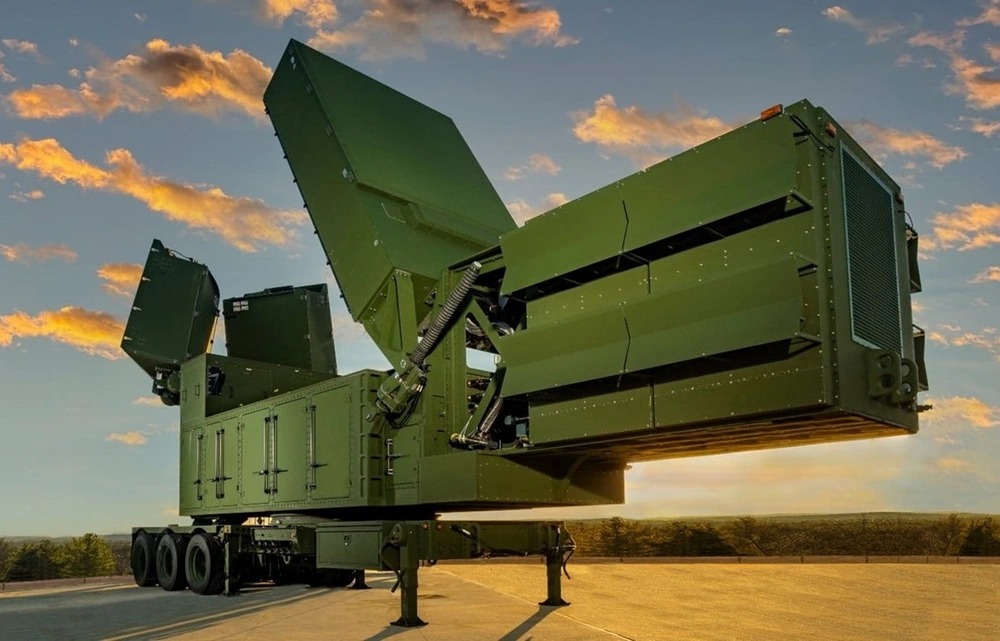
The U.S. Army’s Lower Tier Air and Missile Defense Sensor (LTAMDS) demonstrated 360-degree engagement capability during a successful August 14, 2025, missile flight test at White Sands Missile Range, detecting, tracking, and enabling the intercept of an Air Breathing Threat target. (Official U.S. Army photo)
Rather than relying on a single, monolithic test event, IFTC embodies the Continuous Evaluation Campaign by integrating data from contractor testing, developmental flight tests, operational assessments and joint and multinational exercises. Planned data collection in operational theaters, including Guam, further reinforces the principle of TiC: embedding learning in the environments where these systems will ultimately fight.
ALL SUITABLE DATA, ALL THE TIME
ATEC is fostering a culture of transparency and inclusivity, integrating relevant information from across the acquisition ecosystem. A cornerstone of ATEC’s Continuous Evaluation Campaign is a commitment to use all suitable data from any source to inform evaluations. That means data doesn’t have to originate from ATEC-executed events alone, as it did in the past. Data from vendors, U.S. Army Combat Capabilities Development Command (DEVCOM) laboratories, university research partnerships, Soldier touch points, unit training and more all play an equally vital role. By embracing diverse data sources, the command can assess system performance earlier, identify gaps and support more timely decisions.
This approach also allows ATEC to provide feedback not only on performance and safety, but across the full spectrum of DOTMLPF-P to ensure the Army is fully prepared to field new capabilities. In doing so, ATEC supports transformation at the speed of relevance.
DIGITAL BACKBONE FOR A CONTINUOUS EVALUATION CAMPAIGN
To enable this new model, ATEC is investing heavily in digital transformation. The command is developing a secure, cloud-based data mesh architecture to connect data across locations and classification levels. This federated structure allows analysts and evaluators to ingest, visualize and share data in near real time. ATEC’s data mesh has received authorities to operate at both the controlled unclassified as well as classified levels for information security, which is an enormous achievement.
ATEC is also increasing its use of live, virtual and constructive environments that use modeling and simulation in digital environments. This enables rapid sequences of multidomain operations scenarios for cutting-edge technologies that would be impossible in the open air. During an October 2023 demonstration event, this infrastructure enabled analysts to generate insights within 60 seconds of data collection. That kind of speed is revolutionizing how the Army views analytics, moving from retrospective reporting to in-stride learning.
ATEC’s digital initiatives, including embedded artificial intelligence tools and a growing portfolio of digital engineering capabilities, are making it possible to conduct distributed testing and simulation at scale. These investments are also helping reduce the Army’s reliance on resource-intensive live testing, freeing capacity for more integrated, mission-focused assessments.
ORGANIZATIONAL CHANGE
To institutionalize the Continuous Evaluation Campaign and align with the Army Transformation Initiative, ATEC has also integrated two of its subordinate organizations, the U.S. Army Evaluation Center (AEC) and the U.S. Army Operational Test Command (OTC), into a single, unified U.S. Army Operational Evaluation Command (OEC). This new one-star organization, headquartered at Fort Hood, Texas, brings together the complementary strengths of both organizations to streamline processes, reduce redundant reporting and deliver timely, actionable data faster for Army senior leaders.
For example, under the old model, a complex program like Next Generation Command and Control (NGC2) could face multiple, sequential reports from both OTC and AEC. Within OEC, those assessments will be fused, accelerating feedback to developers and decision-makers. This organizational change will position ATEC to deliver more agile, integrated T&E.
PARTNERSHIPS ARE THE POWER MULTIPLIER
ATEC’s transformation doesn’t happen in a vacuum. Close collaboration with Army Transformation and Training Command; the Office of the Assistant Secretary of the Army for Acquisition, Logistics and Technology and its Portfolio Acquisition Executives (PAEs); DEVCOM, the Department of War’s Test Resource Management Center and Office of the Director of Operational Test and Evaluation; academia; industry; and others is vital. Whether through the integration of vendor data, early participation in requirements planning forums or execution of joint training and testing events, ATEC is embedding itself as a proactive partner.
Specifically in support of Army acquisition reform, ATEC now maintains a T&E integrator within each of the six PAEs to co-develop Continuous Evaluation Campaigns that maximize learning opportunities for every new system. These partnerships also help ATEC align with the Army’s TiC framework, testing systems such as NGC2 in the operational environments where they will be used and gathering feedback directly from those who will fight with them.
CONCLUSION
ATEC’s Continuous Evaluation Campaign approach represents more than a process shift—it’s a cultural transformation. By embracing early integration, diverse data, digital enablement and enduring partnerships, ATEC is redefining how T&E supports the acquisition life cycle.
As the Army confronts near-peer competition and disruptive technologies, ATEC will remain a trusted voice providing data-driven, unbiased insights to rapidly inform senior leader decisions, manage risk and ensure the right capabilities reach the warfighter faster than ever before. The future of Army testing is not business as usual. It is layered, continuous and transformative—and it is already underway.
For more information, go to https://atec.army.mil/.
MAJ. GEN. PATRICK GAYDON serves as commanding general of ATEC, headquartered at Aberdeen Proving Ground, Maryland. He holds an M.S.S. in strategic studies from the U.S. Army War College and a B.S. in mechanical engineering from the U.S. Military Academy at West Point.
CHRISTOPHER BARRETT serves as executive technical director of the U.S. Army Operational Evaluation Command, an ATEC subordinate organization headquartered at Fort Hood, Texas. He holds an M.Eng. in systems engineering from Stevens Institute of Technology and a B.A. in economics from Rutgers University New Brunswick.
Recent Posts
Read more of our recent Behind The Frontlines Posts.

JIATF-401 LEADS A NEW ERA IN COUNTER-SUAS DEFENSE

Aligned for Impact – John Franklin

HIRING CONTRACTING SPECIALISTS, THE SMART WAY